
Are you considering starting a car detailing business in Minnesota, or perhaps you already own one and want to ensure you’re complying with all the regulations? Understanding car detailing laws in Minnesota is essential for maintaining a legal and successful business.
From licensing requirements to tax regulations and where you can operate your detailing services, there are important details you need to know. This guide will walk you through the key laws and regulations that affect your car detailing business in Minnesota, helping you avoid costly mistakes and focus on what matters most—delivering top-notch service to your customers.
Keep reading to get the clear, simple answers you need to stay compliant and grow your business with confidence.

Credit: m.yelp.com
Business Licensing
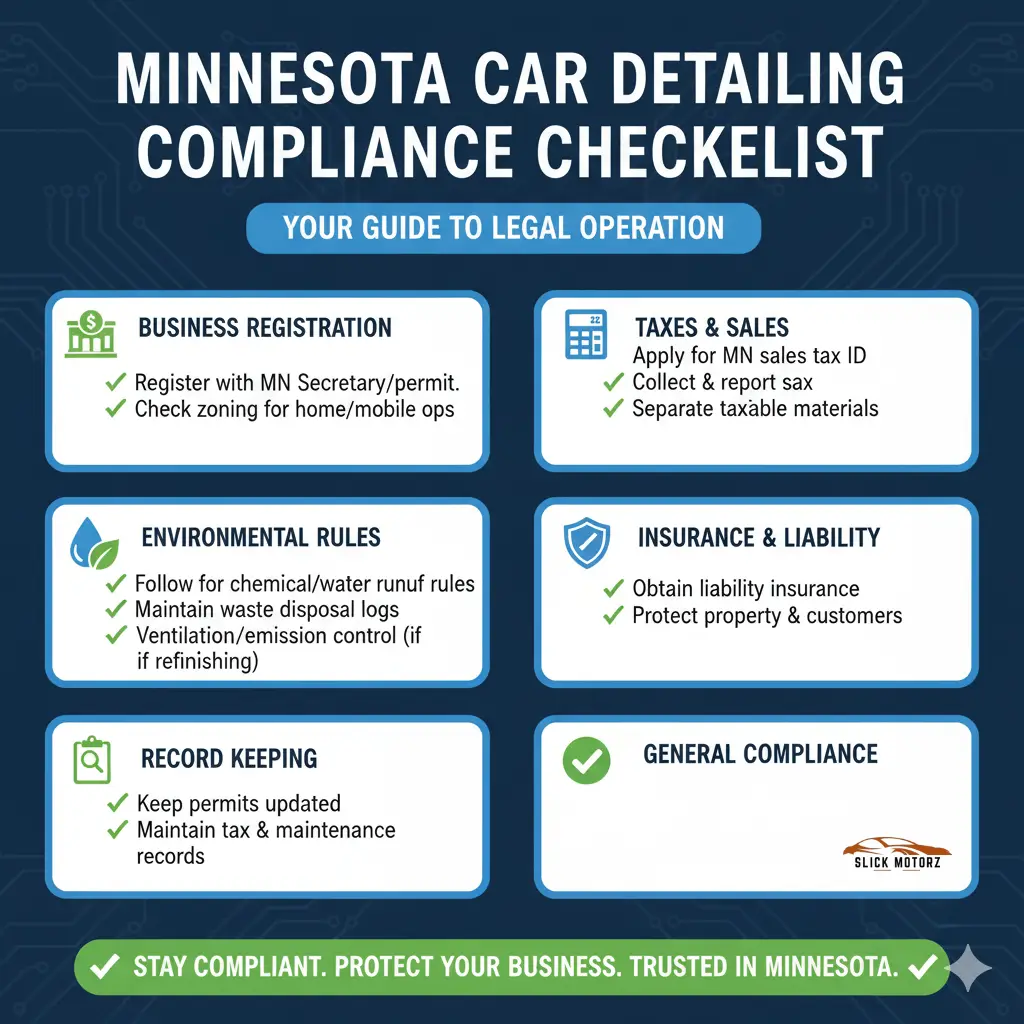
Starting a car detailing business in Minnesota requires proper licensing to operate legally. Business licensing ensures your company follows state and local rules. It protects you and your customers. Understanding the licensing process helps you avoid fines and delays. This section breaks down the essentials of business licensing for car detailing.
State And Local Requirements
In Minnesota, you must register your business with the state. This process varies by city and county. Some cities require a local business license. Others may ask for special permits for car detailing activities. Check your city’s website for exact rules. The state also requires a tax ID number for sales tax collection. Compliance with environmental regulations is important too.
LLC Vs Sole Proprietorship
You can run your car detailing business as a sole proprietorship or an LLC. A sole proprietorship is simple to set up and has fewer fees. It offers no personal liability protection. An LLC separates your personal assets from the business. It requires more paperwork and fees. Choose the structure that fits your risk level and business goals. Register your chosen structure with the Minnesota Secretary of State.
Home-based Business Rules
Many car detailers start their business at home. Minnesota allows home-based businesses but with limits. Local zoning laws control what you can do on your property. Some cities limit the number of customers or vehicles at your home. Noise and water runoff rules may apply. Always check with your city zoning office before starting. Following these rules keeps your business legal and neighbor-friendly.
Tax Regulations
According to the Minnesota Department of Revenue, most car detailing services in the state are taxable, requiring proper registration and reporting.
Understanding tax regulations is key for car detailing businesses in Minnesota. These rules affect how services and materials are taxed. Compliance helps avoid penalties and keeps your business running smoothly.
Sales Tax On Detailing Services
In Minnesota, most car detailing services are subject to sales tax. This includes cleaning, polishing, and waxing. Businesses must collect sales tax from customers and report it to the state.
Some services may qualify as non-taxable, but these are rare. It is important to check specific details with the Minnesota Department of Revenue. Proper tax collection ensures legal operation and customer trust.
Taxable Materials And Exemptions
Materials used during car detailing are often taxable. This includes wax, polish, and cleaning supplies sold to the customer. However, some items bought for business use only may be exempt from sales tax.
Exemptions apply if materials are not sold directly to customers but are used in the service. Keep clear records to separate taxable and non-taxable items. This practice helps during tax audits and maintains business integrity.
Environmental Rules
Car detailing businesses in Minnesota must follow strict environmental rules. These regulations protect air, water, and land from pollution. Understanding these rules helps detailers avoid fines and keep the environment safe. The key areas include emissions, waste management, and water runoff control.
Emissions From Auto-body Refinishing
Auto-body refinishing releases harmful fumes and chemicals. Minnesota law requires businesses to control these emissions carefully. Detailers must use approved paint booths with filters. These booths capture most pollutants before they reach the air. Regular equipment maintenance is essential to meet emission standards.
Waste And Debris Management
Car detailing generates waste like paint cans, solvents, and debris. Minnesota requires proper disposal of these materials. Hazardous waste must be separated and handled by licensed facilities. Businesses should avoid dumping waste into regular trash or drains. Proper waste management prevents soil and water contamination.
Water Runoff And Land Application
Water runoff from car washes can carry chemicals into local waters. Minnesota rules limit the use of soaps and cleaners that harm aquatic life. Detailers must use water reclamation systems or direct runoff to treatment areas. Land application of wastewater is allowed only under strict conditions. These measures protect lakes, rivers, and groundwater from pollution.
Credit: m.yelp.com
Operational Restrictions
Operating a car detailing business in Minnesota requires following specific rules. These rules help keep neighborhoods safe and businesses fair. Understanding operational restrictions helps you avoid fines and legal trouble. It also ensures your business runs smoothly.
Public Space Detailing Laws
Detailing cars in public spaces has clear limits. You cannot use sidewalks or streets for washing or cleaning vehicles. City ordinances often forbid blocking public pathways. Getting permission from local authorities is necessary for any public detailing. Always check with your city before starting work in public areas.
Zoning And Location Guidelines
Where you run your detailing business matters. Residential areas often do not allow commercial detailing. Commercial or industrial zones are best for car detailing shops. Local zoning rules define if you can operate from home or need a business location. Contact your city zoning office to confirm allowed locations.
Daily Service Limits
Minnesota may limit the number of cars detailed each day. These limits help reduce noise and traffic in neighborhoods. They also prevent excessive water use or pollution. Check local rules about how many vehicles you can service daily. Following these limits keeps your business legal and community-friendly.
Car Wash Licensing
In Minnesota, car wash businesses must follow specific licensing rules. These rules help keep the services safe and environmentally friendly. Licensing ensures car wash operators meet state standards and local codes. Understanding these requirements is key for anyone running or starting a car detailing or wash business.
Self-service Wash Permits
Self-service car washes in Minnesota need a special permit. This permit allows customers to wash their cars using the provided equipment. The state requires permits to monitor water usage and pollution control. Operators must apply for this permit before opening the facility. The permit also ensures that safety and health rules are followed.
Exemptions For Repair Garages
Repair garages with car wash services do not need a separate license for washing cars. These businesses focus on fixing vehicles but may offer washing as part of their service. The law exempts them from reducing extra paperwork. Despite this, repair garages must still follow environmental rules about water discharge and waste.
Facility Maintenance Requirements
All licensed car wash facilities must keep their sites clean and well-maintained. This includes regular checks of equipment and drainage systems. Proper maintenance prevents pollution and protects local water sources. Facilities must also comply with local zoning and safety regulations. Keeping the site in good shape helps the business run smoothly and legally.
Credit: m.yelp.com
Mobile Detailing Permits
Starting a mobile car detailing business in Minnesota requires understanding local permit rules. Mobile detailing permits help regulate services provided outside fixed locations. These permits ensure businesses follow safety, environmental, and zoning laws. Knowing the permit requirements avoids fines and legal issues. Permits vary depending on the service area and setup.
Twin Cities Metro Area Rules
The Twin Cities metro area includes Minneapolis, St. Paul, and nearby suburbs. Mobile detailers must check local city and county regulations here. Many cities require a business license and a special permit for mobile services. Some areas limit hours or days when mobile detailing is allowed. Environmental rules often apply, especially for water use and runoff. Follow these rules to protect local water sources and avoid penalties.
Parking Lot And Workplace Services
Mobile detailers often serve customers in parking lots or workplaces. Permission from property owners is usually required. Some cities ask for a permit to operate on private or public lots. Insurance coverage is important to protect against accidents or damage. Certain locations may have restrictions on noise or chemical use. Always confirm local laws before setting up your mobile detailing service at these sites.
Frequently Asked Questions
Is Car Detailing Taxable In MN?
Car detailing services in Minnesota are generally taxable. Sales tax applies unless a specific exemption exists. Check with the Minnesota Department of Revenue for detailed rules.
Do You Need An LLC for A Car Detailing Business?
You don’t need an LLC to start a car detailing business. Choose a business structure, register it, and get local licenses.
How Many Cars Can A Person Detail In A Day?
A person can detail 3 to 6 cars daily, depending on the detail level and experience. Efficiency and tools impact output.
Can I Run A Detailing Business From Home?
Yes, you can run a detailing business from home. Check local zoning laws and obtain necessary business licenses first.
Conclusion
Understanding Minnesota’s car detailing laws helps you stay legal and avoid fines. Always check local rules before starting your business. Register your business and get the required licenses on time. Pay attention to tax rules on services and products. Follow environmental guidelines to protect your community.
Staying informed keeps your car detailing business safe and successful.
For additional safety standards, read our post on OSHA Safety Requirements for Auto Detailing Shops to ensure full workplace compliance.