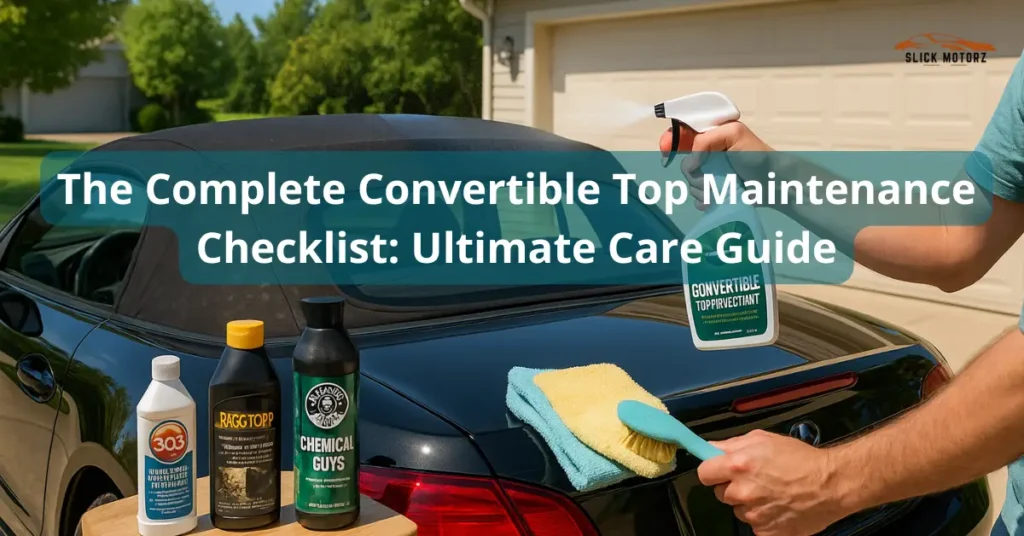
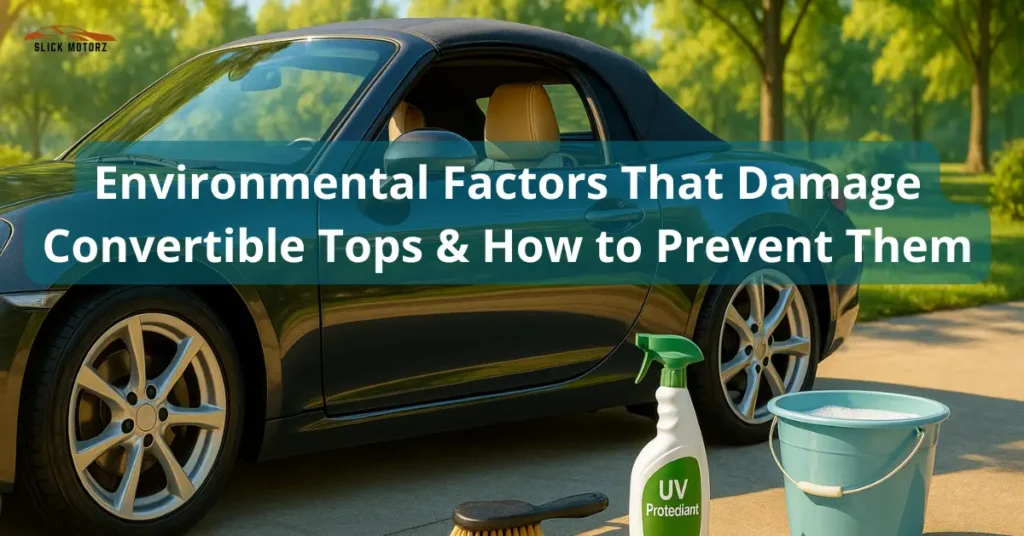
Your convertible top is more than just a stylish feature—it’s a key part of your car’s identity and protection. But did you know that every day, environmental factors like sun, rain, dust, and pollution can silently damage it over time?
If you want to keep your convertible top looking fresh and lasting longer, you need to understand what harms it and how to stop that damage before it starts. You’ll discover the main environmental threats to your convertible top and simple, effective ways to protect it.
Keep reading to ensure your ride stays sleek and shielded no matter the weather.
Common Environmental Threats
Convertible tops face many environmental threats daily. These threats can cause fading, cracking, and leaks. Understanding common environmental risks helps protect your convertible top. Taking simple steps can extend its life and keep it looking good.
Sunlight And UV Damage
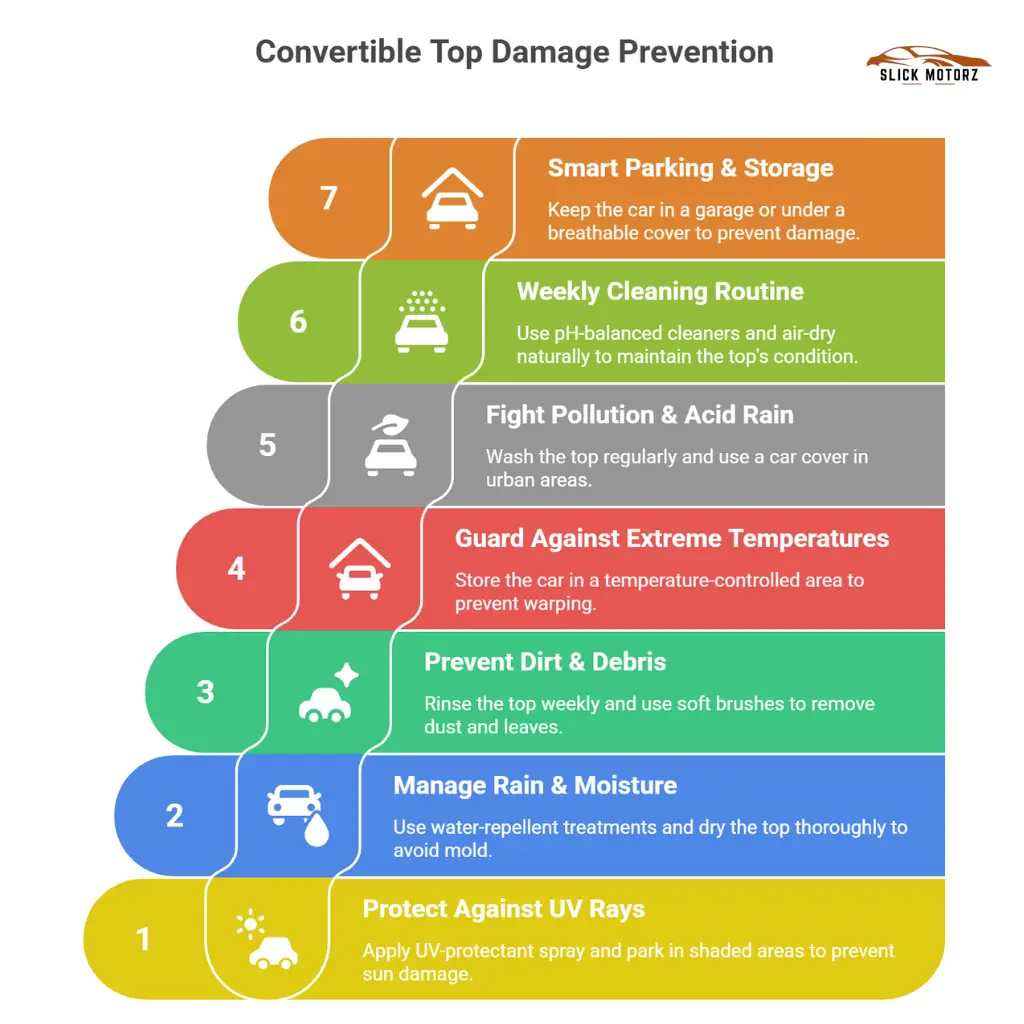
Sunlight exposes convertible tops to ultraviolet (UV) rays. UV rays break down the fabric and vinyl over time. This causes colors to fade and materials to become brittle. Continuous sun exposure can lead to cracks and tears. Using a UV protectant spray helps block harmful rays. Parking in the shade also reduces sun damage.
Rain And Moisture Effects
Rain and moisture can soak into convertible tops, especially fabric ones. Prolonged moisture causes mold and mildew growth. Wet tops can develop stains and unpleasant odors. Water can also damage the stitching and seams. Dry the top thoroughly after rain. Applying a water-repellent treatment creates a protective barrier.
Dirt And Debris Accumulation
Dirt, leaves, and debris collect on convertible tops during driving and parking. These particles can grind into the fabric and cause abrasion. Dirt buildup traps moisture, increasing the risk of mold. Regular cleaning with mild soap removes dirt safely. Avoid harsh brushes that can scratch or tear the material.
Extreme Temperatures
Hot summers and cold winters stress convertible tops. High heat causes materials to expand and soften. This weakens the fabric and vinyl over time. Cold temperatures make the top stiff and brittle. Rapid temperature changes can cause cracks and shrinkage. Store your car in a controlled environment if possible.
Pollution And Acid Rain
Air pollution contains chemicals that damage convertible tops. Acid rain, formed from pollutants, eats away at the fabric and vinyl. This leads to fading, discoloration, and weakening of the material. Washing the top frequently helps remove pollutants. Using a protective coating also shields against acid rain effects.
Credit: sustainabletravel.org
Daily Cleaning Tips
Daily cleaning is essential to keep your convertible top in good shape. Dirt, dust, and pollutants build up every day. Cleaning removes these harmful particles before they cause damage. A gentle routine helps maintain the top’s look and extends its life. Follow simple steps to clean your convertible top safely and effectively.
Choosing Gentle Cleaners
Select cleaners made for convertible tops. Harsh soaps can strip protective coatings. Mild, pH-balanced cleaners work best. They remove dirt without damaging fabric or vinyl. Avoid household detergents or strong chemicals. These may cause fading or cracking over time. Always test cleaners on a small area first.
Using Soft-bristle Brushes
Use soft-bristle brushes to clean your convertible top. Hard brushes can wear down the material. Gentle brushing loosens dirt and grime without harm. Brush in one direction to avoid damage. For delicate spots, use a microfiber cloth instead. Soft tools keep the fabric smooth and intact.
Avoiding Harsh Chemicals
Do not use bleach, ammonia, or solvents on the top. These chemicals break down fibers and cause discoloration. Avoid automatic car washes with strong brushes and soaps. They scratch and weaken the material. Stick to products made for convertible tops. They protect your investment and maintain appearance.
Proper Drying Techniques
Dry your convertible top properly after cleaning. Use a clean microfiber towel to blot excess water. Let the top air dry fully before folding it down. Trapped moisture causes mold and mildew. Never use heat sources like hair dryers. Natural drying keeps the fabric healthy and fresh.
Protective Treatments
Protective treatments play a key role in extending the life of your convertible top. These treatments form a barrier that guards against sun damage, moisture, and dirt. Applying the right products helps maintain the material’s strength and appearance. Regular care prevents cracks, fading, and mildew, keeping the top looking fresh and functioning well.
Applying Vinyl And Fabric Protectants
Use protectants designed for your convertible top’s material. Vinyl protectants prevent drying and cracking. Fabric protectants shield against water and stains. Always clean the top before applying. Spread the product evenly using a soft cloth or sponge. Let it dry completely for the best results.
Creating Hydrophobic Barriers
Hydrophobic treatments repel water effectively. They stop moisture from soaking into the fabric or vinyl. This reduces the risk of mold and mildew. Spray or brush on the hydrophobic product after cleaning. Reapply after heavy rain or every few months to maintain protection.
Reapplying Sealants Regularly
Sealants wear off over time due to weather and washing. Reapplying them keeps the protective layer intact. Check the condition of your top every few months. If water no longer beads on the surface, it is time to reapply. Follow the product instructions carefully for best results.
Parking Strategies
Proper parking plays a key role in protecting your convertible top. It reduces damage from the sun, rain, and dirt. Smart parking choices help keep the fabric and mechanisms in good shape. This extends the life of your convertible top and keeps it looking fresh.
Garage Storage Benefits
Storing your convertible in a garage offers great protection. It shields the top from harsh sun and rain. Garages also keep dirt and debris off the fabric. This prevents fading and mold growth. A cool, dry garage helps maintain the top’s material and seals. Garage storage is the best way to avoid weather damage.
Parking In Shade
If a garage is not available, park in the shade. Shade cuts down on UV rays that cause fading and cracks. Trees or carports provide good shade options. Avoid parking under pine or fruit trees to prevent sap and bird droppings. Shade keeps the top cooler and prevents heat damage.
Using Breathable Car Covers
Breathable car covers protect the top when parked outside. They block sunlight and rain but allow air to flow. This prevents moisture buildup under the cover. Moisture can cause mold and mildew on the fabric. Choose covers made for convertibles for the right fit and ventilation. Covers help keep the top clean and dry.
Maintenance Best Practices
Proper maintenance extends the life of your convertible top. Small, regular care prevents costly repairs and keeps your top looking new. Follow these maintenance best practices to protect your investment and enjoy your convertible for years.
Inspecting Seals And Weather Stripping
Check seals and weather stripping often for cracks or wear. Damaged seals let water and dirt inside, causing mold and damage. Use a rubber protectant to keep seals soft and flexible. Replace any cracked or missing strips quickly to prevent leaks.
Keeping The Top Dry
Always keep your convertible top dry to avoid mold and mildew. Do not lower the top while it is wet. Moisture trapped inside the folds can cause fabric damage and odors. After washing or rinsing, let the top dry fully before folding it down.
Avoiding Automatic Car Washes
Automatic car washes can harm your convertible top. The harsh brushes and chemicals may scratch or weaken the fabric or vinyl. Hand-wash your convertible top gently using mild soap and water. Use a soft brush or cloth to protect the material from damage.
Keeping The Top Up When Parked
Keep the convertible top up whenever the car is parked. This prevents unnecessary wear and tear on the fabric and mechanisms. It also protects the interior from sun damage and reduces the risk of dirt and debris accumulation. If possible, park in shaded or covered areas.
Credit: thehill.com
Seasonal Care
Seasonal care plays a vital role in keeping your convertible top in excellent condition year-round. Each season brings unique challenges that can harm the fabric or vinyl if left unprotected. Understanding how to adjust your care routine with the changing weather helps extend the life of your convertible top. Taking small, consistent steps during every season prevents costly repairs and maintains the top’s appearance.
Protecting Against Winter Snow
Snow and ice can cause serious damage to convertible tops. Heavy snow adds weight, risking tears or frame damage. Ice buildup can stiffen fabric and seals, leading to cracks.
Always remove snow gently using a soft brush or broom. Avoid sharp tools that can puncture or scratch the material. Keep the top dry by wiping away moisture after the snow melts. If possible, park your car in a garage or under a cover to shield it from harsh winter conditions.
Managing Spring And Summer Exposure
Spring and summer bring strong sun and rain that wear down convertible tops. UV rays fade colors and weaken fabric fibers. Rainwater can soak in, causing mold or mildew if the top stays wet too long.
Apply a UV protectant regularly to block harmful rays. Clean the top with mild soap and water to remove dirt and pollen. Use a water-repellent treatment to make the surface shed rain easily. Park in shaded areas during peak sun hours to reduce heat damage.
Preparing For Fall Weather
Fall drops leaves, dirt, and moisture that can clog seams and cause stains. Cooler temperatures also dry out seals and fabric, leading to cracks.
Clear leaves and debris from the top and surrounding edges often. Inspect and treat seals with a rubber conditioner to keep them flexible. Clean the top thoroughly before colder weather arrives. This preparation helps prevent damage from falling debris and early frost.
Frequently Asked Questions
How To Protect Your Convertible Top?
Clean your convertible top regularly with mild soap and water using a soft brush. Apply a UV protectant annually. Avoid harsh chemicals and automatic washes. Park in shade or use a breathable cover. Keep the top dry and latched when not in use to prevent damage and fading.
How Long Should A Convertible Top Last?
A convertible top typically lasts 10 to 15 years with proper care. Regular cleaning, UV protection, and avoiding harsh chemicals extend its life. Parking in shade and using protectants helps prevent fading and cracking. Neglect or harsh conditions can reduce durability significantly.
Should Convertibles Be Garage Kept?
Yes, garage keeping convertibles protects their tops from UV damage, moisture, and fading. It prolongs the top’s life and maintains its appearance.
Should I Scotchgard My Convertible Top?
Yes, apply Scotchgard to your convertible top after cleaning to repel water and protect against UV damage. Reapply yearly.
Conclusion
Protecting your convertible top requires simple, regular care. Clean it gently using mild soap and soft brushes. Apply a specialized protectant to block harmful UV rays and water. Always park your car in the shade or a garage to avoid sun damage.
Avoid harsh chemicals and automatic washes that can harm the material. Check seals often to prevent leaks and keep the top dry to stop mold growth. Small steps make a big difference in extending your convertible top’s life. Stay consistent, and your top will stay strong and looking great.