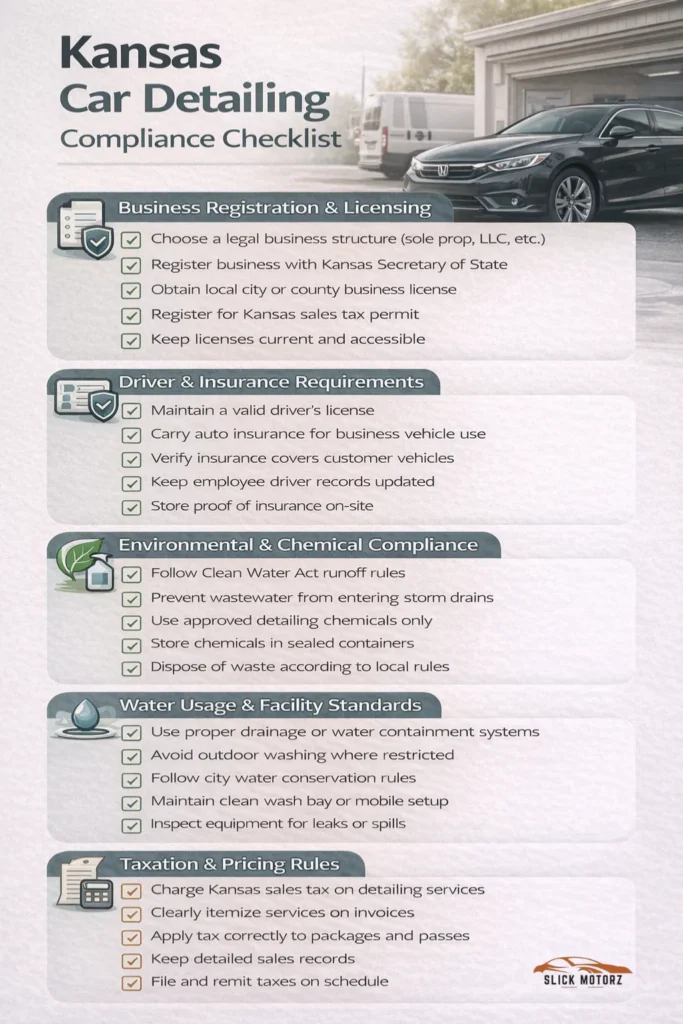
If you’re planning to start or run a car detailing business in Kansas, understanding the laws that apply to your work is crucial. You might wonder: Do you need a special license?
What rules govern the chemicals and water you use? Are there taxes or insurance requirements you should know about? Getting these details right can save you from costly fines and keep your business running smoothly. You’ll discover everything you need to know about car detailing laws in Kansas—from business registration to environmental regulations.
Read on to make sure your car detailing venture is fully legal and set up for success.
Business Licensing
Starting a car detailing business in Kansas requires proper licensing to operate legally. Business licensing ensures compliance with state and local regulations. It also helps protect your business and customers. Understanding these requirements is crucial before opening your doors.
State And Local Requirements
Kansas does not require a federal license for car detailing services. You must follow state and local rules. Check with your city and county offices for specific permits. These may include sales tax permits and environmental permits. Complying with these rules avoids fines or business closure.
Choosing A Business Structure
Decide on the best legal structure for your detailing business. Options include sole proprietorship, partnership, or limited liability company (LLC). Each type has different tax and liability implications. Many small businesses choose LLCs for personal asset protection. Consult with a legal advisor to make the right choice.
Registering Your Detailing Business
Register your business name with the Kansas Secretary of State. This step is necessary before obtaining your license. You must also apply for any required local business licenses. Submit the needed forms and pay applicable fees. Keep all documentation updated to maintain good standing.

Credit: allenstewart.com
Driver And Insurance Rules
Understanding the driver and insurance rules is essential for car detailers in Kansas. These rules protect both the detailer and the customer. They ensure legal compliance and provide safety during business operations.
Car detailers often drive customer vehicles or move them within the shop. Proper licensing and insurance are necessary for these activities. Kansas has clear regulations on these topics to guide detailers and shop owners.
Driver’s License Necessity
Every car detailer who drives must have a valid driver’s license. This license must be current and issued by Kansas or another recognized state. Driving without a license is illegal and can lead to fines or business penalties.
Many detailing shops require employees to show proof of a driver’s license. This rule helps avoid liability if an accident happens while handling customer vehicles.
Insurance Obligations For Detailers
Kansas law requires all drivers to carry vehicle insurance. Car detailers must have insurance covering any cars they drive or move. This insurance protects against damage or accidents during detailing work.
Detailers should check that their insurance covers commercial use. Personal insurance may not cover vehicles used for business purposes. A proper insurance policy reduces financial risks for detailers and customers.
Employee Licensing In Detailing Shops
Detailing shops in Kansas often require employees to hold valid driver’s licenses. This practice ensures all drivers meet state standards. Shops may also verify licenses regularly to maintain safety and compliance.
Employers should keep records of employee licenses and insurance. These records help during inspections or claims. Proper employee licensing supports a trustworthy and professional detailing business.
Vehicle Modification Laws
Vehicle modification laws in Kansas regulate changes made to motor vehicles. These laws keep vehicles safe and legal on the road. Modifications can improve appearance or performance but must follow state rules. Understanding these laws helps avoid fines and penalties.
Many modifications are allowed, but some have legal limits. Knowing these limits is important for car owners and detailers.
Legal Limits On Modifications
Kansas sets clear limits on vehicle modifications. Changes must not affect safety or emissions. Lights, exhausts, and window tints have specific rules. For example, headlights must meet brightness standards. Exhaust noise must not exceed the set decibel levels. Window tint darkness is also regulated to ensure driver visibility.
Modifications cannot hide a vehicle’s identity, such as altering the Vehicle Identification Number (VIN). The vehicle must remain roadworthy and pass inspections.
Common Restrictions In Kansas
Kansas restricts some common vehicle modifications. Lift kits and lowered suspensions have height limits. Tires must fit the vehicle’s design and not extend beyond fenders. Certain colored or flashing lights are banned except for emergency vehicles. Aftermarket bumpers and mirrors need to meet safety standards.
Illegal modifications risk fines, registration issues, or vehicle impoundment. Following Kansas laws helps keep your vehicle street legal and safe for all drivers.
Credit: www.waterway.com
Consumer Protection Laws
Consumer protection laws in Kansas help buyers avoid fraud and unfair practices. These laws cover car sales, warranties, and dealer obligations. Understanding these rules helps you make safer purchases and know your rights.
Kansas Lemon Law Basics
Kansas does not have a special lemon law for used cars. New cars may have protections under state lemon laws. These laws require manufacturers to fix serious defects within a set time. If repairs fail, buyers may get a replacement or refund.
For used cars, lemon law protections are limited. Buyers must rely on other laws for protection.
Used Car Sales And ‘as-is’ Rules
Most used cars in Kansas sell “as-is.” This means no guarantees on the car’s condition. Dealers must clearly show this on a Buyer’s Guide sticker. Buyers accept the car in its current state.
Even with “as-is” sales, dealers must disclose known problems. Hiding defects can lead to legal troubles for sellers. Always check the Buyers Guide and ask questions before buying.
Implied Warranties And Rights
Federal law requires vehicles to be “merchantable.” This means the car must be fit for normal use. Implied warranties protect buyers even if the car sells “as-is.” These warranties cover basic safety and function.
Buyers can seek legal help if a car has serious hidden defects. The Kansas Attorney General’s office offers consumer protection resources. Knowing your rights prevents costly mistakes.
Taxation For Detailers
Kansas car detailers must understand taxation rules to run legally. Taxes affect pricing and how services are offered. Knowing these laws helps avoid penalties and fines. This section explains key tax points for detailers in Kansas.
Sales Tax On Services
Kansas charges sales tax on most car detailing services. Detailers must collect tax from customers on each service sold. The current state sales tax rate is 6.5%, but local rates may add more. Detailers must register for a sales tax permit with the Kansas Department of Revenue.
Services like washing, waxing, and interior cleaning are taxable. Detailers should clearly list the tax on customer invoices. Failure to collect sales tax can lead to fines and back taxes. Keep accurate records of all taxable sales for reporting.
Tax Rules For Packages And Passes
Detailers often sell service packages or prepaid passes. Kansas taxes these packages based on the services included. If a package combines taxable and non-taxable services, tax applies only to the taxable portion. Detailers must track the value of each service in the package.
Prepaid passes for multiple detailing visits are also taxable. Tax is due at the time of sale, not when the service is performed. Detailers should issue receipts showing the tax collected on packages and passes. Proper tax handling avoids issues during audits.
Signage And Advertising Rules
Signage and advertising play a key role in the car detailing business in Kansas. Clear and legal signs help attract customers and build trust. Kansas sets specific rules to keep advertising honest and professional. These rules protect consumers and ensure fair competition. Business owners must follow them carefully to avoid penalties and fines.
Restrictions On Vehicle Signage
Kansas limits the size and placement of signs on vehicles. Signs must not block windows or mirrors. The state prohibits flashing or distracting lights on moving vehicles. Business names, phone numbers, and services can be displayed, but must be clear and easy to read. Vehicle signage should not resemble official or emergency signs. Keeping signs simple and lawful helps avoid legal troubles.
Advertising Compliance
Advertising for car detailing in Kansas must be truthful and accurate. Claims about services or prices cannot be misleading. All offers and discounts must clearly state their terms. Kansas law requires businesses to include contact information in ads. Online and print ads must follow the same rules. Following these guidelines builds customer confidence and protects the business.
Credit: www.waterway.com
Frequently Asked Questions
Do You Need An Llc For Auto Detailing?
You don’t need an LLC to start an auto detailing business. Choose a structure like a sole proprietorship or LLC and register accordingly.
Is It Legal To Modify Your Car In Kansas?
Modifying your car in Kansas is legal if the changes comply with state safety and emissions regulations. Avoid alterations that violate these rules.
Do You Need A Driver’s License To Be A Car Detailer?
A driver’s license is usually required to work as a car detailer. Employers often mandate licensed drivers for insurance and liability reasons.
Does Kansas Have A Lemon Law For Used Cars?
Kansas does not have a specific lemon law for used cars. Most used cars sell “as-is” with limited protections. Federal implied warranties apply, ensuring basic vehicle fitness. Buyers should review the “Buyers Guide” and consult consumer protection agencies or lawyers for undisclosed defects.
Conclusion
Understanding Kansas car detailing laws helps you stay legal and avoid fines. Always check local rules before starting your business or service. Register your business properly and keep up with state requirements. Knowing driver licensing and insurance rules protects you and your customers.
Stay informed about consumer rights for used cars in Kansas. Following these tips ensures smooth, lawful car detailing operations. Keep it simple, stay safe, and run your business with confidence.