Are you thinking about tinting your car windows in North Dakota? Before you head out, it’s important to know the state’s window tint laws.
These rules can affect how dark your tint can be, which windows you can tint, and even what happens if you don’t follow the regulations. Understanding these laws helps you avoid fines, keeps you safe on the road, and ensures your vehicle looks great without any legal trouble.
You’ll get a clear, easy-to-follow guide on North Dakota’s window tint laws—so you can make the best choice for your car and drive worry-free. Keep reading to find out what’s allowed, what’s not, and how to stay compliant.
Credit: www.tinting-laws.com
Tint Darkness Limits
Understanding the tint darkness limits in North Dakota is essential for all vehicle owners. The state has specific rules about how dark window tint can be. These rules help maintain driver safety and allow law enforcement to see inside the vehicle when needed.
Each type of window has its own restrictions. The front side windows, rear windows, and windshield all have different allowed levels of tint darkness. Knowing these limits prevents fines and ensures your tint is legal.
Front Side Window Rules
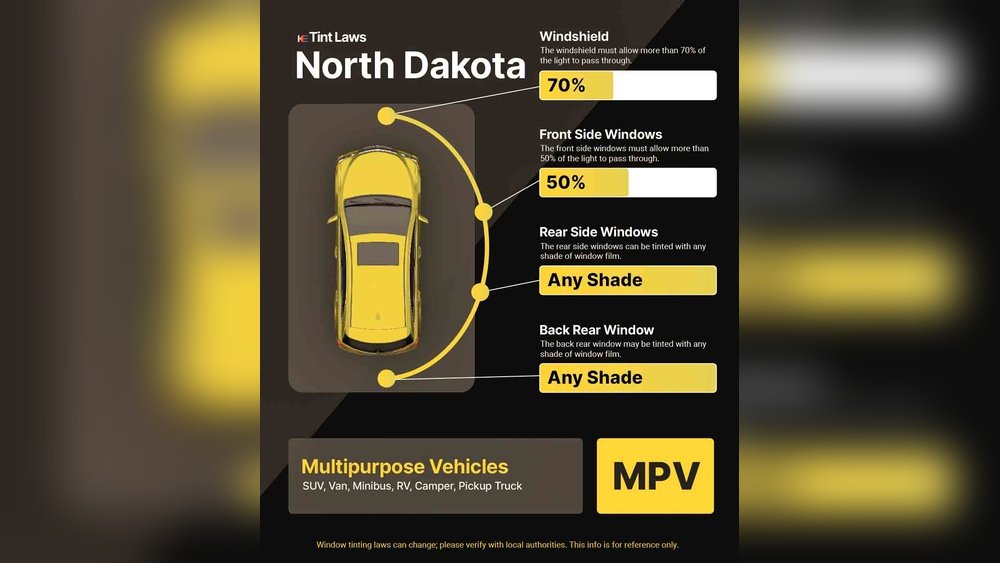
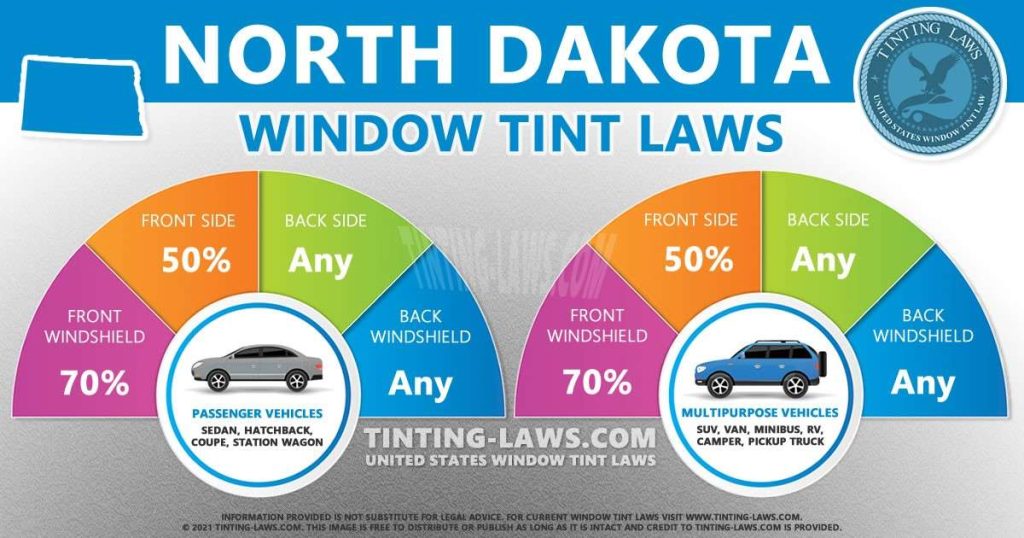
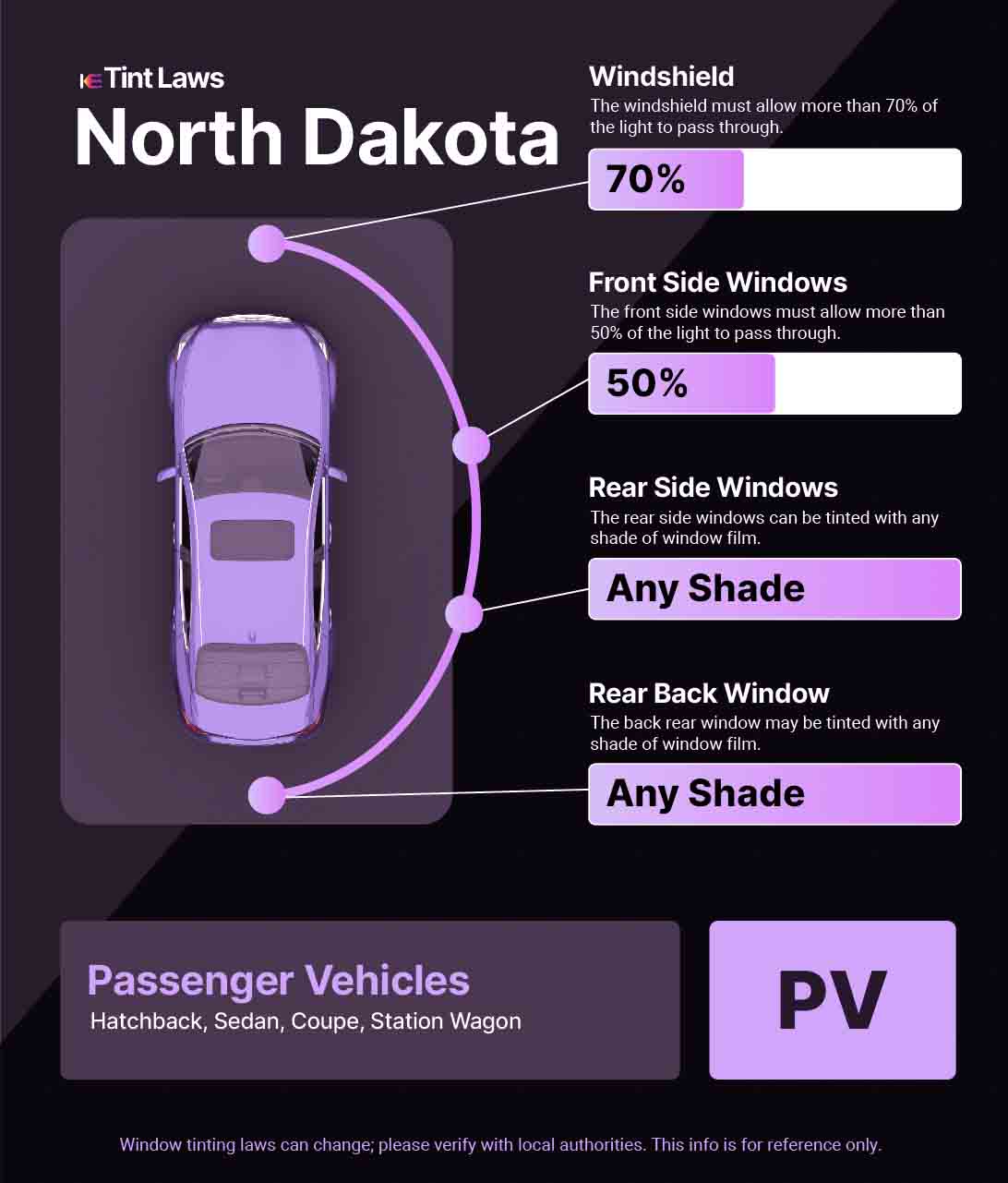
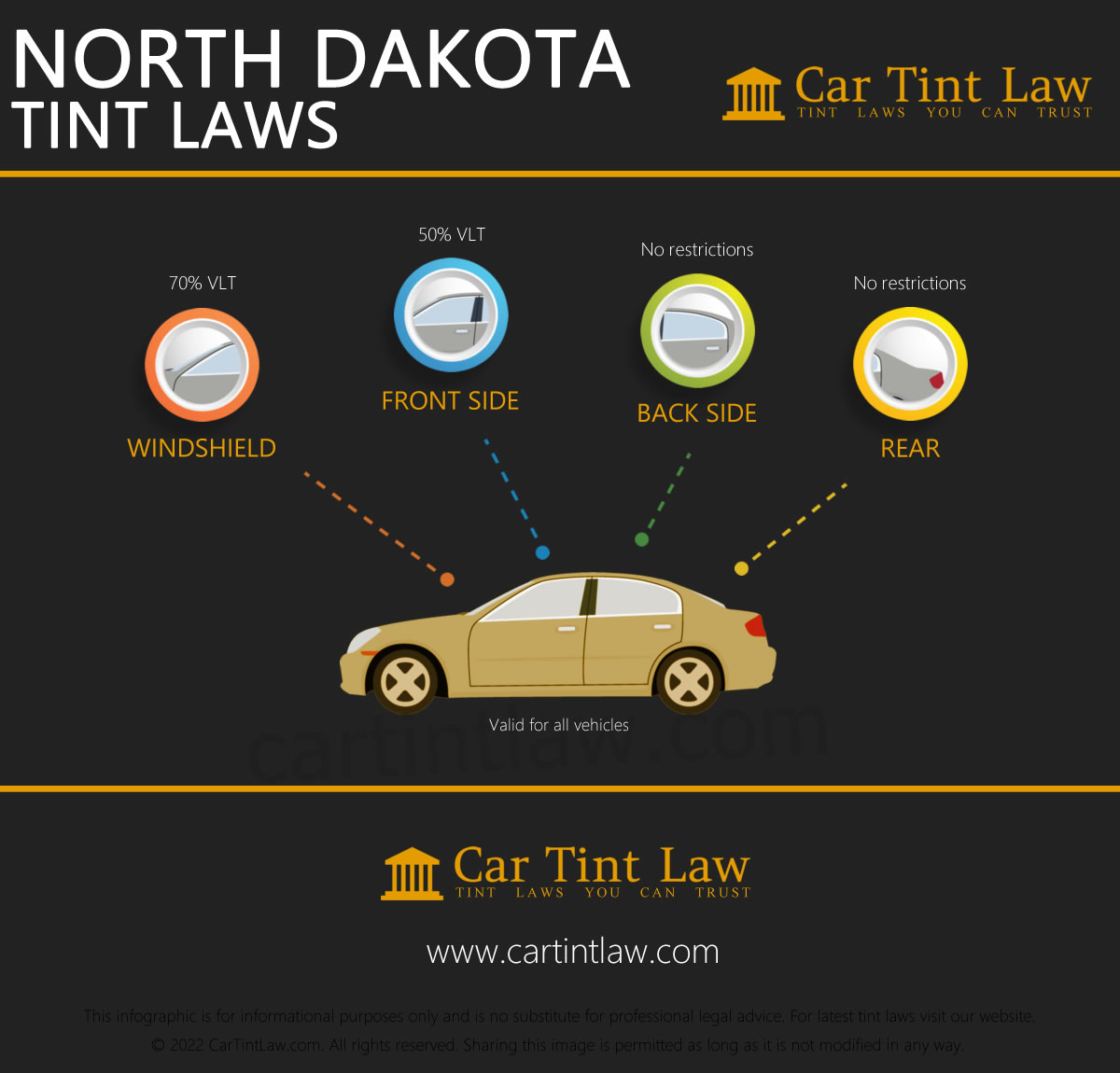
North Dakota law requires front side windows to allow at least 50% of light to pass through. This means the tint cannot block more than 50% of light. The rule helps drivers see clearly and keeps roads safer for everyone. Darker tints on front side windows are not allowed unless for medical reasons with proper documentation.
Rear Window Regulations
The rear windows can have darker tint than the front. North Dakota allows any darkness on rear windows if the vehicle has outside mirrors on both sides. This rule gives more privacy for passengers and cargo. Without the mirrors, tint must meet the same 50% light transmission rule as front side windows.
Windshield Tinting Restrictions
The windshield has the strictest tinting limits. Only the top few inches, called the AS-1 line, can have tint. This tint must not block more than 70% of light. Tinting the entire windshield is illegal. These rules ensure drivers have a clear, safe view of the road ahead.
Light Transmission Requirements
North Dakota has specific rules about how much light your car windows must let through. These rules help keep drivers safe by making sure windows aren’t too dark. Light transmission requirements describe how much visible light can pass through your tinted windows. Understanding these rules helps you avoid fines and keeps your car legal on the road.
Visible Light Transmission Percentages
In North Dakota, the front side windows must allow more than 25% of visible light in. This means your tint can block up to 75% of light. Rear side windows and the back window can be darker. They do not have the same light transmission limits as front windows. This rule helps officers see inside your car during traffic stops. It also keeps drivers’ vision clear while driving.
Factory Tint Considerations
Some vehicles come with factory tint on the windows. This tint is usually lighter and follows state rules. North Dakota law accepts factory tint if it meets the required light transmission percentages. If the factory tint is darker, you may need to check with local laws. Always test the tint’s light transmission to avoid legal trouble. Remember, factory tint is treated differently than added aftermarket tint.
Medical Exemptions
North Dakota allows medical exemptions for window tint laws. These exemptions help drivers who need extra protection from sunlight for health reasons. The state understands some medical conditions require darker tints than normally allowed.
Medical exemptions provide legal permission to use darker window tints. These tints block harmful UV rays and reduce glare. This helps people with specific health issues drive safely and comfortably.
Qualifying Conditions
Certain health conditions qualify for medical tint exemptions. These include lupus, skin cancer, and photosensitivity disorders. People with these illnesses must avoid strong sunlight exposure.
Other qualifying conditions may include eye diseases that cause light sensitivity. Doctors evaluate if darker window tinting is necessary for the patient’s safety and comfort.
Documentation Needed
Drivers must provide medical proof to get an exemption. A doctor’s statement or prescription is required. This document must explain the need for darker tinting clearly.
The medical note should include the diagnosis and recommended tint level. It is important to keep this paperwork in the vehicle at all times. Law enforcement may ask to see it during traffic stops.
Enforcement And Penalties
North Dakota enforces strict rules on window tint to ensure driver safety and clear visibility. Authorities actively monitor compliance through routine traffic stops. Violations can lead to immediate consequences that affect your driving record and wallet. Knowing the enforcement methods and penalties helps drivers avoid trouble and stay legal on the road.
Fix-it Tickets
Police officers issue fix-it tickets for illegal window tints. These tickets require drivers to remove or adjust the tint to meet state standards. After correcting the tint, drivers must show proof to the court or police. This process avoids heavier penalties but demands quick action. Fix-it tickets focus on fixing the problem instead of punishing the driver.
Fines And Legal Consequences
Failing to comply with window tint laws in North Dakota can result in fines. These fines vary but often start around $100. Repeat offenses may lead to higher fines or court appearances. In some cases, police may impound the vehicle until the tint issue is resolved. Legal consequences also include points on your driving record, which affect insurance rates. Staying within the tint limits prevents these costly problems.
Recent Law Changes
North Dakota has updated its window tint laws recently. These changes affect how dark and reflective your car’s windows can be. The new rules aim to balance driver safety with privacy needs. Understanding these updates helps vehicle owners stay legal and avoid fines.
New Tinting Bill Highlights
The new bill allows darker tint on rear windows. This applies if your car has side mirrors on both sides. Front side windows must still allow at least 50% light in. Windshield tinting remains limited to the top few inches. Reflective tint is still not allowed on any window.
Impact On Vehicle Owners
Vehicle owners can now enjoy more privacy in the back seats. Law enforcement can still see inside through front windows. Drivers must check their tint percentage carefully before installation. Non-compliance can lead to fines and fix-it tickets. Fix-it tickets require removing or replacing the tint to meet standards.
Credit: kepler-dealer.com
Color And Material Rules
North Dakota regulates window tint colors and materials strictly. These rules ensure safety and clear visibility for drivers and law enforcement. Knowing what colors and materials are allowed helps avoid fines and legal trouble.
The state permits only specific tint colors. The material must meet safety standards to ensure clear vision. Some finishes that look reflective or mirror-like are banned to prevent glare and distractions.
Allowed Tint Colors
North Dakota allows tints in shades that do not alter the natural color of the glass. Black and gray shades are common and accepted. Bright colors like red, blue, or green are not allowed. The tint must maintain a natural appearance to avoid confusing other drivers.
Tints should not reduce visibility too much. The front side windows must allow more light through than the rear windows. This rule helps officers see inside the vehicle during stops. It also keeps drivers safe by ensuring clear side views.
Prohibited Mirror Finishes
The law bans mirror or reflective finishes on window tints. These mirror-like coatings reflect light strongly and can blind other drivers. They create dangerous glare, especially in sunlight.
Reflective tints also make it hard for police to see inside the vehicle. North Dakota requires tints to be non-reflective to promote safety. Drivers should choose films that do not shine or mirror their surroundings.
Using prohibited mirror finishes can lead to fines and the need to remove the tint. Always select tint materials that follow North Dakota’s non-reflective rules.
Safety And Visibility
Window tinting impacts both safety and visibility on North Dakota roads. The state’s laws balance these two factors to protect drivers and passengers. Tint should reduce glare and heat without blocking too much light. Understanding these rules helps avoid fines and keeps everyone safe.
Night Driving Considerations
Tinted windows can affect vision in low light. In North Dakota, front side windows must allow more light to pass through for clear night vision. Dark tint may reduce glare from headlights but can also make it hard to see pedestrians or road signs. Choosing the right tint level helps maintain good visibility after dark.
Heat And Uv Protection
Window tinting blocks heat and harmful UV rays. This protection keeps the car cooler in summer and protects skin from damage. North Dakota tint laws allow films that provide heat rejection while still letting in enough light. Proper tint improves comfort and safety by reducing glare and sun exposure inside the vehicle.
Compliance Tips
Staying compliant with North Dakota’s window tint laws keeps you safe and avoids fines. Following simple tips ensures your tint meets state rules. Understanding rules helps keep your vehicle legal on the road.
Checking Tint Levels
Use a tint meter to measure the darkness of your window film. North Dakota requires at least 50% light to pass through front side windows. Make sure your tint does not block more light than allowed. Regular checks prevent accidental violations. Some auto shops offer free tint level tests. Always confirm your tint percentage matches state law before driving.
Choosing Legal Tint Films
Select window films that clearly state their visible light transmission (VLT) rating. Films with a VLT of 50% or higher are legal for front windows in North Dakota. Rear windows have fewer restrictions but need side mirrors on both sides. Avoid films that reduce visibility too much at night. Opt for high-quality films that block UV rays without darkening too much. Proper film choice keeps your car safe and compliant.
Credit: www.cartintlaw.com
Frequently Asked Questions
What Is The Darkest Tint In North Dakota?
The darkest legal tint on front side windows in North Dakota allows 30% visible light transmission (VLT). Rear windows have no darkness limit with side mirrors. Medical exemptions may permit darker tints with proper documentation. Always consider factory tint when choosing your film.
Is 35% Or 20% Tint Darker?
A 20% tint is darker than a 35% tint. Lower percentage means less light passes through, creating a darker appearance.
Can You Get Pulled Over For Tint In Nd?
Yes, police in North Dakota can pull you over for illegal window tint. Tints must meet state visibility and reflectivity rules. Non-compliance may result in fines and fix-it tickets. Always ensure your tint follows North Dakota laws to avoid penalties.
How Dark Is 50 Tint?
50 tint lets in about 50% of light, offering moderate darkness. It provides privacy while maintaining clear visibility inside and out. This tint reduces glare and heat without significantly blocking your view, making it suitable for daily driving and complying with many state laws.
Conclusion
Understanding North Dakota’s window tint laws helps keep you safe and legal. The state allows specific tint levels to balance privacy and visibility. Remember to check rules for front, rear, and side windows. Medical exemptions offer more tint options with proper documentation.
Always consider factory tint when adding aftermarket films. Following these laws prevents fines and ensures clear vision while driving. Stay informed to avoid trouble on the road. Keeping your vehicle compliant protects you and others every time you drive.