If you drive in New Hampshire and are thinking about tinting your car windows, you need to know the state’s window tint laws first. Getting your tint wrong can lead to fines, failed inspections, or even trouble with insurance.
But it’s not just about avoiding penalties—understanding these laws helps you enjoy the benefits of window tinting safely and legally. You’ll discover exactly what New Hampshire allows, what’s banned, and what exceptions might apply to you. Keep reading to make sure your car stays compliant while you enjoy the comfort and style that window tinting can bring.
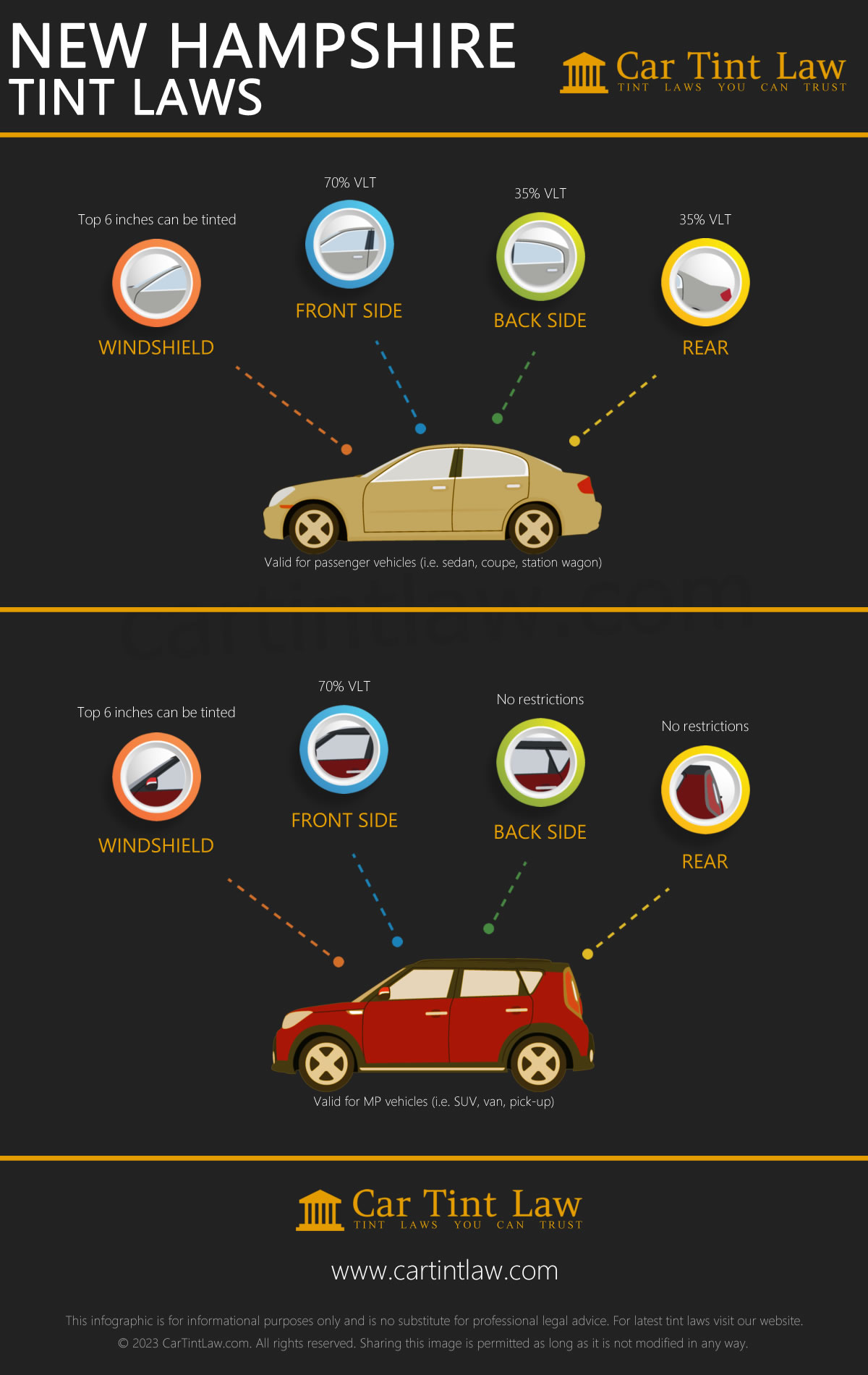
Credit: www.cartintlaw.com
Tint Darkness Limits
Understanding tint darkness limits is important for every vehicle owner in New Hampshire. These limits set how dark your window tint can be. Following these rules helps avoid fines and failed inspections. Below are the key tint darkness limits for different windows.
Front Side Windows
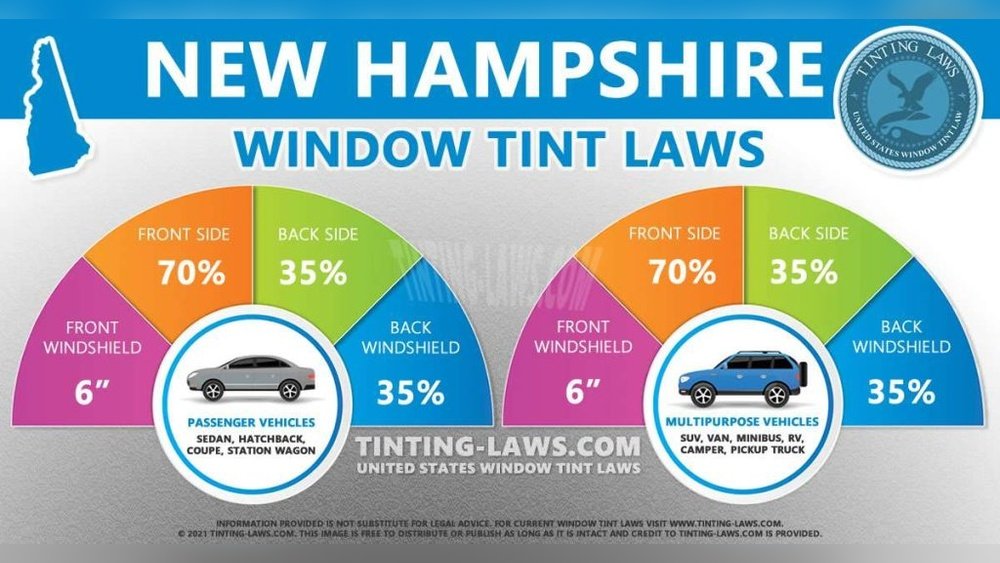
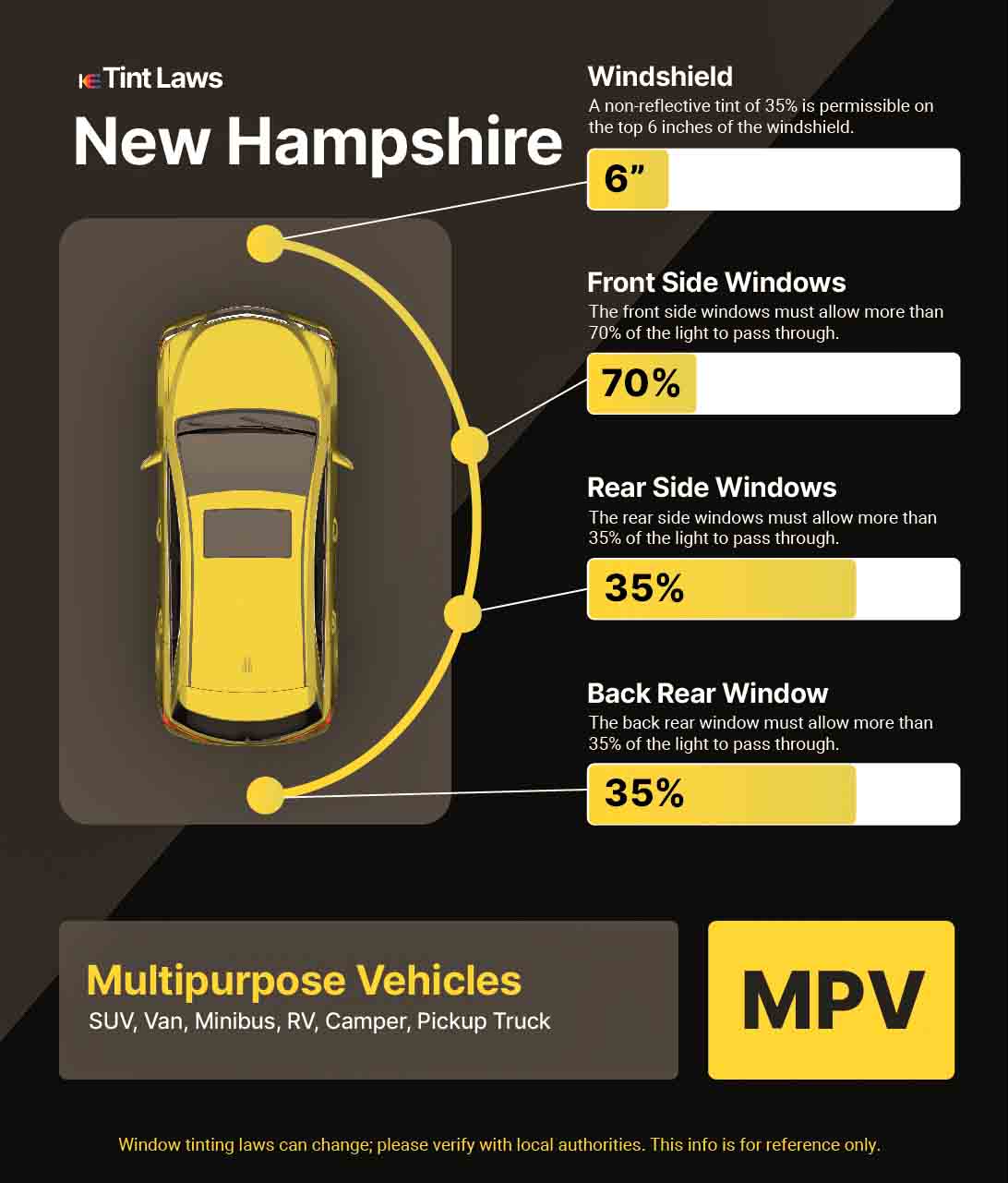
New Hampshire law requires at least 35% visible light transmission on front side windows. This means the tint must allow 35% or more of outside light through. Darker tints that block more light are not legal on these windows. The rule ensures drivers and officers can see inside the vehicle clearly.
Rear Side Windows
Rear side windows have no strict limit on tint darkness. You can use any tint shade you prefer. However, your vehicle must have dual outside mirrors if the rear window is tinted. This helps maintain good visibility for safe driving. Many drivers choose darker tints here for privacy and sun protection.
Windshield Tinting Rules
The windshield may only have tint on the top 6 inches. This tint is called an “eyebrow” tint. It helps reduce sun glare without blocking the driver’s view. Tinting below this limit is not allowed and can cause a ticket. The windshield must remain mostly clear for safety reasons.
Credit: kepler-dealer.com
Prohibited Tint Types
New Hampshire has strict rules about window tints. Certain types of tints are not allowed on vehicles. These rules help keep drivers and passengers safe. They also make sure law enforcement can see inside the car when needed. Understanding which tints are banned can save you from fines and failed inspections.
Metallic And Mirrored Tints
Metallic tints are not allowed on any windows in New Hampshire. These tints reflect light and can cause glare for other drivers. Mirrored tints are also prohibited. They create a shiny surface that can distract or blind others on the road. Both types reduce visibility into the vehicle, which is a safety concern for police and emergency responders.
Reflective Film Restrictions
Reflective films are banned on all vehicle windows. These films act like mirrors and reflect sunlight strongly. This reflection can increase glare and reduce safety for drivers around you. New Hampshire law requires that window tints do not have a mirror-like finish. This rule helps maintain clear visibility for everyone on the road.
Inspection And Enforcement
In New Hampshire, window tint laws are strictly inspected and enforced to ensure driver safety and legal compliance. The state requires all vehicles to pass annual safety checks, where tint levels are examined closely. Law enforcement also plays a key role in identifying illegal tinting on the road. Understanding how inspections and enforcement work helps drivers avoid fines and penalties.
Annual Vehicle Safety Checks
New Hampshire mandates yearly vehicle safety inspections. During these checks, inspectors measure the tint darkness on vehicle windows. Tint that is too dark or reflective will cause the vehicle to fail the inspection. Drivers must correct illegal tinting before passing the inspection. This process keeps all vehicles compliant with state tint laws.
Consequences Of Non-compliance
Failing to meet tint regulations leads to serious consequences. Drivers may receive tickets or fines for illegal window tint. Repeated violations can increase insurance rates or lead to additional penalties. Police officers can also order removal of illegal tint. Staying within legal tint limits helps avoid these costly issues.

Credit: www.nhada.com
Medical Exemptions
New Hampshire allows medical exemptions for window tint laws. These exemptions help people with certain health issues use darker tints. The state recognizes the need for extra protection from sunlight for some drivers and passengers. Understanding the rules about medical exemptions is important for legal tinting.
Qualifying Conditions
Medical exemptions apply to specific health problems. These include conditions sensitive to sunlight, such as lupus or skin cancer. Eye diseases like photophobia or albinism also qualify. The tint helps reduce glare and UV rays. This protection can ease symptoms and prevent damage.
Application Process
To get a medical exemption, you must follow a set process. First, a licensed doctor must confirm your condition. They provide a written note explaining the need for darker tint. Then, submit this note to the New Hampshire Division of Motor Vehicles (DMV). The DMV reviews your request and issues a permit if approved. Keep the permit in your vehicle at all times. This ensures law enforcement knows your tint is legal.
Additional Equipment Requirements
New Hampshire has specific rules about the equipment on vehicles with tinted windows. These rules ensure safety and proper visibility for all drivers. Knowing these requirements helps avoid fines and failed inspections. Two key points are about dual side mirrors and rear window obstruction.
Dual Side Mirrors
In New Hampshire, cars with tinted rear windows must have two side mirrors. One on each side of the vehicle. These mirrors help the driver see behind and to the sides. They make up for the reduced view caused by the tinted rear window. Without these mirrors, the vehicle does not meet safety standards.
Rear Window Obstruction Rules
The rear window may have tint, but it cannot block the driver’s view completely. If the tint or any object obstructs the rear window, the vehicle must have dual side mirrors. These mirrors provide the necessary rear visibility. This rule keeps the driver aware of traffic behind the vehicle. It also reduces the chance of accidents caused by blind spots.
Legal Implications
Understanding the legal implications of window tint laws in New Hampshire is essential for all drivers. These laws regulate how dark or reflective window tint can be. Violating these rules may lead to legal trouble and affect your driving record. It is important to follow the guidelines to avoid penalties and keep your vehicle compliant.
Traffic Violations And Fines
Driving with illegal window tint can result in traffic violations. Police officers may stop you if your tint is too dark or reflective. In New Hampshire, tint that does not meet the state’s standards can cause a ticket. Fines vary depending on the severity of the violation. Repeated offenses may lead to higher penalties or mandatory removal of the tint.
Illegal tint is not usually considered a moving violation. However, you still face fines and possible court appearances. Your vehicle could also fail the annual safety inspection. This failure can prevent your vehicle registration from being renewed until you fix the tint issue.
Impact On Insurance
Illegal window tint can affect your car insurance rates. Insurance companies may view violations as risky behavior. This perception can lead to higher premiums. In some cases, insurers may even refuse coverage until the tint is corrected. Maintaining legal window tint helps keep your insurance costs stable.
Insurance claims could also be complicated if illegal tint is involved in an accident. Some insurers may reduce or deny claims if the tint contributed to poor visibility. Staying within the law protects you financially and legally.
Recent Law Updates
New Hampshire has recently updated its window tint laws to improve road safety and clarify regulations. These changes affect aftermarket tint applications and include new rules for drivers and installers. Staying informed helps avoid fines and failed inspections.
The updates reflect ongoing efforts to balance driver comfort with law enforcement needs. Understanding the latest rules ensures compliance and safer driving conditions across the state.
Changes To Aftermarket Tint Regulations
The state now requires stricter standards for aftermarket window tinting. Reflective and mirrored tints are banned on all vehicle windows. The allowed tint darkness must meet specific light transmission percentages. Rear windows may have tint but need dual side mirrors for visibility. Annual safety inspections will check tint compliance closely. Non-compliance will result in a failed inspection and possible fines.
Advocacy And Legislative Efforts
Local groups advocate for balanced tint laws that protect drivers and law enforcement. The New Hampshire Auto Dealers Association supports clearer rules to help businesses and consumers. Lawmakers review proposals to update and improve tint regulations regularly. Public input plays a key role in shaping these laws. Efforts continue to ensure safety without overly restricting window tint options.
Tips For Compliance
Staying within New Hampshire’s window tint laws protects you from fines and inspection failures. Follow simple tips to keep your vehicle compliant. Understanding legal limits and working with trusted professionals helps avoid trouble on the road.
Proper tinting keeps your car safe and legal. It also improves comfort without risking penalties. Use these guidelines to ensure your window tint meets state rules.
Choosing Legal Tint Shades
New Hampshire restricts how dark your window tint can be. Front side windows must allow more light than rear windows. Avoid tints that block too much visibility. Stick to shades that meet the state’s minimum light transmission levels. Reflective or mirrored tints are not permitted on any windows. Check the exact percentage limits before buying tint film. This prevents costly fines and inspection failures.
Working With Certified Installers
Choose a window tint installer who knows New Hampshire laws well. Certified professionals use the right materials and techniques. They ensure the tint is applied evenly and legally. Experienced installers help you select shades that comply with state rules. They also provide proper documentation for inspections. Trusting experts reduces chances of illegal tint or damage to your car.
Frequently Asked Questions
In What State Is 20% Tint Legal?
20% tint is legal in New Mexico for front side windows. Most states require higher visible light transmission levels.
Is 35 Or 20 Tint Darker?
A 20% tint is darker than a 35% tint. Lower percentages allow less light, making the tint darker.
Is Window Tint A Moving Violation In Nh?
Window tint violations in New Hampshire are not classified as moving violations. Non-compliant tint may fail inspections but won’t add points to your driving record.
What Are The Tint Laws In New Hampshire 2026?
New Hampshire allows up to 70% visible light transmission on front side windows. Windshields must have a non-reflective tint above the AS-1 line. No metallic or mirrored tints are permitted. Rear windows have no restrictions but dual side mirrors are required if rear window is tinted.
Conclusion
Understanding New Hampshire’s window tint laws helps you stay safe and legal. Tint rules protect drivers and passengers while allowing some customization. Always check the allowed tint percentages before applying film. Remember, inspections will catch illegal tint and may cause fines.
Keeping your tint within limits avoids traffic stops and insurance issues. Stay informed and follow local regulations to enjoy your vehicle worry-free. Simple steps keep your ride compliant and comfortable on New Hampshire roads.