Are you thinking about tinting your car windows in Mississippi? Before you get started, it’s important to know the state’s window tint laws.
These rules affect how dark your tint can be and which windows you can tint. If you don’t follow them, you might face fines or have to remove your tint. But don’t worry—this guide will break down everything you need to know in simple terms.
By the end, you’ll feel confident about tinting your vehicle legally and safely. Keep reading to learn the key regulations, exceptions, and tips to protect both your privacy and your driving experience.
Credit: www.youtube.com
Tint Limits For Passenger Cars
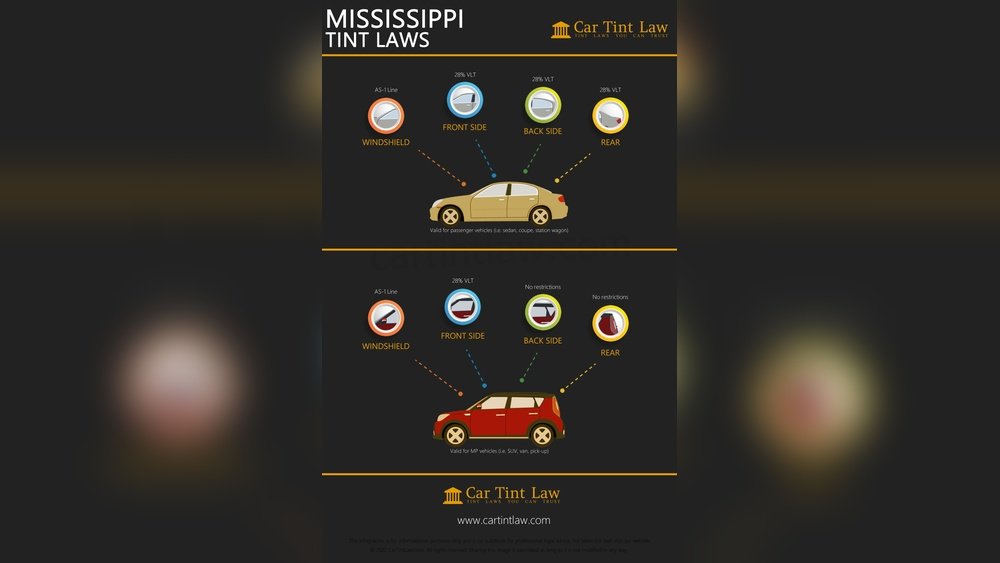
Mississippi has specific rules about how dark window tint can be on passenger cars. These rules help keep drivers safe while allowing some privacy. Understanding these limits can prevent fines and keep your vehicle legal.
Front Side Windows
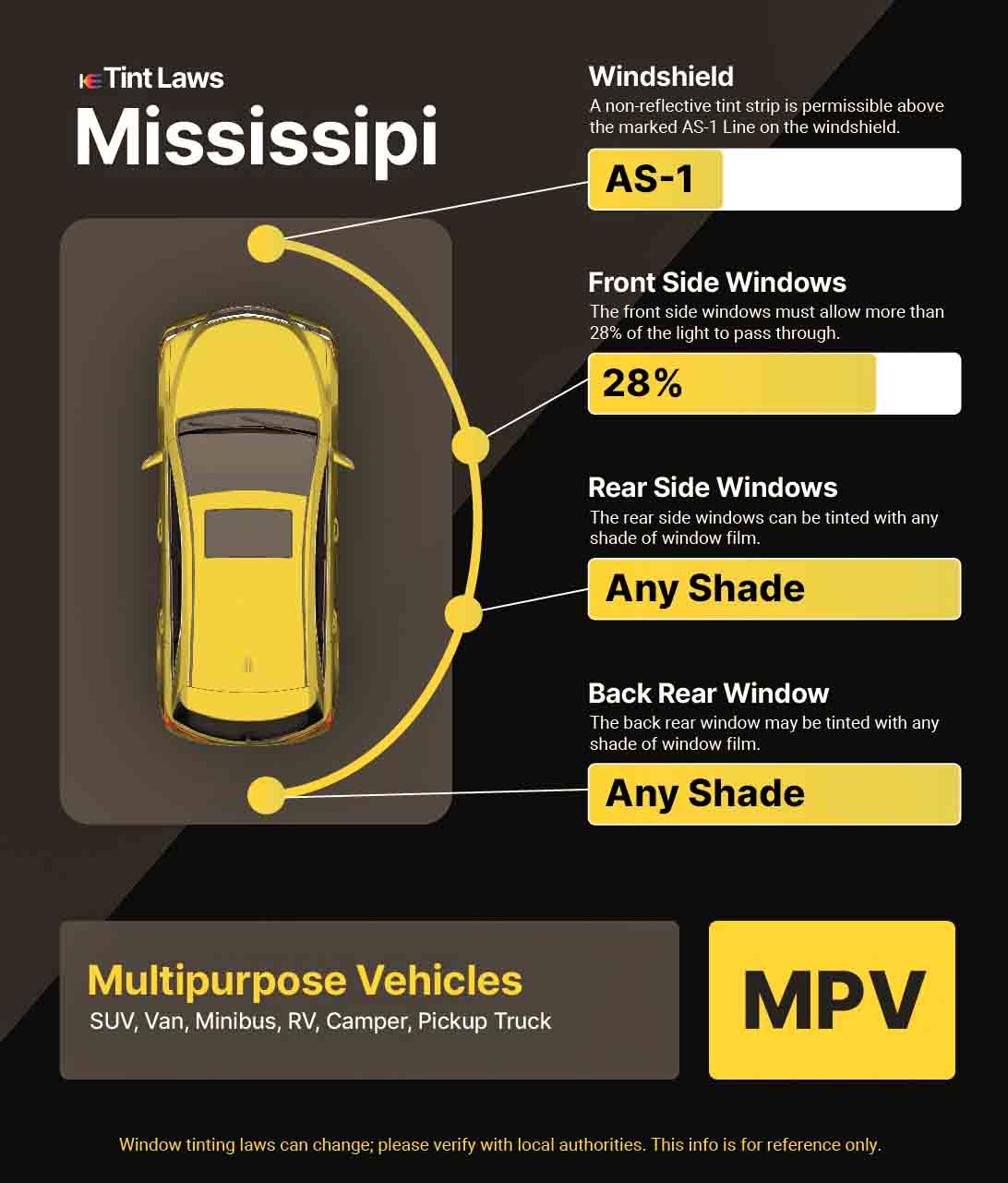
Front side windows must allow more light than other windows. Mississippi law requires at least 25% of outside light to pass through. This means tint on these windows cannot be too dark. The rule helps police see inside your car for safety reasons.
Rear Side Windows
Rear side windows have fewer restrictions. You can use darker tint here than on front windows. Mississippi does not set a specific light transmission percentage for these windows. Still, the tint must not block the driver’s view behind the vehicle.
Windshield Tinting Rules
Windshield tinting is very limited in Mississippi. Only the top few inches of the windshield may have tint. This area is called the “AS-1 line.” The tint here must not block the driver’s clear view of the road. No dark tint is allowed below this line on the windshield.
Credit: kepler-dealer.com
Tint Limits For Trucks, Suvs, And Vans
Mississippi sets specific tint limits for trucks, SUVs, and vans to ensure driver safety and law compliance. These limits differ from those for passenger cars. Understanding these rules helps avoid fines and keeps visibility clear. Each window type has unique tint restrictions to balance privacy and safety.
Front Side Windows
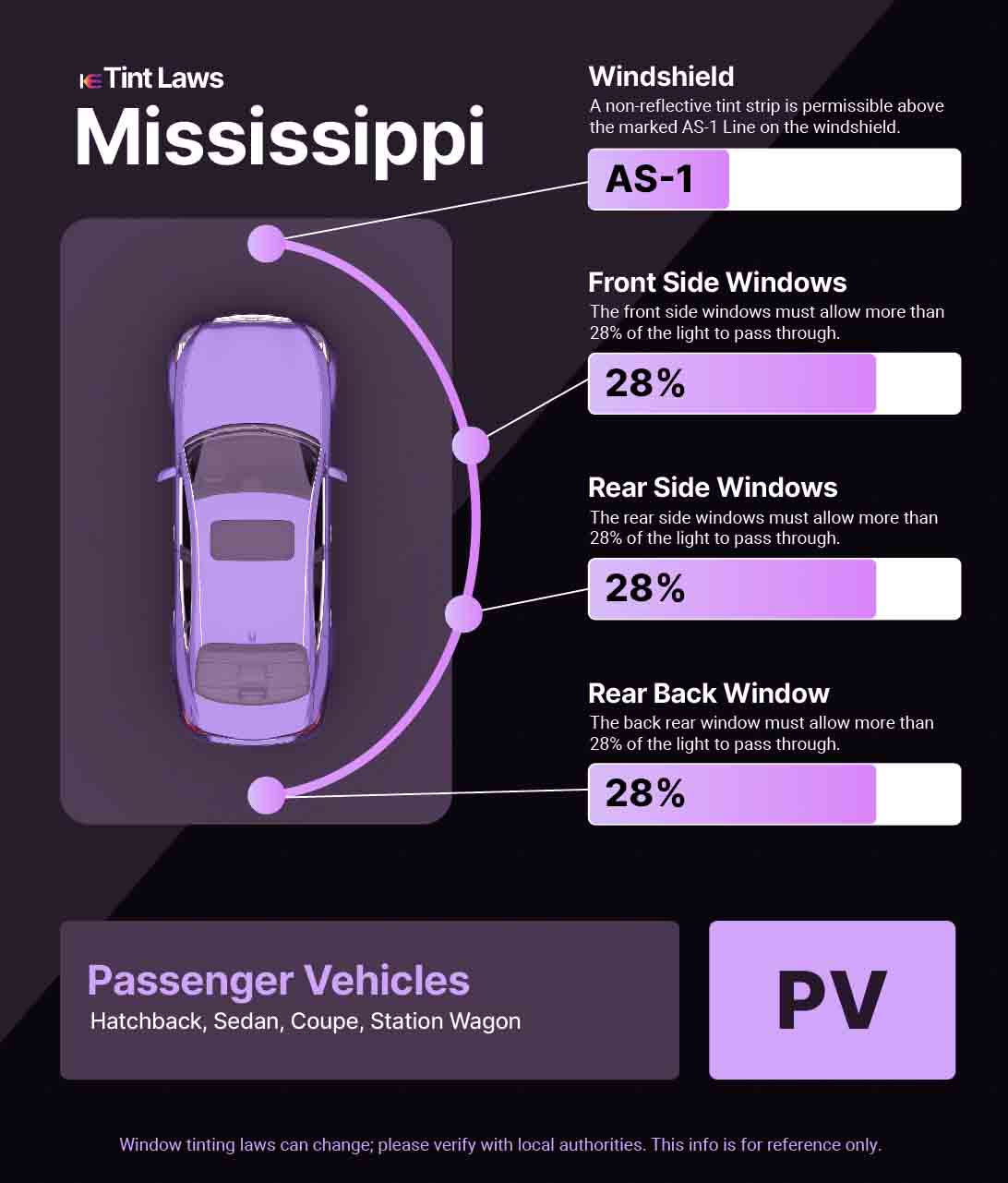
Trucks, SUVs, and vans must allow at least 25% of outside light through the front side windows. This means the tint can block up to 75% of the light. The law aims to keep these windows clear enough for police and other drivers to see inside if needed.
Rear Side Windows
The rear side windows on these vehicles can have darker tint. Mississippi allows up to 25% light transmittance here, meaning 75% tint darkness is legal. This rule gives more privacy to passengers and cargo in the back.
Windshield Tinting Rules
The windshield tint rule is stricter. Only the top 5 inches of the windshield can have any tint. The tint in this area must not reflect or block too much light. This rule keeps driver vision clear and safe, especially in low light conditions.
Visible Light Transmission (vlt) Percentages
Understanding Visible Light Transmission (VLT) percentages is key to following window tint laws in Mississippi. VLT shows how much light passes through your car windows. It affects visibility, safety, and legal compliance. Knowing VLT limits helps avoid fines and keeps you safe on the road.
Definition Of Vlt
Visible Light Transmission (VLT) is the percentage of light allowed through window tint. A lower VLT means darker tint and less light. For example, 20% VLT means only 20% of light passes through. Higher VLT means lighter tint and more light. VLT affects how well you can see inside and outside your vehicle.
Legal Vlt Levels In Mississippi
Mississippi sets specific VLT limits for car windows. For passenger cars, the front side windows must allow more than 28% of light. Rear side windows and back windows can have darker tint with no specific VLT limit. For trucks, SUVs, and vans, front side windows must also allow over 28% light. Rear windows can be darker. Windshields can only have tint on the top 5 inches.
Medical waivers allow darker tint for health reasons. Drivers must carry a certificate from a doctor. This helps people with light sensitivity or other conditions.
Credit: kepler-dealer.com
Medical Waivers And Exceptions
Mississippi law allows medical waivers for darker window tints. These waivers help people with certain health issues needing extra protection from sunlight. The state requires specific steps to get approval and follow rules for using these tints legally. Understanding the details can save you trouble and keep you compliant.
Qualifying Conditions
Medical waivers apply to those with health problems sensitive to light. Common conditions include lupus, skin cancer, and other diseases worsened by UV rays. A doctor must confirm the condition and recommend darker tinting as necessary. Only approved medical reasons qualify for these exceptions under Mississippi law.
Application Process
Start by obtaining a written statement from your physician. The statement must describe your condition and need for darker tint. Submit this along with a medical waiver form to the Mississippi Department of Public Safety. Approval can take several weeks, so apply early. Keep copies of all documents in your vehicle.
Display Requirements
Once approved, you must display the medical waiver certificate inside your car. It should be visible to law enforcement during inspections. The certificate proves your right to have darker window tint. Failure to show it may lead to fines or tint removal orders. Always keep the waiver in the vehicle while driving.
Rear Windshield And Mirror Requirements
The rear windshield and mirrors have specific rules in Mississippi for window tinting. These rules help keep drivers safe by ensuring clear visibility. The state sets limits on how dark the tint can be on the rear glass. It also requires certain mirrors for better view while driving.
Tint Darkness Rules
Mississippi allows tint on the rear windshield but with limits. The tint must let in at least 20% of light. This means the glass can be quite dark but not completely blacked out. The rule helps drivers see behind the car clearly. It also aids other drivers in noticing your vehicle at night.
Dual Side Mirror Mandate
Cars with tinted rear windshields must have two side mirrors. One mirror on each side of the vehicle is required. These mirrors help cover blind spots caused by the darker rear glass. They improve safety by giving drivers a wider view of the road behind. This rule ensures you can see vehicles approaching from either side.
Nighttime Visibility And Safety
Nighttime visibility plays a crucial role in safe driving, especially for vehicles with tinted windows. In Mississippi, window tint laws balance privacy and safety by setting limits on how dark tints can be. Tinted windows can reduce glare from headlights but may also affect how well drivers see at night. Understanding how tint affects visibility helps drivers stay safe on the road after dark.
Driving In Well-lit Areas
Well-lit streets and highways make it easier to see despite window tint. Streetlights and headlights provide enough light to spot obstacles and road signs. Darker tints usually do not create major visibility problems in these conditions. Drivers can maintain good awareness of their surroundings and drive confidently at night on illuminated roads.
Challenges In Dark Areas
Driving in areas with little or no lighting can be tricky with dark window tints. Shadows and objects become harder to see, increasing the risk of accidents. Tinted windows may reduce the amount of light entering the car, limiting the driver’s field of vision. Extra caution is necessary in rural or unlit neighborhoods where visibility is already low.
Tips For Safe Night Driving
Keep your windshield and windows clean to maximize visibility. Use high-quality tint films that allow more light transmission. Avoid very dark tints on front side windows to comply with Mississippi laws and enhance safety. Lower your windows briefly when parking or reversing in dark areas. Always adjust your driving speed to match your visibility conditions.
Enforcement And Compliance
Enforcement and compliance with window tint laws in Mississippi ensure drivers follow state rules. The state uses clear programs and regulations to manage window tinting. These efforts protect both drivers and law enforcement officers on the road. Understanding how Mississippi enforces these laws helps drivers stay legal and avoid fines.
Tint Compliance Program
Mississippi has a Tint Compliance Program to monitor window tint levels. Law enforcement officers check vehicle windows during traffic stops or inspections. The program helps identify vehicles with illegal tint darkness or reflectivity. This keeps roads safe by ensuring clear visibility for drivers and officers.
The program also educates drivers about legal tint limits. It encourages them to remove or adjust illegal tint films. Regular checks help maintain consistent enforcement across the state.
Licensing And Decals
Mississippi requires specific licensing for tint installers. Licensed shops follow state guidelines for legal tint application. This system helps prevent illegal tinting from untrained or unlicensed providers.
Vehicles with medically approved dark tint receive special decals. These decals show law enforcement that the tint is legal under medical waiver rules. Drivers must display the decal clearly on their vehicle to avoid penalties.
Penalties For Violations
Mississippi enforces strict penalties for window tint violations. Drivers caught with illegal tint may face fines and citations. Repeat offenders risk higher fines or court appearances.
Police may also order removal of illegal tint films. Failure to comply can lead to further legal actions. These penalties motivate drivers to follow tint laws and avoid trouble.
Choosing Quality Window Tint
Choosing quality window tint is important for drivers in Mississippi. The right tint protects your vehicle and keeps you safe. Not all tints are the same. Some are made better and last longer. Poor quality tint can cause problems on the road and with the law. Knowing the difference helps you make a smart choice for your car.
Benefits Of High-quality Tint
High-quality window tint blocks harmful UV rays effectively. It keeps your car cooler in hot Mississippi weather. This helps protect your skin and the car’s interior. Good tint also reduces glare, making driving safer. It lasts longer without bubbling or peeling. Quality tint stays clear and looks great for years. It meets state laws, so you avoid fines and trouble.
Risks Of Cheap Tint Films
Cheap tint films fade and bubble quickly. They can peel off and ruin your windows. Low-quality tint may block too much light and break Mississippi’s rules. This can lead to tickets or having to remove the tint. Poor tint often reduces visibility at night. This increases the risk of accidents. It also offers less protection from UV rays and heat.
Tint Laws For Commercial And Out-of-state Vehicles
Understanding window tint laws is crucial for commercial and out-of-state vehicles in Mississippi. These regulations differ from those for passenger cars. They ensure safety while allowing some flexibility for commercial needs. Compliance helps avoid fines and vehicle stops.
Mississippi sets specific rules for semi-trucks and outlines requirements for vehicles coming from other states. Knowing these rules can help drivers stay legal and safe on Mississippi roads.
Rules For Semi-trucks
Semi-trucks have unique tinting rules in Mississippi. The front windshield must allow at least 70% of light to pass through. Side windows on the driver’s side must allow at least 35% light transmission. Other windows can have darker tints.
Reflective or mirrored tints are not allowed on any truck windows. These restrictions help ensure clear visibility for truck drivers and other road users. Commercial vehicles must meet these standards to avoid penalties.
Traveling With Tinted Vehicles In Mississippi
Out-of-state vehicles with window tint must meet Mississippi’s tint laws while driving in the state. If the tint is darker than allowed, drivers may face fines. Law enforcement can require drivers to remove or cover illegal tint.
Mississippi honors some medical exemptions from other states but requires proper documentation. Drivers should carry proof of compliance or exemption to avoid issues during stops. It’s best to check local laws before traveling with tinted windows.
Frequently Asked Questions
What Is The Darkest Tint Legal In Mississippi?
Mississippi allows 30% VLT (Visible Light Transmission) tint on front side windows for passenger cars. Rear windows can have any darkness. Windshield tint is limited to the top 6 inches only. Medical exemptions may permit darker tints with proper certification.
In What State Is 20% Tint Legal?
New Mexico allows 20% tint on front side windows legally. Most other states require higher VLT percentages. Always check local laws.
Is 35 Or 20 Tint Darker?
A 20% tint is darker than a 35% tint. Lower percentages mean less light passes through, resulting in a darker shade.
How Dark Is 15% Tint?
A 15% tint blocks 85% of visible light, making windows very dark and providing strong privacy. Night driving can be challenging.
Conclusion
Mississippi’s window tint laws set clear limits on darkness and placement. Following these rules helps avoid fines and ensures safety. Remember, front windows have stricter tint limits than rear windows. Medical waivers allow darker tints with proper documentation. Always check your tint’s Visible Light Transmission (VLT) percentage before installation.
Staying informed protects you on the road and keeps your vehicle compliant. Keep these laws in mind when choosing window tinting in Mississippi.