Are you thinking about tinting your car windows in Kentucky? Before you get those shades installed, it’s important to understand the state’s window tint laws.
Knowing the rules can save you from unexpected fines and legal trouble. Plus, it helps ensure your safety and the safety of others on the road. You’ll discover exactly what Kentucky allows, what’s banned, and how medical exemptions work. Keep reading to make sure your car’s window tint is both stylish and legal in the Bluegrass State.
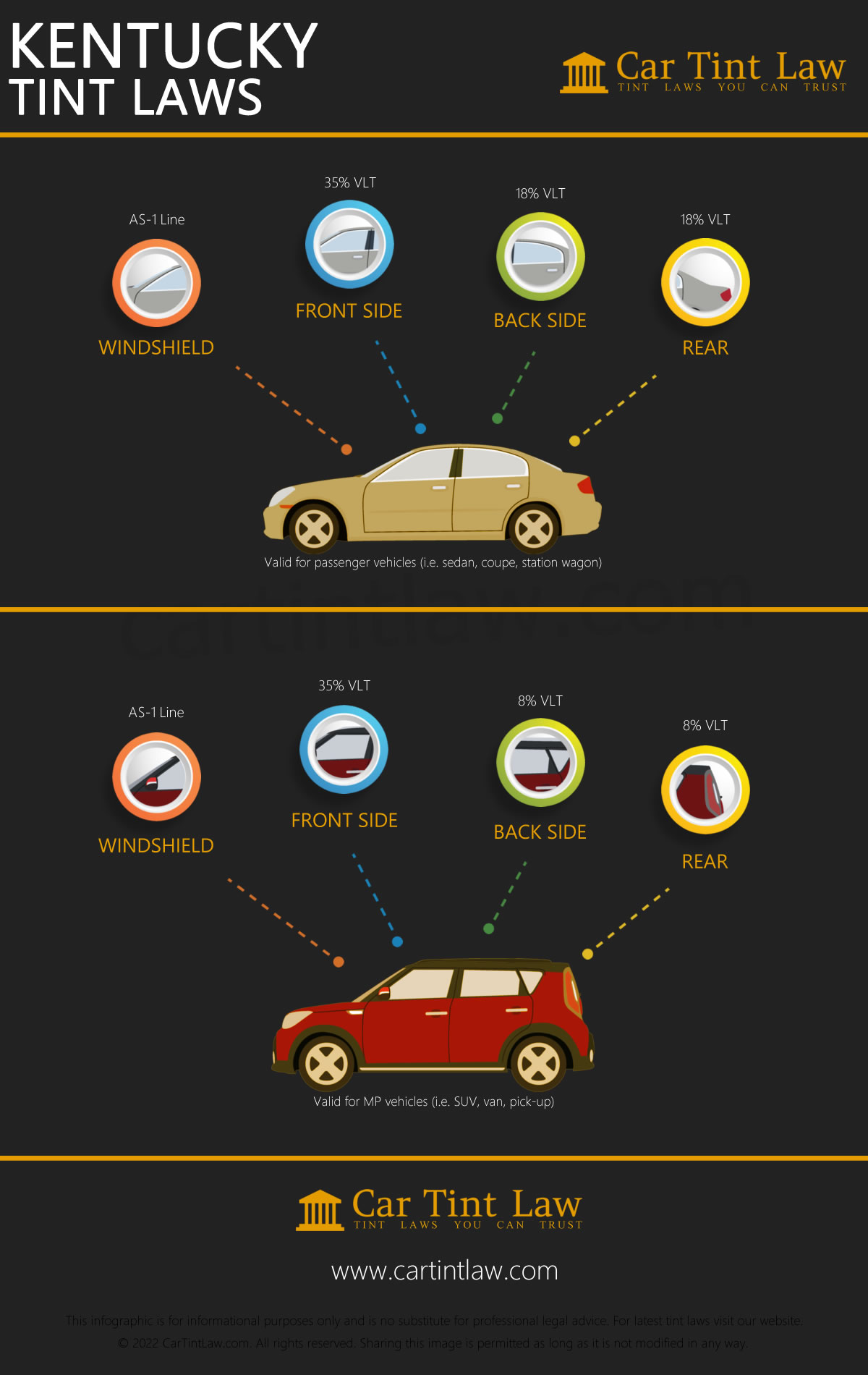
Credit: www.cartintlaw.com
Kentucky Tint Limits
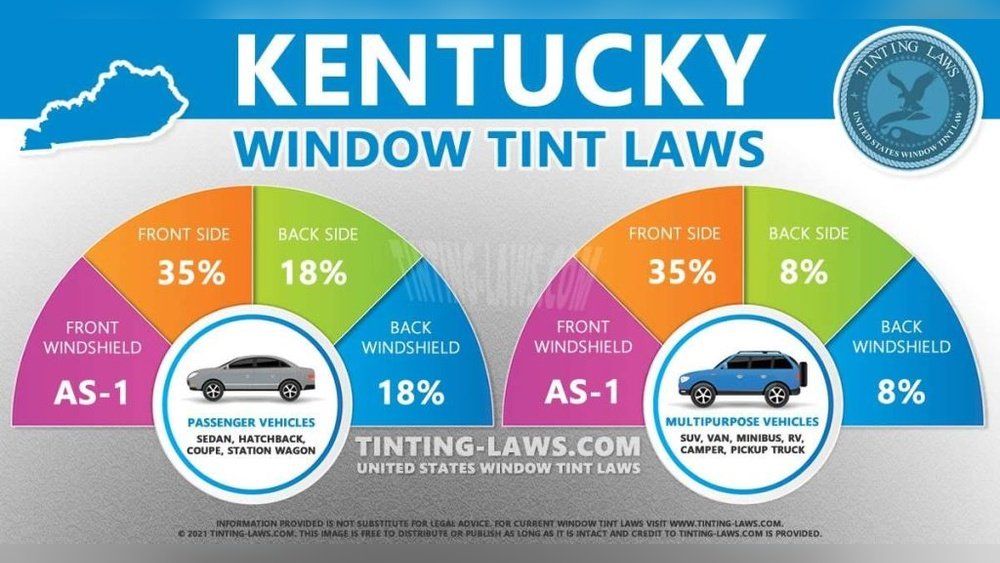
Kentucky has clear rules about how dark window tints can be on vehicles. These rules protect drivers and law enforcement. They help keep roads safe by ensuring good visibility. Each window on a car has its own tint limit.
Understanding these limits can help you avoid fines and keep your vehicle legal. Below are the specific tint limits for different windows on cars in Kentucky.
Front Side Windows
The front side windows must allow more light to pass through. Kentucky requires at least 23% visible light transmission (VLT) for these windows. This means the tint cannot block more than 77% of light. This rule helps drivers see pedestrians and other vehicles clearly.
Rear Side Windows
The rear side windows have a different standard. They can be tinted darker than the front side windows. Kentucky allows any darkness on these windows. This gives drivers more privacy and helps reduce glare from behind.
Rear Window
The rear window tinting follows the same rule as the rear side windows. There is no limit to how dark this tint can be. Drivers often use this to reduce heat and protect the car’s interior. However, the vehicle must have side mirrors on both sides to ensure safety.
Windshield Tinting
Windshield tinting is very limited in Kentucky. Tinting can only be applied to the top 5 inches of the windshield. This is called the “AS-1 line” or the top strip. The rest of the windshield must allow at least 70% of light to pass through. This ensures clear visibility for safe driving.
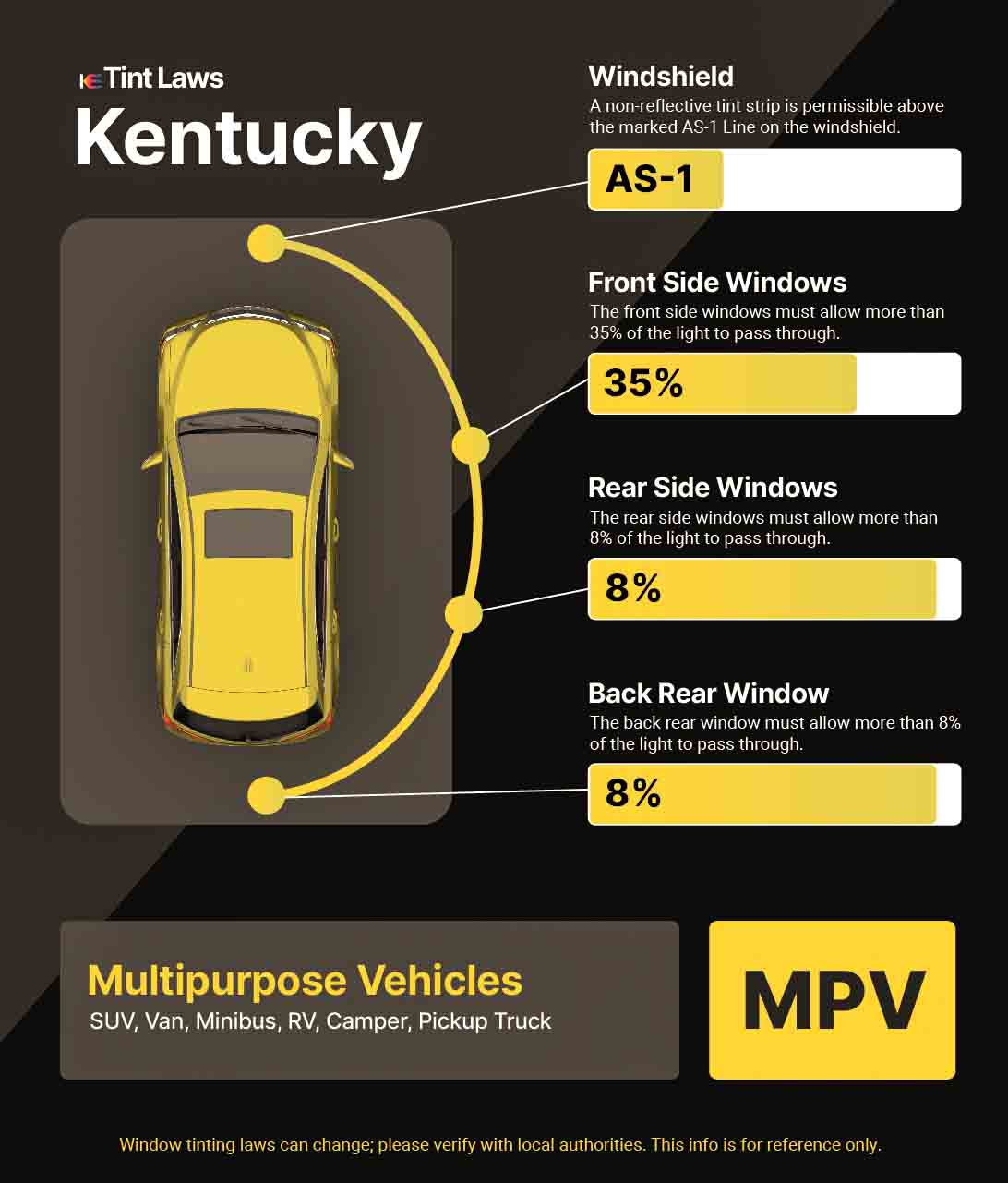
Credit: kepler-dealer.com
Visible Light Transmission Rules
Kentucky enforces specific rules on Visible Light Transmission (VLT) for vehicle window tints. These rules control how much light must pass through car windows. They help maintain safe driving by ensuring windows are not too dark.
Understanding these rules is key to following the law and avoiding fines. The regulations set limits on the VLT percentage for different windows on a vehicle. This section explains what VLT means and how it is measured.
Vlt Percentage Explained
Visible Light Transmission (VLT) shows the amount of light allowed through tinted windows. It is shown as a percentage. A higher percentage means more light passes through the glass.
Kentucky law requires certain minimum VLT levels on car windows. For example, front side windows must allow at least 23% of light through. Rear windows can have darker tinting but must still meet specific standards.
These limits ensure drivers can see clearly and others can see inside the vehicle if needed. Darker tints may block too much light and reduce visibility, which can be unsafe.
Measurement Methods
VLT is measured using a special device called a tint meter. It shines light through the window and calculates how much passes through. This test is quick and accurate.
Law enforcement officers use tint meters during traffic stops to check compliance. The measurement is taken at the darkest part of the tint film on the window.
Only factory-installed window tint or film that meets the VLT rules is legal. Homemade or excessive tint can lead to citations and fines in Kentucky.
Color And Reflectivity Restrictions
Kentucky has clear rules on the color and reflectivity of window tints. These rules keep drivers safe by ensuring good visibility. They also help law enforcement identify vehicles easily. Understanding these restrictions can prevent fines and legal problems.
Prohibited Tint Colors
Kentucky bans certain tint colors on car windows. Red and yellow tints are not allowed. These colors can confuse other drivers and police officers. They may look like emergency vehicle lights. Keeping to allowed colors makes the roads safer for everyone.
Reflective Tint Limits
The law also limits how reflective window tints can be. Reflective tints can cause glare for other drivers. Kentucky restricts the shine or mirror-like finish on tints. This rule applies to all car windows except the windshield. Reflective tints must not reflect more than 25% of light. This keeps visibility clear and reduces distractions on the road.
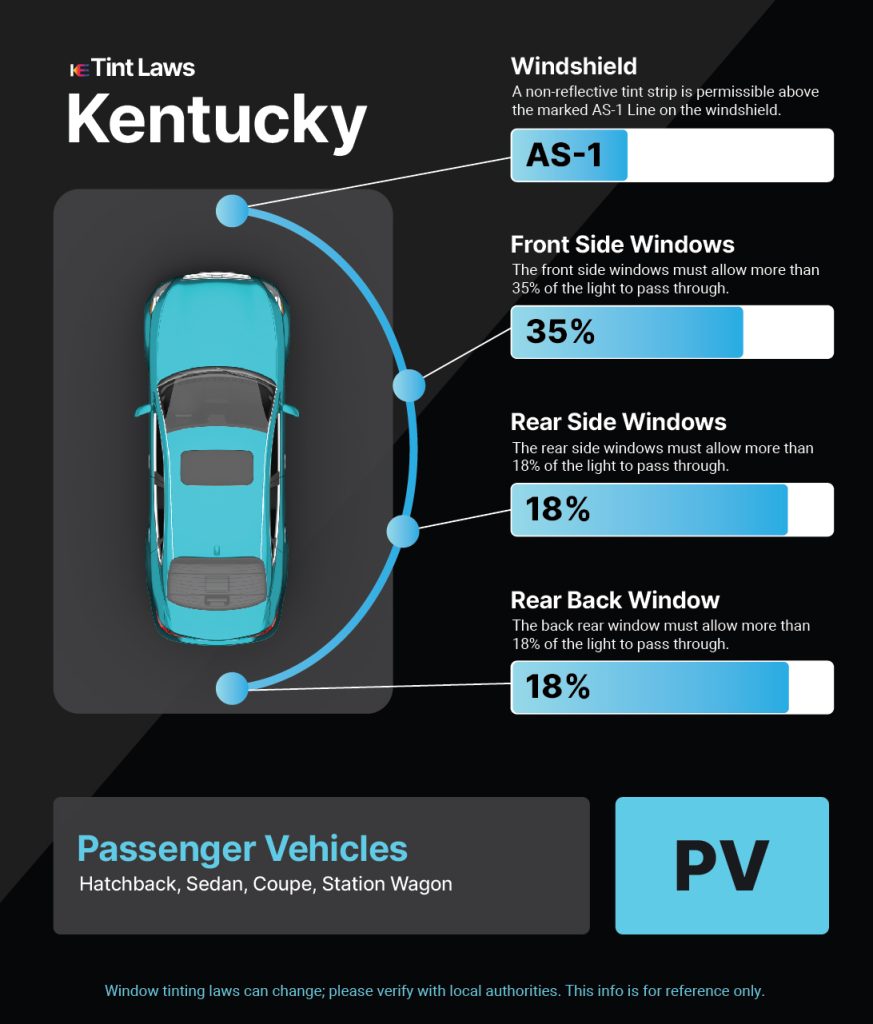
Credit: cricksshadeshop.com
Medical Exemptions
Kentucky allows medical exemptions for window tint laws. This helps people with special health needs use darker tints. The state understands some conditions require extra protection from sunlight. Medical exemptions provide legal permission for these cases.
Eligibility Criteria
To qualify, a person must have a medical condition. The condition should require protection from UV rays or bright light. Common examples include lupus, skin cancer, or eye disorders. The tint must help reduce symptoms or prevent harm. Only window tinting darker than legal limits is exempted.
Required Documentation
A letter from a licensed doctor is necessary. The letter must state the medical condition clearly. It should explain why darker tint is needed. The doctor’s contact information and signature are required. This letter acts as proof during inspections or stops.
Application Process
First, get a medical letter from your doctor. Then, submit the letter to the Kentucky Transportation Cabinet or local motor vehicle office. The office reviews the request for approval. Once approved, you receive a medical exemption certificate. Keep this certificate in the vehicle at all times.
Legal Identification Requirements
In Kentucky, legal identification requirements for window tinting ensure drivers comply with state laws. These rules help law enforcement verify that your window tint meets Kentucky’s standards. Proper identification is key to avoid fines or penalties related to tint violations.
Kentucky requires a special sticker on vehicles with tinted windows. This sticker proves that the tint is legal and approved by state authorities. Without this sticker, your vehicle may face inspection issues or fines.
Sticker Placement
The tint identification sticker must be placed on the driver’s side door jamb. This location makes it easy for officers to check the tint legality without disturbing the driver. The sticker shows the percentage of visible light transmission allowed by law. Keeping the sticker clean and visible is important to avoid penalties.
Inspection Procedures
During vehicle inspections, officers look for the tint identification sticker. They may also use a light meter to measure how much light passes through the windows. If the tint is darker than allowed or the sticker is missing, you could receive a fine. Regularly checking your tint and sticker helps keep your vehicle compliant with Kentucky law.
Penalties For Violations
Violating window tint laws in Kentucky comes with clear penalties. These penalties aim to ensure safety on the roads. They discourage drivers from using illegal tints that reduce visibility. Kentucky enforces these rules strictly through fines, misdemeanors, and law enforcement actions. Understanding the penalties helps drivers avoid costly consequences and legal trouble.
Fines And Court Costs
Drivers caught with illegal window tint face fines. The typical fine is around $143 for improper tint. Court costs may add to the total amount. These fees can increase if the case goes to court. Paying fines promptly can prevent further legal issues.
Misdemeanor Charges
Illegal window tint violations in Kentucky are Class B misdemeanors. This means the offense is more serious than a simple traffic ticket. Misdemeanor charges can lead to higher fines. Repeat offenders risk harsher penalties or even jail time. It is important to comply with tint laws to avoid these charges.
Enforcement Practices
Law enforcement officers regularly check window tint during traffic stops. Officers use light meters to measure tint darkness. If tint does not meet legal standards, drivers receive citations. Police may require drivers to remove illegal tint within a set time. Failure to comply can lead to additional penalties or vehicle inspection failures.
Recent Legislative Changes
Kentucky has seen important changes in window tint laws recently. These updates affect how much tint drivers can have on their car windows. The goal is to improve safety and make rules clearer for everyone on the road. Understanding these changes helps drivers stay legal and avoid fines.
Proposed Bills
Several bills have been introduced to adjust Kentucky’s tint laws. One bill aims to allow tint on the windshield’s top strip. Another seeks to increase the allowed tint darkness on side windows. Lawmakers want to balance driver safety with privacy and heat reduction. These bills are under review and could become law soon.
Impact On Windshield Tinting
Current laws limit tinting on the windshield to a small strip at the top. New proposals may let drivers apply tint to more of the windshield. This change would help reduce glare from the sun. It could also improve comfort inside the car. Drivers should watch for updates to avoid breaking the law.
Comparing Kentucky To Neighboring States
Comparing Kentucky’s window tint laws with those of its neighboring states highlights key differences. Each state sets its own rules on how dark or reflective window tinting can be. These differences affect drivers who cross state lines regularly. Understanding these variations helps avoid fines and legal trouble.
Tint Limits Differences
Kentucky requires 23% Visible Light Transmission (VLT) on front side windows. Rear side windows and the back windshield have no VLT limit. Indiana demands 35% VLT on front side windows, making it less strict. Ohio allows 50% VLT on front side windows, offering more light than Kentucky. Tennessee’s front side window tint must allow at least 32% light. Each state sets unique limits, so tint darkness varies widely.
Cross-state Compliance
Drivers must follow the tint laws of the state they are in. A tint legal in Kentucky might be illegal in Ohio or Indiana. Police in neighboring states can issue tickets for non-compliant tints. Medical exemptions for darker tint are accepted in Kentucky but may not be recognized elsewhere. Checking tint laws before driving across state lines avoids fines and hassles. Some drivers remove or change tint to comply with local rules during travel.
Tips For Choosing Legal Tint
Choosing the right window tint that follows Kentucky’s legal rules is key. Tints can improve your car’s look and comfort. But breaking the law can lead to fines or other issues. Learn how to pick legal tints without stress. These tips will help you stay safe and compliant.
Selecting Vlt Levels
Kentucky law uses Visible Light Transmission (VLT) to set tint limits. VLT shows how much light passes through the window. The front side windows must allow at least 28% of light. Rear side windows and back windows have fewer restrictions. Choose tints that meet these percentages. Always check your vehicle’s tint specifications before buying.
Certified Installers
Use certified tint installers for the best results. Certified pros know Kentucky’s tint laws well. They apply films correctly to avoid bubbles or peeling. A good installer can provide proof of legal tint. This proof helps if police check your vehicle. Avoid DIY tint jobs to reduce risks of failing inspections.
Avoiding Common Mistakes
Many drivers pick tints that are too dark by mistake. This causes legal trouble and fines. Some forget to get medical exemptions if needed. Others skip the required identification sticker on the driver’s door jamb. Always double-check the tint rules before installation. Keeping your tint legal saves money and hassle.
Frequently Asked Questions
Is 35% Or 20% Tint Darker?
A 20% tint is darker than a 35% tint. Lower percentages allow less light to pass through, making the tint darker.
What Does 35% Legal Tint Look Like?
A 35% legal tint lets 35% of visible light pass through the window. It appears moderately dark, enhancing privacy without blocking vision.
How Much Is A Tint Ticket In Kentucky?
A tint ticket in Kentucky typically costs $143 in fines and court fees. Violations are Class B misdemeanors.
What Are Kentucky’s Window Tint Vlt Requirements?
Kentucky law requires front side windows to have at least 23% Visible Light Transmission (VLT). Rear side and back windows can be darker, but must still allow some light through. These rules ensure drivers maintain visibility and comply with safety standards.
Conclusion
Kentucky’s window tint laws protect both drivers and law enforcement. Knowing the allowed tint levels helps avoid fines. Medical exemptions offer relief for those with special needs. Always check the current rules before tinting your vehicle. Following these laws keeps you safe and legal on the road.
Stay informed and choose tint wisely for your car’s windows.