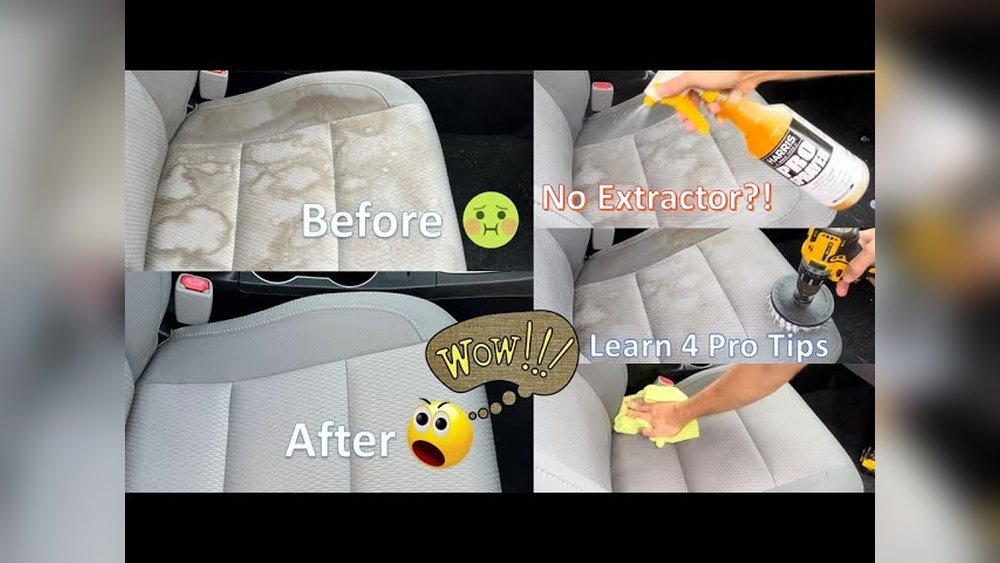
Your car seats take a lot of wear and tear every day. Dirt, spills, and odors can build up, making your ride less comfortable and less fresh.
But you don’t have to live with that. Knowing how to shampoo car seats the right way can bring your interior back to life, making your car feel clean and inviting again. In this guide, you’ll discover simple steps and expert tips to deep clean your seats without damaging the fabric or electronics.
Ready to transform your car’s interior? Keep reading and learn how to shampoo your car seats like a pro.
Preparation Tips
Preparation is key to shampooing car seats effectively. Taking time before cleaning helps achieve better results. Proper prep removes loose dirt and targets stains early. This makes shampooing easier and more thorough.
Removing Seats For Access
Removing seats gives full access to all areas. It helps clean spots that are hard to reach otherwise. Check your car manual for seat removal instructions. Use basic tools like wrenches or screwdrivers. Keep bolts and parts safe to avoid losing them. If seats cannot be removed, fold them down or move them forward.
Vacuuming Thoroughly
Vacuum seats carefully to remove dust and crumbs. Use a vacuum with a brush attachment for best results. Pay attention to seams and crevices where dirt hides. Vacuuming prevents dirt from mixing with water during shampooing. Clean seats dry and ready for deep cleaning.
Spot-treating Stains
Identify stains before shampooing the entire seat. Use a gentle stain remover suitable for your seat fabric. Dab the stain lightly with a clean cloth or sponge. Avoid rubbing hard to prevent damage. Let the spot treatment sit for a few minutes. Treating stains early improves overall cleanliness.
Credit: www.youtube.com
Choosing The Right Cleaner
Choosing the right cleaner is the first step in shampooing car seats effectively. The cleaner must be safe for the seat material and strong enough to remove dirt and stains. Using the wrong product can damage the upholstery or leave unwanted residues. Understanding the types of cleaners helps protect your car’s interior and keep it looking fresh.
Avoiding Harsh Chemicals
Harsh chemicals can ruin fabric and leather car seats. Avoid products with bleach, ammonia, or strong acids. These can cause discoloration and weaken the material. Gentle cleaners protect the seats and extend their life. Always check the label for warnings about fabric safety.
Recommended Upholstery Shampoos
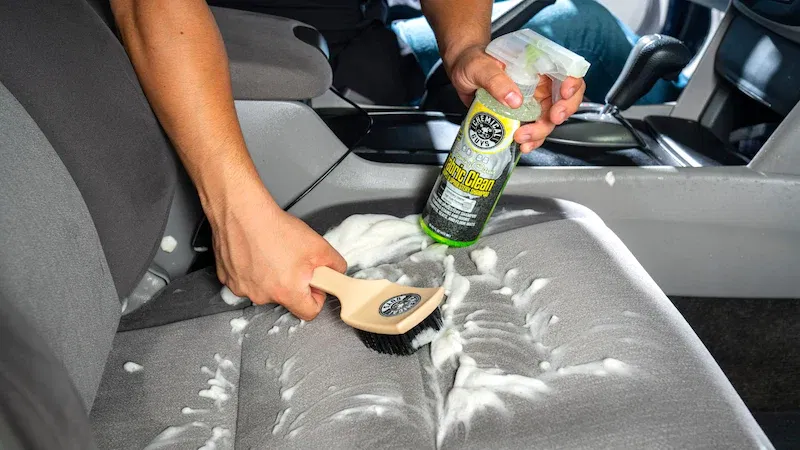
Choose shampoos made specifically for car upholstery. These are designed to remove dirt without damaging the fabric. Look for pH-balanced formulas that clean gently but effectively. Some brands offer foaming shampoos that lift dirt easily. Test the shampoo on a small spot before full use.
Handling Organic Stains
Organic stains like food, drinks, or pet messes need special attention. Use cleaners with enzymes that break down these stains. Enzyme-based shampoos target proteins and oils, making stains easier to remove. Treat the stain quickly for the best results. Blot, don’t rub, to avoid spreading the stain.
Shampooing Techniques
Shampooing car seats cleans deep dirt and stains. Choosing the right technique makes a big difference. Proper methods protect the fabric and give a fresh look. Below are easy ways to shampoo your car seats effectively.
Manual Brushing Methods
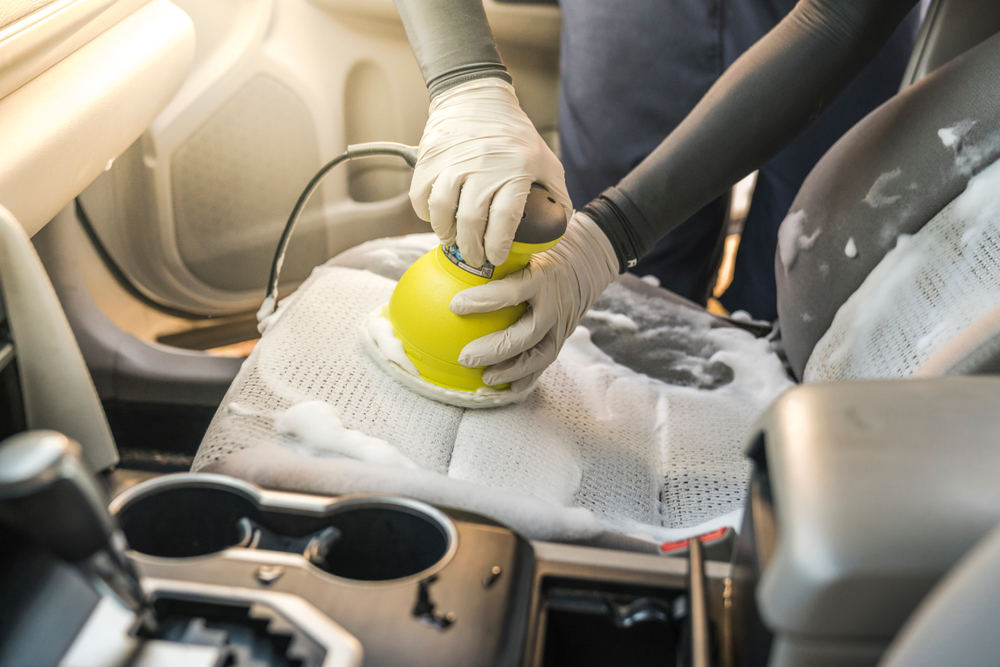
Use a soft-bristle brush for gentle cleaning. Dip the brush in shampoo solution lightly. Scrub the seat in small circular motions. Focus on stained or dirty areas more. Avoid scrubbing too hard to protect fabric. Wipe away excess moisture with a clean cloth. Let the seat air dry after brushing.
Using Drill Brush Attachments
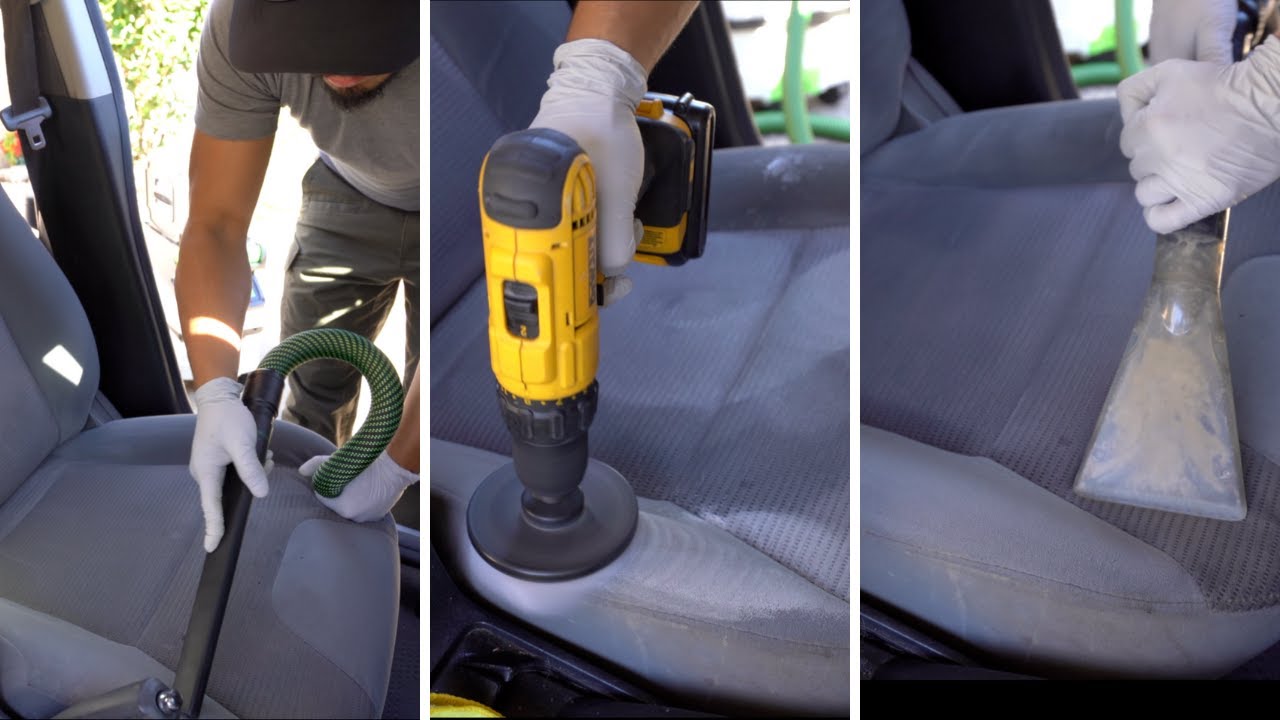
Attach a soft brush to a drill for faster cleaning. This method saves time and effort. Move the drill slowly over the seat surface. Keep the pressure light to avoid damage. The spinning brush loosens dirt deep in fibers. After use, wipe the seat with a damp cloth. Allow full drying before using the car again.
Safe Application Practices
Test shampoo on a hidden spot first. Watch for color fading or fabric damage. Use only recommended upholstery shampoos or cleaners. Avoid soaking the seat with too much liquid. Work in small sections to control moisture. Always use clean tools and cloths for best results. Dry the seats completely to stop mold growth.
Credit: dennisautodetails.com
Rinsing And Extraction
Rinsing and extraction are crucial steps after shampooing car seats. They remove dirt, shampoo residue, and moisture. Proper rinsing prevents stains and keeps seats fresh. Extraction helps seats dry faster and avoids mold growth. Use the right tools and techniques for best results.
Using Upholstery Extractors
Upholstery extractors spray clean water and vacuum it instantly. This process lifts dirt and shampoo from the fabric. It cleans deeply without soaking the seats. Extractors are efficient for large areas and tough stains. They save time and improve cleaning quality.
Wet/dry Vacuum Alternatives
Wet/dry vacuums can remove water and shampoo from seats. They are a good alternative if no extractor is available. Use a nozzle attachment for better suction on fabric. Move slowly to extract as much liquid as possible. Repeat until the seat feels mostly dry.
Microfiber Towel Wiping
Microfiber towels absorb leftover moisture and shampoo residue. Wipe the seat gently after vacuuming or extraction. Use clean, dry towels and press firmly. Replace towels when they become too wet. This step helps speed up drying and keeps seats clean.
Drying Methods
After shampooing car seats, drying them properly is crucial. Wet seats can lead to unpleasant smells and damage. Choosing the right drying method helps keep your car interior fresh and clean. Let’s explore effective ways to dry your seats safely.
Air Drying With Windows Down
Air drying is a simple, natural way to dry your car seats. Open your car windows to let fresh air flow inside. This airflow helps moisture evaporate faster from the fabric. Park your car in a shaded area to avoid direct sunlight. Too much sun can fade or damage the seat material. Keep doors or windows slightly open for several hours. Check the seats regularly to feel if they are completely dry. This method saves energy and prevents heat damage.
Preventing Mold And Odors
Mold grows quickly in damp car seats if not dried properly. To avoid this, remove all moisture as soon as possible. Use a clean towel to blot excess water after shampooing. Avoid sitting on the seats until fully dry to stop trapping moisture. Consider using a portable fan inside the car to boost air circulation. A dehumidifier can also help in humid climates. Keep your car interior clean to reduce bacteria that cause odors. Good drying habits protect your car seats and keep the air fresh.
Special Care For Leather Seats
Leather seats need special care during shampooing to keep their look and feel. They are delicate and can dry out or crack if cleaned harshly. Proper cleaning preserves leather’s softness and color for a long time.
Use gentle methods and products designed for leather. Avoid soaking the seats or using strong chemicals. A soft touch protects the leather’s natural oils and texture.
Gentle Cleaning Solutions
Choose a mild cleaner made for leather surfaces. Mix it with warm water for a light solution. Test the cleaner on a small hidden spot first. Use a soft cloth or sponge to apply gently.
Work in small sections and wipe softly. Avoid scrubbing hard to prevent damage. This method removes dirt without stripping leather oils.
Avoiding Heavy Shampooing
Do not saturate leather with water or shampoo. Excess moisture can soak into the seats and cause stains or warping. Use a damp cloth rather than wet.
Skip strong brushes or vigorous scrubbing. Light cleaning keeps the leather smooth and intact. After cleaning, dry the seats with a soft towel quickly.
Common Mistakes To Avoid
Shampooing car seats can refresh your vehicle’s interior and remove stubborn stains. Avoid common mistakes to get the best results. Simple errors can damage fabric or cause long drying times. Pay attention to these common pitfalls to keep your seats clean and safe.
Over-wetting Fabric
Using too much water can soak the fabric deeply. This causes longer drying times and may lead to mold or mildew. Wet seats also attract dirt faster after cleaning. Use a spray bottle to apply cleaner lightly. Work in small sections and dry quickly with a towel or fan.
Using Dish Soap On Upholstery
Dish soap removes grease but can strip fabric protectants. It may also leave residue that attracts more dirt. Upholstery cleaners are designed to be gentle yet effective. Always choose products made for car seats. Test any cleaner on a hidden spot before full use.
Ignoring Electronics Protection
Modern car seats often have built-in electronics or heating elements. Water and cleaners can damage these parts. Cover or avoid these areas during shampooing. Use minimal moisture near buttons, wires, or sensors. Protecting electronics prevents costly repairs and keeps your car safe.
Credit: www.convoyhandcarwash.com
Maintaining Clean Seats
Keeping car seats clean improves your driving comfort and protects your vehicle’s value. Dirt, spills, and odors can build up over time. Regular care stops stains and smells from settling deep into the fabric. Simple steps keep seats fresh and well-maintained between thorough cleanings.
Regular Vacuuming
Vacuum seats often to remove dust and crumbs. Use a soft brush attachment to avoid damage. Pay attention to seams and crevices where dirt hides. Vacuuming stops dirt from embedding into fibers. It also helps keep the fabric looking smooth and neat.
Quick Spot Cleaning
Act fast on spills to prevent stains. Blot liquids with a clean cloth, do not rub. Use a mild upholstery cleaner for small spots. Test cleaners on a hidden area first. Spot cleaning keeps dirt from spreading and reduces the need for deep shampooing.
Using Enzyme Cleaners For Odors
Bad smells come from bacteria and organic matter. Enzyme cleaners break down these odor-causing particles naturally. Apply enzyme cleaner according to instructions. Let it sit to fully work before wiping or vacuuming. This method refreshes seats without harsh chemicals and keeps the interior smelling clean.
Frequently Asked Questions
What’s The Best Way To Shampoo Your Car Seats?
Vacuum seats thoroughly to remove dirt. Spot-treat stains with upholstery cleaner. Scrub gently using a soft brush. Extract dirt with a wet/dry vacuum or microfiber towel. Let seats air dry fully with windows open to prevent odors. Avoid over-wetting to protect fabric.
Is It Worth Shampooing Car Seats?
Shampooing car seats removes deep dirt, odors, and allergens that vacuuming misses. It enhances appearance, smell, and seat longevity. Regular shampooing keeps your car interior fresh and preserves fabric quality, making it a worthwhile maintenance step.
How Long Does It Take For Your Car Seats To Dry After Shampooing?
Car seats usually take 4 to 6 hours to dry after shampooing. Air circulation and open windows speed drying. Avoid direct sunlight to prevent fabric damage. Use fans to reduce drying time if needed. Ensure seats are fully dry before use to prevent odors and mold.
Can You Use Dawn Dish Soap On Car Upholstery?
Avoid using Dawn dish soap on car upholstery. It can strip fabric and damage seat materials. Use a cleaner made for car interiors instead.
Conclusion
Shampooing car seats keeps them clean and fresh. Regular cleaning removes dirt, stains, and odors. Use gentle brushes and suitable cleaners for best results. Allow seats to dry completely to avoid mold. Clean seats improve your car’s look and comfort.
Follow these simple steps to maintain your seats well. A little care extends the life of your upholstery. Enjoy a cleaner, healthier car interior every time.