Are you thinking about tinting your car windows in Florida? Before you pick the darkest shade, it’s important to know the state’s window tint laws.
These rules are in place to keep you safe while still letting you enjoy the benefits of tinted windows—like reduced glare, better privacy, and protection from harmful UV rays. But what exactly can you do without risking a ticket or having to remove your tint?
You’ll discover the key details about Florida’s window tint regulations, including how dark your tint can be, which windows are affected, and special medical exemptions you might qualify for. Read on to make sure your tint is both stylish and legal!
Florida Tint Limits
Florida sets clear rules for how dark car window tints can be. These limits protect drivers and law enforcement. Knowing the exact tint limits helps avoid fines and vehicle stops.
Different vehicle types have different tint rules. The laws also specify what is allowed on the windshield. Understanding these details keeps your vehicle legal on Florida roads.
Sedans And Passenger Cars
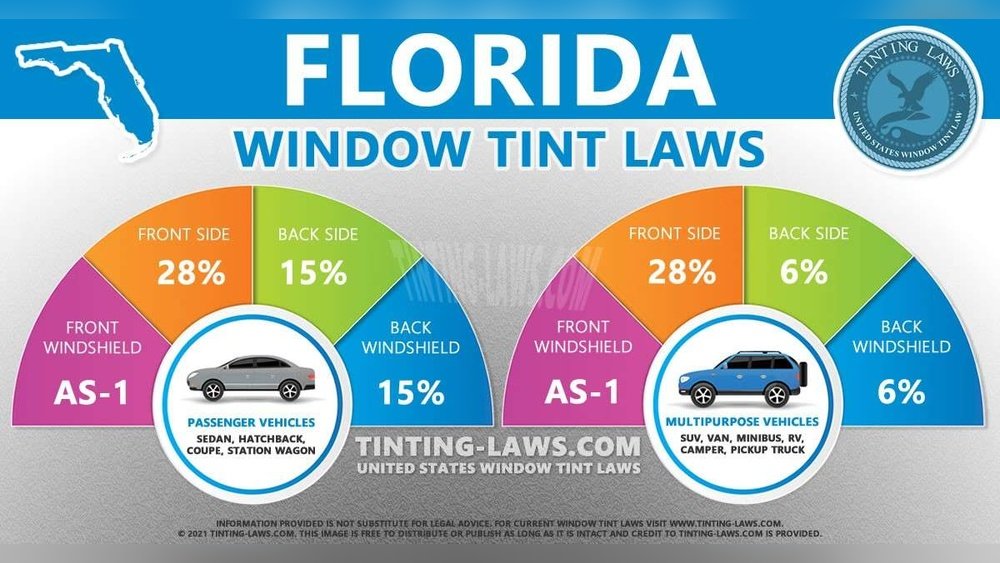
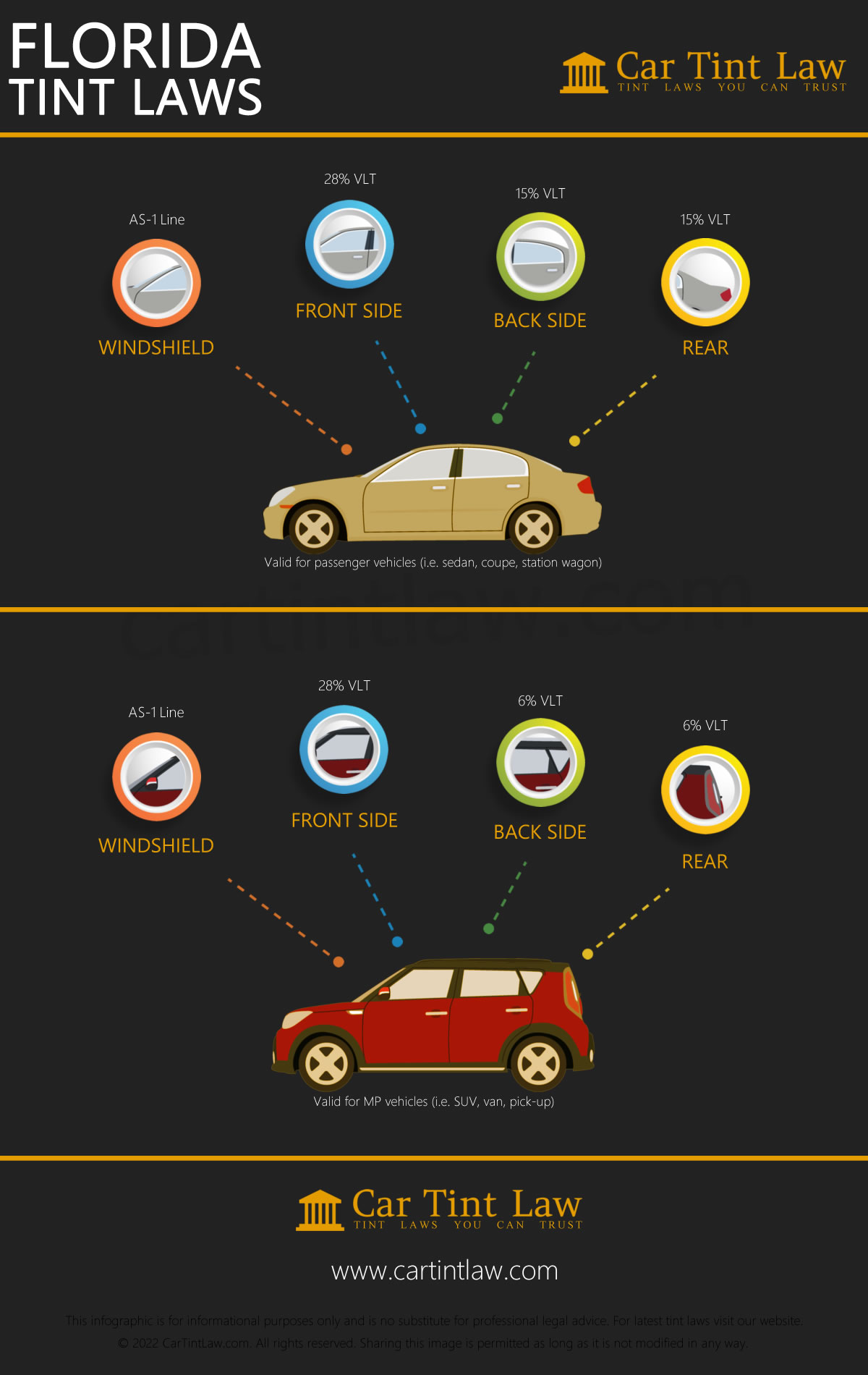
Sedans and passenger cars have strict tint limits. Front side windows must allow more than 28% of light. Rear side windows and the back window can be darker. They can have any darkness level, as long as visibility is safe. A medical exemption allows darker tints on front windows.
Suvs, Vans, And Trucks
SUVs, vans, and trucks follow similar rules to sedans. Front side windows must allow at least 28% of light through. Rear windows can be tinted darker without limit. The back window also has no darkness limit. Medical exemptions apply to front windows as well.
Windshield Tinting Rules
Windshield tinting is limited to the top few inches only. The tint strip must not extend below the manufacturer’s AS-1 line. This line is usually near the top of the windshield. No dark tint is allowed on the main windshield area. Only a light strip to reduce sun glare is legal.
Credit: www.cartintlaw.com
Visible Light Transmission
Visible Light Transmission (VLT) plays a crucial role in Florida’s window tint laws. It defines how much light can pass through your vehicle’s tinted windows. Understanding VLT helps drivers stay within legal limits and avoid fines. This section breaks down what VLT means, the legal limits in Florida, and how it affects tint darkness.
What Vlt Means
VLT stands for Visible Light Transmission. It measures the percentage of light that passes through a window film. A higher VLT means more light gets through, making the tint lighter. A lower VLT means less light passes, making the tint darker. VLT is the key factor in legal tint regulations.
Legal Vlt Percentages
Florida law sets specific VLT percentages for different windows. Front side windows must allow more than 28% of light in. Back side windows and rear windows can have any darkness if the vehicle has side mirrors. Windshield tint is allowed only on the top few inches. These rules ensure safety and visibility for all drivers.
Impact On Tint Darkness
The lower the VLT percentage, the darker the tint looks. A 10% VLT means only 10% of light passes through, creating a very dark shade. A 50% VLT lets half the light through, resulting in a lighter tint. Staying within the legal VLT limits helps avoid penalties and keeps visibility clear.
Restricted Tint Colors
Florida has strict rules about the colors allowed for window tints. These restrictions help keep drivers and law enforcement safe. Some colors are not allowed on any vehicle windows. Knowing which colors are banned can prevent fines and legal trouble.
Prohibited Colors
Florida law forbids tint colors like red, amber, and yellow. These colors can confuse other drivers and police officers. They may look like emergency vehicle lights or signals. The law also bans mirrored or reflective colors that hide the driver’s face.
Using these banned colors on your car windows can lead to tickets. Law enforcement officers need to see inside the vehicle clearly. This rule applies to all passenger vehicles in Florida. Stick to allowed colors to avoid problems on the road.
Reasons For Restrictions
Restricted tint colors pose safety risks on Florida roads. Bright or unusual colors can distract other drivers. They may cause confusion or delay reactions in traffic. Law enforcement must identify drivers and passengers quickly. This helps officers ensure public safety.
Restricted colors also interfere with traffic signals and signs. Red or amber tints can blend with brake lights or turn signals. This reduces visibility and increases accident chances. Clear and safe tint colors support better driving conditions.
Medical Exemptions
Florida law allows special medical exemptions for window tinting rules. These exemptions help drivers with certain health problems. They let people use darker tints than normally allowed. The goal is to protect individuals sensitive to light.
Medical exemptions require official approval. Drivers must follow specific steps to get permission. This protects both the driver and law enforcement.
Qualifying Conditions
Only certain medical issues qualify for exemptions. These include lupus, vitiligo, and other light-sensitive skin diseases. Some eye conditions also qualify. The tint helps reduce harmful sun exposure. Not all conditions are eligible. A doctor must confirm the diagnosis.
Obtaining A Medical Exemption
Start by getting a written statement from a licensed doctor. This must explain the medical need for tint. Submit this statement to the Florida Department of Highway Safety. The department reviews the request carefully. If approved, they issue a medical exemption certificate. The certificate allows tint beyond standard limits.
Required Documentation
Drivers must carry proof of exemption in the vehicle. This includes the doctor’s note and the official certificate. The certificate must be displayed on the driver’s door jamb. Law enforcement can ask to see this during a traffic stop. Without documentation, the tint may be considered illegal. Keep documents updated and accessible at all times.
Sticker And Certification
In Florida, window tint laws require a sticker and certification for tinted windows. This ensures the tint meets state standards. The sticker shows the tint’s compliance with Florida regulations.
The certification helps law enforcement and vehicle inspectors confirm the tint is legal. It protects drivers from fines or having to remove illegal tint. Understanding the sticker and certification is key for every driver with tinted windows in Florida.
Location Of Compliance Sticker
The compliance sticker is placed on the driver’s side door jamb. This spot is easy for officers to check during traffic stops. It should remain visible and undamaged at all times. Removing or hiding the sticker can lead to penalties.
Importance Of Sticker
The sticker proves the tint meets Florida’s window tint laws. It shows the tint was professionally installed and tested. Without the sticker, the tint may be considered illegal by law enforcement. Keeping the sticker helps avoid fines and legal issues.
Verification Process
Officers verify window tint legality by checking the sticker first. They may also use a light meter to measure tint darkness. If the sticker is missing or tint is too dark, a citation may be issued. Always keep the certification sticker intact and visible.
Penalties And Enforcement
Florida enforces strict rules on window tinting to ensure road safety. Breaking these rules leads to penalties. Authorities actively check vehicles for illegal tints. Understanding penalties helps drivers avoid fines and legal troubles.
Fines And Tickets
Drivers caught with illegal window tint face fines. Tickets usually come with a monetary penalty. The amount depends on the tint’s darkness and location. Repeat offenses may lead to higher fines or court appearances. Paying fines promptly avoids extra fees or license issues.
Tint Removal Requirements
Offenders must remove illegal tint within a set time. Law enforcement often gives a deadline for removal. Failure to remove tint can cause more penalties. Removal proof might be required to clear the ticket. Professional removal ensures compliance without damaging the glass.
Traffic Stops And Inspections
Police officers may stop vehicles to check tint levels. They use special devices to measure light transmission. Inspections can happen during routine stops or safety checks. Drivers should cooperate and provide required documents. Clear tint laws help officers enforce rules fairly.
Benefits Of Window Tinting
Window tinting offers more than style; it improves comfort and safety in many ways. Many Florida drivers choose tinting to make their rides cooler, safer, and more private. Understanding these benefits helps you see why window tinting is popular across the state.
Heat Reduction
Tinted windows block a large part of the sun’s heat. This keeps your car cooler on hot Florida days. Less heat means less need for air conditioning. This can save fuel and reduce energy use. It also creates a more comfortable ride for everyone.
Uv Protection
Window tinting blocks most harmful UV rays from the sun. UV rays can damage skin and cause fading inside your car. Tint helps protect your skin from burns and reduces the risk of skin cancer. It also keeps your car’s interior looking new longer.
Enhanced Privacy
Tinted windows give you more privacy on the road. They make it harder for others to see inside your vehicle. This helps protect your belongings from prying eyes. Privacy also adds a sense of security and comfort while driving.

Credit: kepler-dealer.com
Tips For Staying Legal
Understanding and following Florida’s window tint laws helps avoid fines and legal trouble. Simple steps keep your vehicle compliant and safe. Focus on the right tint, proper installation, and regular checks.
Choosing The Right Tint
Select tint that meets Florida’s legal limits for each window. Front side windows must allow more light than rear ones. Check the Visible Light Transmission (VLT) percentage before buying. Avoid very dark or reflective films that break the rules.
Professional Installation
Use experienced tint installers familiar with Florida laws. Proper installation prevents bubbles and peeling. Professionals ensure the tint matches legal standards. They can also provide a certification sticker required by law.
Regular Compliance Checks
Inspect your window tint regularly for damage or fading. Law enforcement may test your tint’s darkness at any time. Replace or adjust tint if it no longer meets legal standards. Keep your compliance sticker visible and safe.

Credit: kepler-dealer.com
Frequently Asked Questions
What Is The Darkest Legal Tint In Florida?
The darkest legal tint in Florida allows 28% visible light transmission (VLT) on front side windows. Rear windows have no VLT limit. Medical exemptions permit darker tints with proper documentation. Red, amber, or yellow tints are prohibited. Compliance stickers must be displayed.
Will You Get Pulled Over For 20% Tint In Florida?
Florida law requires passenger vehicle front side windows to have at least 28% visible light transmission (VLT). A 20% tint is darker and may lead to being pulled over. Medical exemptions allow darker tints with proper documentation. Always carry your tint compliance sticker or medical certificate.
What Is The Darkest Legal Tint In Florida?
Florida law allows a minimum of 28% Visible Light Transmission (VLT) on front side windows. Rear side and back windows can have any darkness level. Windshields may only have a non-reflective tint on the top 6 inches.
Are Colored Tints Allowed On Car Windows?
No, Florida prohibits red, amber, or yellow tints on vehicle windows. Only neutral shades are permitted to ensure safety and visibility compliance.
Conclusion
Knowing Florida’s window tint laws helps you stay safe and avoid fines. Dark tints have limits depending on your vehicle type. Medical exemptions allow darker tints with proof from a doctor. Always check your tint’s visible light transmission percentage. Carry required stickers and documents in your car.
Following these rules keeps you legal and protected on the road. Stay informed and tint your windows wisely.