Are you thinking about tinting your car windows in New Mexico? Before you head to the shop, it’s crucial to understand the state’s window tint laws.
Knowing these rules can save you from costly fines, help you avoid safety issues, and ensure your tint stays legal. In New Mexico, there are specific limits on how dark or reflective your window film can be, and special rules if you have medical needs.
This guide breaks down everything you need to know about New Mexico’s window tint laws—so you can protect your vehicle and drive with confidence. Keep reading to find out what’s allowed, what’s not, and how to stay on the right side of the law.
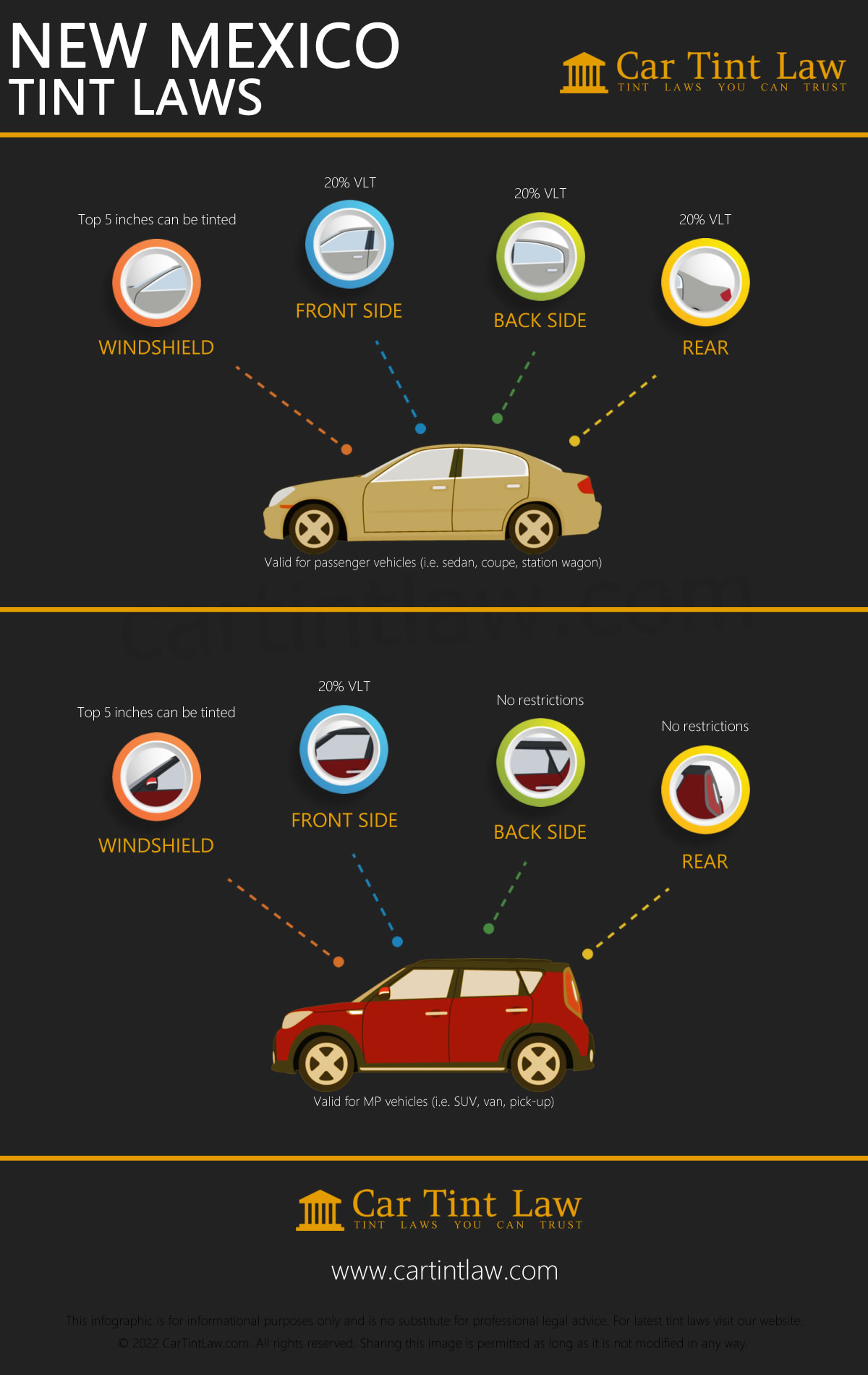
Credit: www.cartintlaw.com
Legal Tint Limits
New Mexico has clear rules about how dark window tints can be on vehicles. These rules protect drivers and law enforcement by keeping visibility safe. Knowing the legal tint limits helps you avoid fines and keeps your vehicle compliant. Below are the key points about tint limits in New Mexico.
Visible Light Transmission Rules
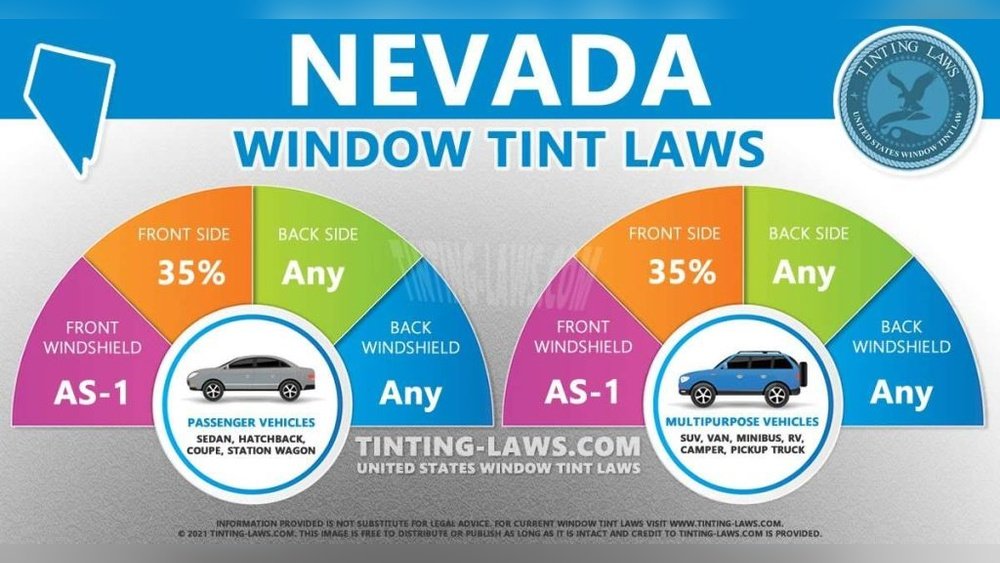
Visible Light Transmission (VLT) is the amount of light allowed through your window tint. New Mexico law requires at least 35% VLT on front side windows. Rear side windows and the back window can have any darkness. This means front windows must let in 35% or more of light. Darker tints on front windows are not legal.
Reflectivity And Mirror Requirements
Window tint in New Mexico can have some reflectivity but cannot be too shiny. The tint should not reflect more than 25% of light. If your rear windows are tinted, your vehicle must have dual side mirrors. These mirrors help drivers see behind and beside the vehicle clearly. Reflective or mirrored tint must meet these standards.
Windshield Tint Regulations
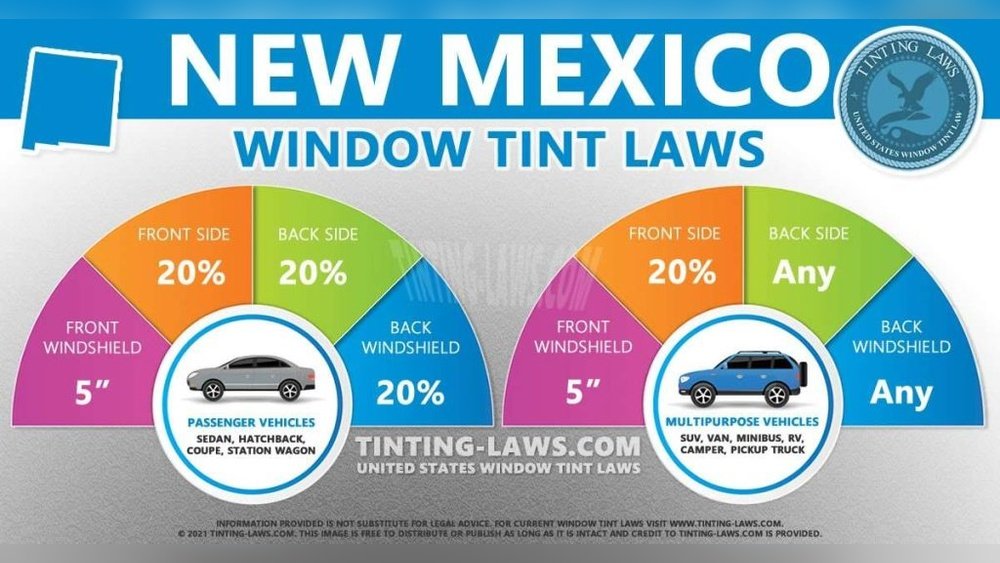
The windshield can only have tint on the top 5 inches, called the AS-1 line. This tint must not be too dark and should allow enough light through. The rest of the windshield cannot have any tint. This rule keeps the driver’s view clear and safe at all times. Any tint below the AS-1 line is illegal in New Mexico.
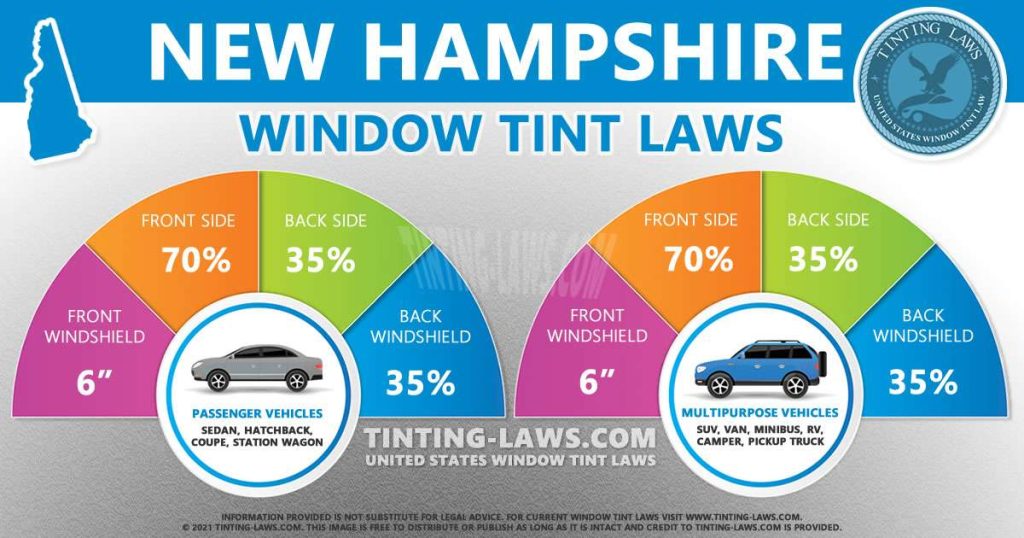
Credit: www.tinting-laws.com
Medical Exemptions
New Mexico allows medical exemptions for window tint laws. This helps drivers with health issues sensitive to sunlight. The state requires specific steps to qualify. Medical exemptions ensure safety and comfort for those in need.
Obtaining A Medical Waiver
To get a medical waiver, you need a note from a licensed doctor or optometrist. The note must explain why you need darker tint. It should be signed and dated by the medical professional. Keep this document with you in the vehicle at all times.
Documentation And Vehicle Requirements
Carry the signed medical affidavit inside your car. Police officers may ask to see it during traffic stops. Your vehicle must meet all other legal tinting requirements. The waiver only covers window tint levels, not other vehicle rules.
Tint Levels For Medical Exemptions
New Mexico law does not set exact tint limits for medical exemptions. The doctor’s note allows darker tint than usual limits. Tint should still allow enough visibility for safe driving. Always follow any instructions given by your medical provider.
Vehicle Types And Tint Laws
New Mexico has specific window tint laws that change based on the type of vehicle. Different rules apply to passenger cars, trucks, and commercial vehicles. Understanding these rules helps drivers stay legal and safe on the road. Each vehicle type has distinct limits on how dark or reflective the tint can be.
Rules For Passenger Cars
Passenger cars in New Mexico must follow strict tint limits. Front side windows must allow more than 28% of light through. Rear side and back windows can have darker tint. Reflective or mirrored tints are allowed but must not be too shiny. Dual side mirrors are required if rear windows have tint. These rules protect drivers and law enforcement visibility.
Tinting Regulations For Trucks
Trucks have similar tint rules as passenger cars. Front side windows must allow at least 28% light. Rear side and back windows can be darker. Reflective tints are also permitted on trucks. Like cars, trucks need dual side mirrors if rear windows are tinted. These rules help keep visibility clear for bigger vehicles.
Differences In Commercial Vehicles
Commercial vehicles face stricter tint laws in New Mexico. Front side windows must allow 50% or more light through. Rear side and back windows also have lighter tint limits. Reflective or mirrored tints are not usually allowed on commercial vehicles. These tougher rules ensure safety for commercial drivers and others on the road.
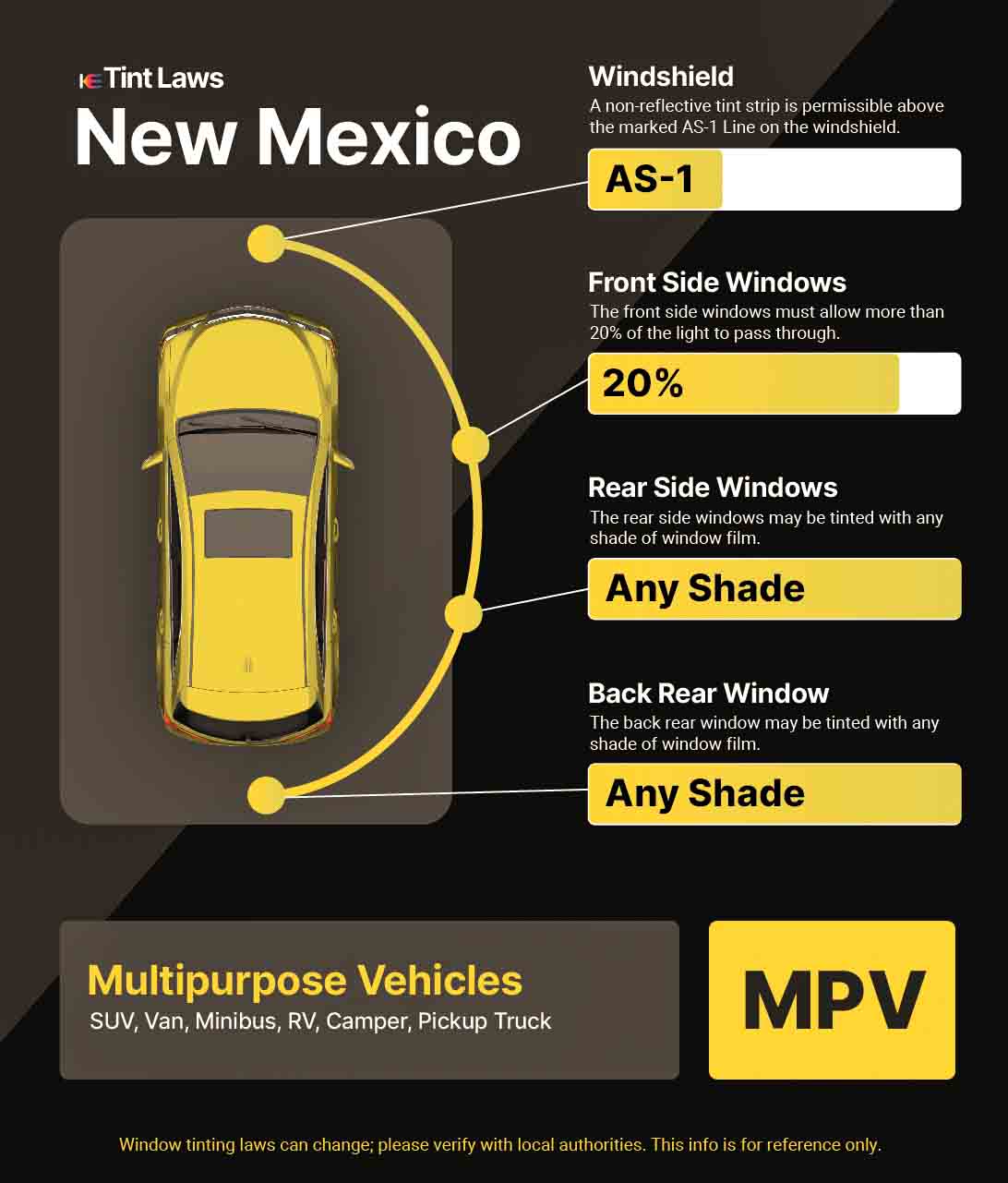
Credit: kepler-dealer.com
Enforcement And Penalties
Enforcement of window tint laws in New Mexico is strict. Authorities regularly check vehicles for compliance. Penalties for violations can affect your driving record and wallet. Understanding enforcement helps you avoid trouble on the road.
Inspection Procedures
Police officers inspect window tint during routine traffic stops. They use special devices to measure Visible Light Transmission (VLT). If tint is too dark, officers may issue a citation. Inspections focus on front side windows and windshield. Rear windows are checked if dual side mirrors are missing.
Fines And Legal Consequences
Fines vary depending on the severity of the violation. First-time offenders usually pay a smaller fine. Repeat violations can lead to higher fines and court appearances. Some cases may result in points on your driver’s license. Tint removal orders are common if the tint breaks the law.
How To Handle Violations
Respond to citations promptly to avoid extra penalties. You can contest the violation in court if you believe it is wrong. Removing illegal tint quickly helps prevent further legal issues. Keep medical exemption documents in the vehicle to show during inspections. Follow state guidelines carefully to stay compliant.
Choosing The Right Tint
Choosing the right window tint involves more than just picking a dark shade. It requires knowing the laws and options available in New Mexico. Selecting the proper tint ensures safety, legal compliance, and the level of privacy you desire. This section breaks down key points to help you decide.
Understanding Vlt Percentages
VLT stands for Visible Light Transmission. It shows how much light passes through the window tint. A lower VLT means a darker tint, allowing less light inside. New Mexico law sets specific VLT limits for different windows on your vehicle. Knowing these limits helps you pick a tint that is legal and effective.
Types Of Window Films
There are several types of window films to choose from. Dyed films block sunlight and reduce glare. Metallic films reflect heat and UV rays. Ceramic films offer strong heat reduction without affecting signal devices. Each type has pros and cons. Your choice depends on your needs and budget.
Balancing Privacy And Compliance
Privacy is a common reason for tinting windows. Darker tints offer better privacy but may break the law. New Mexico requires dual side mirrors if rear windows are tinted beyond certain limits. Always check the legal limits before applying dark tint. Staying within the law avoids fines and safety issues.
Installation Tips
Installing window tint in New Mexico requires care and precision. Proper installation ensures your tint lasts long and stays within legal limits. Follow these tips to avoid common issues and maintain your tint’s quality.
Selecting Certified Installers
Choose installers with proper certification and experience. Certified professionals understand New Mexico’s tint laws well. They use quality materials and tools for better results. Hiring experts reduces the risk of damage or poor application.
Common Installation Mistakes
Avoid rushing the installation process. Mistakes include bubbles, wrinkles, and uneven edges. Dirt or moisture trapped under the tint can cause peeling. Incorrect cutting can lead to legal problems or poor appearance. Take time to prepare the surface and apply tint carefully.
Maintaining Your Window Tint
Clean tinted windows gently with soft cloths and mild cleaners. Avoid ammonia-based products that damage the film. Do not roll down windows for a few days after installation. Regular maintenance helps prevent scratches and discoloration. Proper care keeps your tint looking new and legal.
Recent Updates For 2025
The window tint laws in New Mexico have seen important updates for 2025. These changes affect how dark and reflective the tint can be on your vehicle’s windows. The new rules aim to balance driver safety with privacy and heat reduction.
Understanding these updates helps drivers stay legal and avoid fines. Below, we break down the key changes, enforcement policies, and future trends in window tinting.
Changes In Tint Regulations
New Mexico now limits tint darkness more strictly on front side windows. The allowed Visible Light Transmission (VLT) percentage has increased, meaning tints must let in more light. Rear windows can still have darker tints, but reflectivity rules have tightened. Reflective or mirrored films are now restricted to prevent glare for other drivers.
Medical exemptions remain, but require updated documentation from licensed physicians. These exemptions allow darker tints for health reasons but must be clearly presented during traffic stops.
New Enforcement Policies
Police officers received updated guidelines on checking tint compliance. They focus on measuring VLT accurately using new approved devices. Officers can issue fines immediately if your tint is too dark or too reflective. Repeat offenders face higher penalties, including possible vehicle inspection requirements.
Enforcement aims to reduce accidents caused by poor visibility while keeping privacy benefits intact. Drivers should carry all necessary medical exemption papers to avoid misunderstandings.
Future Trends In Window Tinting
Technology improvements will soon allow smarter tint films. These films can adjust their darkness based on lighting conditions. New Mexico may adopt laws to regulate these advanced films soon. Expect more options for heat rejection and UV protection without breaking tint rules.
Solar control films that improve fuel efficiency and comfort are also gaining popularity. The focus will remain on safety and clear visibility while offering drivers more choices.
Frequently Asked Questions
What Is The Darkest Legal Tint In New Mexico?
The darkest legal tint in New Mexico allows 25% visible light transmission (VLT) on front side windows. Rear and back windows have no VLT limit but require dual side mirrors if tinted. Windshields allow non-reflective tint only on the top five inches.
Is 35% Or 20% Tint Darker?
A 20% tint is darker than a 35% tint. Lower percentage means less light passes through, resulting in a darker shade.
Is 30% Tint All Around Legal?
In New Mexico, 30% tint on all windows is generally illegal. Front side windows require at least 50% visible light transmission. Rear and back windows can have darker tints, but 30% all around does not meet legal limits without medical exemption.
Is 15% Or 30% Tint Darker?
A 15% tint allows more light through and is lighter. A 30% tint blocks more light and is darker.
Conclusion
Understanding New Mexico’s window tint laws helps keep you safe and legal. Dark tints have limits to ensure clear driver visibility. Medical exemptions allow darker tint but require proper documentation. Reflective tints are allowed but must follow specific rules. Always check the latest rules before tinting your vehicle.
Staying informed avoids fines and improves road safety. Keep your car compliant and enjoy the benefits of tinting.