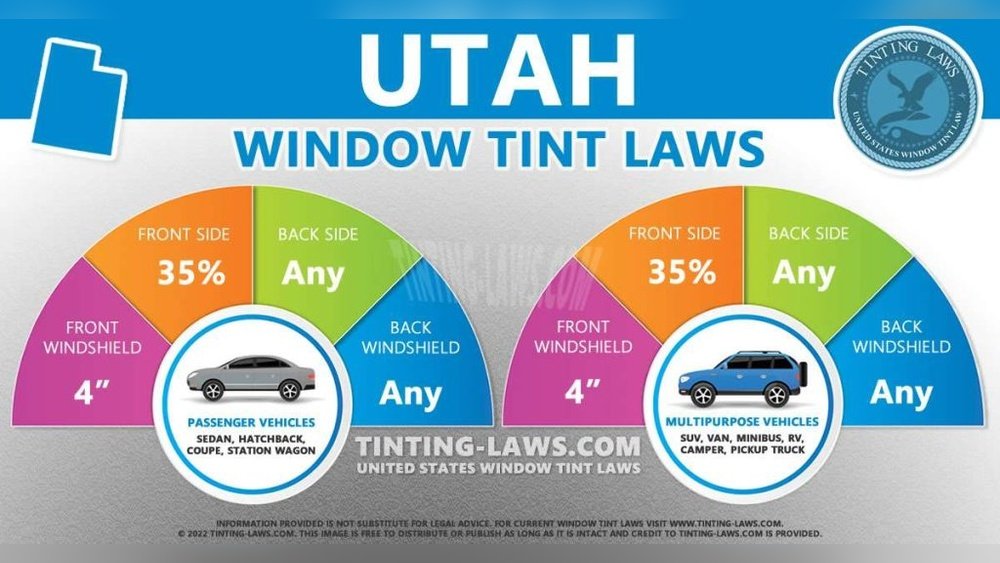
If you drive in Utah and are thinking about tinting your car windows, you need to know the state’s window tint laws. You might wonder, “How dark can my tint be without breaking the law?” or “Can the police pull me over just because of my window tint?” These are important questions because having the wrong tint could lead to a ticket or even force you to remove the tint.
You’ll get clear answers about what’s allowed and what’s not. Understanding Utah’s window tint rules will help you stay safe, avoid fines, and keep your car looking great. Keep reading to learn everything you need to know about window tint laws in Utah!
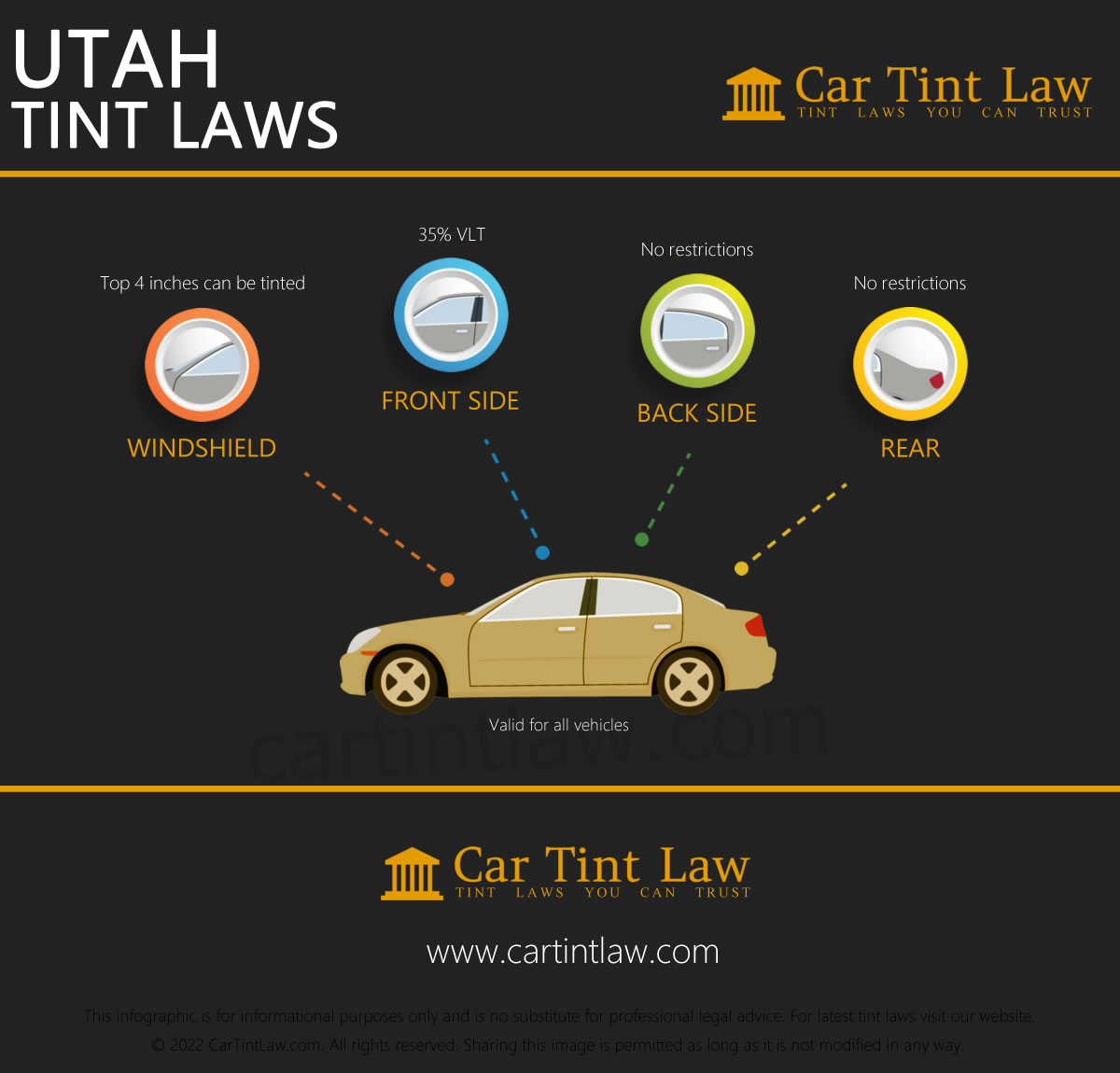
Credit: www.cartintlaw.com
Legal Tint Limits
Utah has clear rules about how dark your car window tint can be. These legal tint limits protect drivers and law enforcement. It is important to know the exact limits for each window type. This helps avoid fines and keep your vehicle safe on the road.
Front Side Windows
The front side windows must allow at least 43% of light to pass through. This means the tint cannot be too dark. Police can stop you if your front tint blocks more than 57% of light. The law aims to keep drivers visible to others and ensure safe driving.
Back Side And Rear Windows
Utah allows any darkness on the back side and rear windows. There is no limit on how dark these tints can be. However, if the rear window is very dark, you must have dual side mirrors. This rule helps drivers see around their vehicle despite the dark tint.
Windshield Restrictions
Only the top 6 inches of the windshield may be tinted. This tint must not block the driver’s view of the road. No dark tint is allowed on the main part of the windshield. Clear visibility through the windshield is critical for safety and law enforcement.
Enforcement And Stops
Utah enforces window tint laws strictly to ensure driver and officer safety. Police officers have clear rules about when and how they can stop a vehicle for tint violations. Understanding enforcement helps drivers stay compliant and avoid fines.
Police Authority To Stop
In Utah, police can stop a vehicle solely for suspected illegal window tint. They do not need another reason to pull you over. This is because very dark tint may hide a driver’s actions or threats inside. Safety concerns give officers this authority. Both local police and Utah Highway Patrol actively enforce these rules.
Measurement Methods
Officers use special light meters to measure Visible Light Transmission (VLT). This device checks how much light passes through your windows. Front side windows have strict VLT limits, while back and rear windows allow darker tint. The meter gives precise readings to decide if your tint breaks the law. Measurements usually happen during the traffic stop.
Possible Penalties
Breaking tint laws can lead to warnings or fines in Utah. Officers may issue tickets requiring tint removal or adjustment. Repeat offenses can result in higher fines or court orders. In some cases, you might need to prove compliance by showing the tint film’s certification. Penalties aim to encourage drivers to follow the rules and keep roads safer.
Reasons For Tint Laws
Window tint laws in Utah serve important purposes. They protect drivers, passengers, and law enforcement officers. These laws balance privacy and safety on the road. Understanding the reasons behind them helps drivers follow the rules better.
Utah’s tint laws focus on visibility and safety. Dark tints may look cool but can cause problems. The state sets limits to reduce risks for everyone.
Safety Concerns
Dark window tints can reduce driver visibility. This makes it harder to see other cars, pedestrians, and road signs. Poor visibility increases the chances of accidents. Clear windows help drivers react quickly to road hazards. Tint laws keep windows light enough to maintain safe driving conditions.
Officer Visibility
Police officers need to see inside vehicles during stops. Dark tints can block their view. This makes it hard to check for weapons or signs of danger. Good visibility helps officers assess situations safely. Utah’s tint laws ensure officers can see inside cars clearly.
Threat Concealment
Very dark tints can hide illegal items or dangerous weapons. This poses risks during traffic stops or emergencies. Tint laws prevent drivers from concealing threats inside their vehicles. Clear windows help law enforcement identify potential dangers quickly. This keeps officers and the public safer.
Recent Law Changes
Utah updated its window tint laws recently. These changes affect what is legal for vehicle windows. Drivers need to know the new rules to avoid fines.
The goal is to balance driver privacy with safety for police and others on the road. The updates clarify allowed tint darkness and mirror requirements.
Changes To Front Side Window Tint
The new law restricts how dark tint can be on front side windows. The allowed Visible Light Transmission (VLT) must be at least 43%. This means tint cannot block more than 57% of light.
Before, the limit was less clear. Now, enforcement is easier and consistent across Utah.
Rear Side And Rear Window Adjustments
Rear side and rear windows can have any darkness of tint. This is unchanged from before. The key rule is the tint must not be reflective.
Also, if the rear window is very dark, vehicles must have dual side mirrors. This helps with visibility for the driver and safety on roads.
Windshield Tint Restrictions
The windshield tint rule remains strict. Only a small strip at the top of the windshield is allowed to be tinted. This strip must be above the AS-1 line.
No other tint on the windshield is legal. This ensures drivers have clear forward vision.
Enforcement And Penalties
Police can pull over drivers for illegal tint. Tint is a primary offense, meaning it alone can cause a stop. Officers use devices to measure VLT accurately.
Violations may result in warnings or tickets. Drivers may have to remove illegal tint to comply with the law.
Avoiding Tint Issues
Understanding how to avoid issues with window tint in Utah helps keep drivers safe and legal. Knowing the rules and practicing smart habits reduces the risk of tickets. This section highlights key tips to manage your tint and avoid trouble.
Window Management During Stops
Lower your front windows when police approach. This simple act shows cooperation and allows clear communication. Officers can see inside your vehicle better, reducing suspicion. It helps avoid misunderstandings during traffic stops. Keeping windows down also lets officers measure your tint easily.
Choosing Legal Tint Levels
Utah law allows any darkness on back and rear windows. Front side windows must allow at least 43% of light through. Windshields can have non-reflective tint only on the top 6 inches. Using legal tint levels prevents stops and fines. Always check your tint’s Visible Light Transmission (VLT) percentage before installation.
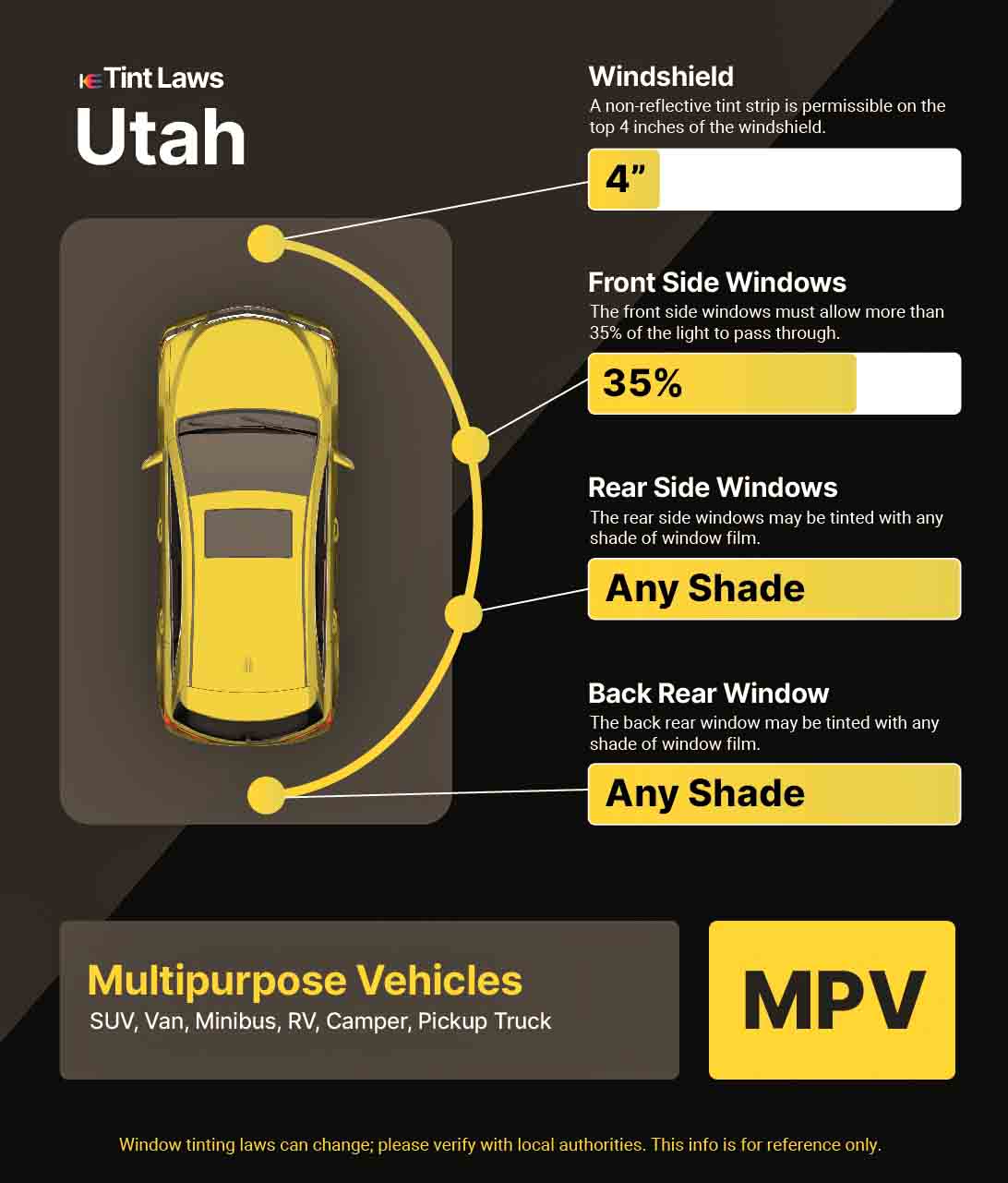
Credit: kepler-dealer.com
Prohibited Tint Features
Utah law sets clear limits on window tint features to ensure driver safety and law enforcement visibility. Certain types of tint are banned because they block too much light or cause dangerous reflections. Understanding prohibited tint features helps avoid fines and keeps your vehicle legal on the road.
Metallic And Mirrored Finishes
Metallic tint films are not allowed in Utah. These films reflect light strongly, creating glare for other drivers. The glare can cause accidents by blinding or distracting others. Mirrored finishes are also banned for the same safety reasons.
These finishes reduce the driver’s ability to see clearly and hinder police officers during traffic stops. Utah law requires non-reflective tint to maintain clear visibility inside and outside the vehicle. Choose tint films that are clear and non-metallic to comply with state rules.
Medical Exemptions
Utah allows medical exemptions for window tint laws. These exemptions help people with specific health issues use darker tints. Darker tints protect sensitive skin or eyes from the sun’s harmful rays. The process requires approval from medical and law enforcement professionals.
Doctor Recommendations
A doctor must recommend the medical exemption. The doctor writes a note explaining the health problem. This note states why darker tint is needed. Common reasons include lupus, skin cancer, or severe sun allergies. The doctor’s letter is essential to start the exemption process.
Highway Patrol Approval
After the doctor’s recommendation, the Utah Highway Patrol reviews the request. They check the medical note and tint application details. Approval by the patrol allows legal use of darker window tint. Drivers must carry the approval document in their vehicle. Without it, officers may issue a ticket for illegal tint.

Credit: www.change.org
Cross-state Tint Law Differences
Window tint laws vary widely between states. Drivers crossing state lines may face different rules. Understanding these differences helps avoid fines and legal troubles. Utah’s tint laws have unique features compared to neighboring states. Knowing the rules in each state ensures safer travel and compliance.
Utah Vs. Neighboring States
Utah allows any darkness on rear and back side windows. Front side windows must let in at least 43% of light. Some nearby states have stricter limits. For example, Colorado requires 27% light transmission on front windows. Wyoming allows only 28% on front side windows. These differences can confuse drivers.
Front Side Window Restrictions
Utah’s front side window tint limit is 43% visible light transmission (VLT). Arizona and Nevada have more lenient rules, allowing darker tints. New Mexico’s limit is stricter, at 20% VLT. Drivers moving between these states should check the legal limits. Police can pull drivers over for illegal tint levels.
Rear And Back Side Window Rules
Utah permits any darkness on rear windows, but requires dual side mirrors if rear window is dark. States like Colorado and Idaho also allow dark rear tints but may require mirrors. Some states, such as New Mexico, have restrictions on reflectiveness rather than darkness. These variations affect vehicle modifications.
Windshield Tinting Differences
Utah only allows non-reflective tint on the top 6 inches of the windshield. Other states have different rules. For instance, Arizona permits tinting on the windshield’s top 5 inches. Some states ban any tint on the windshield. Drivers must be aware to avoid violations and fines.
Frequently Asked Questions
What Is The Darkest Legal Tint In Utah?
Utah allows any darkness of tint on back and rear windows. Front side windows must allow at least 43% light transmission. Reflective tints are prohibited.
In What State Is 20% Tint Legal?
20% tint is legal in New Mexico for front side windows. Other states generally allow lighter tints, so check local laws before tinting.
Can Cops Pull You Over For Tint In Utah?
Yes, Utah police can pull you over for illegal window tint. Front side windows must allow at least 43% light. Rear and back windows have no darkness limit but cannot be reflective. Officers use devices to measure tint and may issue tickets or warnings.
Is 35 Or 20 Tint Darker?
A 20% tint is darker than a 35% tint. Lower percentages mean less light passes through the window.
Conclusion
Understanding Utah’s window tint laws helps keep you safe and legal. Front side windows must allow enough light through to avoid tickets. Rear and back windows can have any darkness but cannot be reflective. Police often check tints to ensure clear visibility and safety.
Always follow these rules to avoid fines or warnings. Stay informed and choose your tint wisely. This way, you can drive confidently without legal worries.