Are you thinking about getting your car professionally detailed in Utah? Before you roll up your sleeves or hand over the keys, it’s important to know the car detailing laws that could affect you.
Understanding these rules not only keeps you on the right side of the law but also ensures your vehicle stays in top shape without unexpected fines or penalties. Whether you’re a car enthusiast or just someone who loves a clean ride, knowing what’s legal—and what isn’t—can save you time, money, and hassle.
Keep reading to discover the key car detailing regulations in Utah and how they impact your vehicle care routine.
Credit: simplycoolusa.com
Utah Car Modification Rules
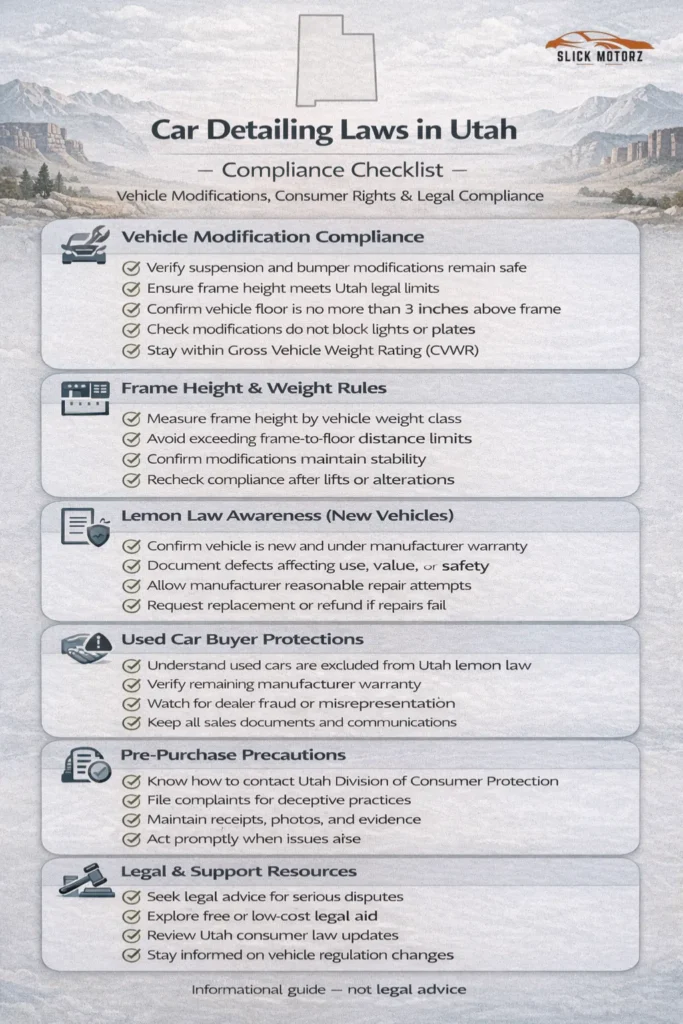
Utah car modification rules set clear limits for vehicle changes. These rules keep roads safe and ensure cars meet state standards. Modifications must follow specific guidelines about height, weight, and structure. Understanding these rules helps avoid fines and inspection issues.
Suspension And Bumper Limits
Utah does not restrict suspension lift heights or bumper heights. Vehicle owners can raise or lower suspensions within reason. Bumpers may be adjusted as long as they remain functional and safe. Modifications should not block lights or license plates.
Frame Height Regulations
The frame height is strictly regulated based on the vehicle’s weight. The vehicle’s floor must not be more than three inches above the top of the frame. This rule helps maintain vehicle stability and safety. Modifying frame height beyond this is illegal in Utah.
Weight Rating Compliance
Vehicles must comply with their Gross Vehicle Weight Rating (GVWR). Modifications cannot increase weight beyond this limit. Exceeding GVWR can cause safety risks and legal problems. Always check the vehicle’s weight rating before making changes.
Lemon Law Basics In Utah
Understanding Utah’s lemon law helps protect car buyers from defective vehicles. The law mainly covers new cars with serious issues that the manufacturer cannot fix. It offers a way to seek repair, replacement, or refund. Knowing the basics helps you know your rights.
Coverage For New Vehicles
Utah’s lemon law covers new vehicles bought or leased in the state. It applies if the car has a significant defect that affects its use, value, or safety. The defect must appear within the warranty period. The manufacturer gets a chance to repair the problem.
If the defect is not fixed after a reasonable number of attempts, the buyer may get a refund or replacement. The law protects buyers from being stuck with faulty new cars.
Exclusion Of Used Cars
Used cars usually are not covered by Utah’s lemon law. The law explicitly excludes vehicles that are not new. This means buyers of used cars must be more cautious.
There might be exceptions if a used car still has a valid manufacturer’s warranty. Also, if a dealer misleads the buyer, other laws may apply, but not the lemon law. It is best to inspect used cars carefully before purchase.
Warranty Requirements
The lemon law requires that the vehicle be under the original manufacturer’s warranty. This warranty covers defects in materials or workmanship. It usually lasts for a specific time or mileage limit.
Only defects covered by this warranty qualify for lemon law protection. If the warranty expires, the buyer may lose lemon law rights. Always check the warranty terms before buying.
Used Car Protection Options
Buying a used car in Utah requires extra care. Utah’s laws offer limited protection for used vehicles. Understanding your options helps protect your investment. These options focus on dealer honesty, warranty status, and buyer responsibility.
Knowing your rights and risks can prevent costly mistakes. Here are key protection options for used car buyers in Utah.
Dealer Fraud And Misrepresentation
Utah law prohibits dealers from lying about a car’s condition. If a dealer hides serious problems, you may have legal recourse. Fraud claims can cover undisclosed accidents, odometer tampering, or fake repairs. Keep all documents and communications with the dealer as proof. Reporting fraud to the Utah Division of Consumer Protection is important. Acting quickly increases your chances of a successful claim.
Remaining Warranty Claims
Some used cars still have active manufacturer warranties. These warranties cover defects during the original warranty period. Verify the warranty status before buying. Use the vehicle identification number (VIN) to check coverage online. Warranty repairs must be done by authorized service centers. If defects arise, warranty claims can reduce repair costs. Remember, most used cars lose warranty protection once sold.
Buyer Beware Principles
Utah follows “buyer beware” rules for used cars. This means buyers must inspect cars carefully before purchase. Independent mechanic inspections are highly recommended. Obtain a detailed vehicle history report from trusted sources. These reports reveal accidents, title issues, and previous damage. Written guarantees from dealers add extra protection. Ultimately, the buyer holds responsibility for the car’s condition after the sale.
Credit: cleanerbros.com
Pre-purchase Precautions
Buying a car in Utah requires careful checks to avoid future problems. Pre-purchase precautions help protect buyers from hidden issues. These steps provide peace of mind and reduce risks.
Independent Vehicle Inspections
Always get an independent mechanic to inspect the vehicle. They check for hidden damage and mechanical problems. This inspection is unbiased and more thorough than a dealer’s check. It helps spot issues that affect safety and value.
Vehicle History Reports
Use trusted services like Carfax or AutoCheck to get a vehicle history report. These reports show accidents, title problems, and past ownership. They reveal if the car was stolen or flooded. This information helps buyers make smart decisions.
Written Dealer Guarantees
Request written guarantees from the dealer about the car’s condition. These promises protect buyers if problems arise after purchase. A written guarantee is a legal document that holds the dealer accountable. It reduces the chance of disputes later.
Consumer Resources And Support
Consumers in Utah have access to important resources and support related to car detailing laws. These tools help protect buyers and ensure fair treatment. Understanding where to turn for help can save time and prevent frustration. Utah offers specific agencies and legal options to assist with vehicle concerns.
Utah Division Of Consumer Protection
The Utah Division of Consumer Protection helps residents with vehicle issues. This agency enforces laws that protect buyers from fraud and misrepresentation. It provides guidance on car detailing regulations and how to handle disputes. Consumers can file complaints if a dealer violates Utah’s car laws. The division also offers educational materials about vehicle rights.
Legal Assistance Options
Legal help is available for those facing serious car problems. Consumers may consult attorneys who specialize in auto law. Many offer free initial consultations to explain rights and options. Legal aid organizations also assist low-income individuals with vehicle disputes. Knowing your legal support options improves the chances of a fair outcome.
Reporting Vehicle Issues
Utah residents should report any car detailing or vehicle issues quickly. Complaints can be submitted to the Utah Division of Consumer Protection online or by phone. Detailed reports help authorities investigate unfair or illegal practices. Reporting protects other consumers and promotes honest business standards. Keep records of all communications and receipts for your case.
Credit: cleanmobiledetailing.com
Frequently Asked Questions
Is It Illegal To Modify Your Car In Utah?
Modifying your car in Utah is legal if it meets state regulations. Suspension and bumper heights have no limits, but frame height must comply with GVWR rules. The vehicle floor cannot extend over three inches above the frame’s top. Always check specific modification laws before proceeding.
Is There A Lemon Law In Utah For Used Cars?
Utah’s lemon law covers only new cars under the original warranty. Used cars lack lemon law protection. Buyers should rely on inspections, warranties, and fraud claims instead.
Can You Legally Sleep In Your Car In Utah?
Sleeping in your car in Utah is generally legal on public roads unless local laws prohibit it. Avoid private property without permission. Check local ordinances and parking rules to ensure compliance and safety.
Can You Return A Used Car In Utah?
Utah law does not allow returns on used cars. Buyers rely on inspections, warranties, or fraud claims against dealers.
Conclusion
Understanding Utah’s car detailing laws helps you stay within legal limits. Always check local rules before modifying your vehicle. Proper compliance avoids fines and keeps your car safe on the roads. Remember, regulations can change, so stay informed regularly. Responsible car care protects your investment and respects state laws.
Safe driving starts with following Utah’s vehicle guidelines closely.