
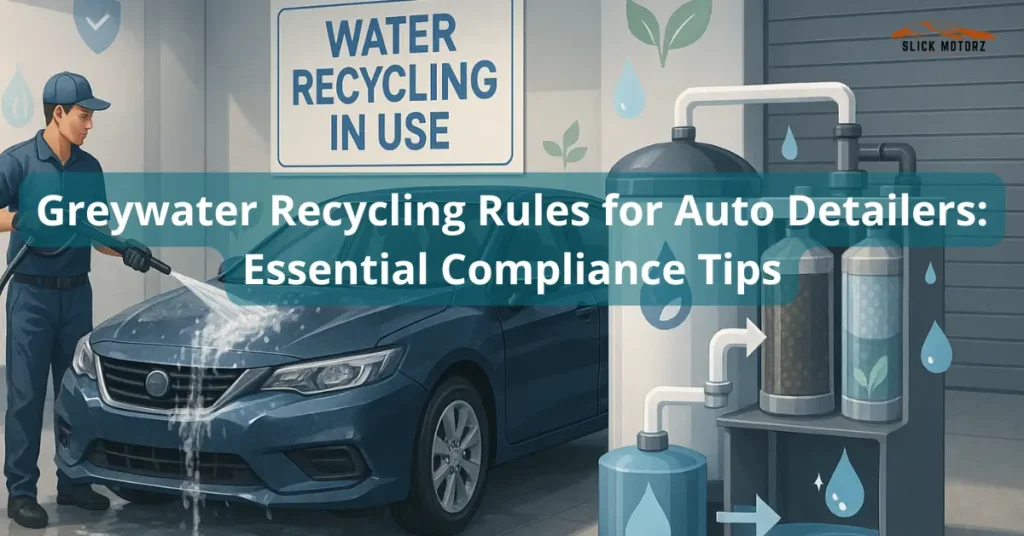
If you run an auto detailing business, understanding greywater recycling rules is essential for staying compliant and protecting your community’s water resources. You might wonder how to handle the water you use every day without running into costly fines or environmental issues.
This article will guide you through the key regulations you need to know, especially if you operate in places like Austin, Texas, where local laws are strict and enforcement is real. By mastering these rules, you can save money, improve your business’s reputation, and contribute to a cleaner environment.
Keep reading to discover how greywater recycling works for auto detailers and what steps you must take to do it right.
Greywater Basics
Understanding greywater is essential for auto detailers aiming to follow recycling rules. Greywater involves water that has been used but still holds potential for reuse. Knowing its basics helps detailers manage water efficiently and meet environmental standards. This section covers what greywater is and where it comes from in auto detailing settings.
What Is Greywater
Greywater is wastewater from sinks, showers, and washers. It excludes toilet waste, which is called blackwater. This water contains some dirt, soap, and small particles. Despite this, greywater can be treated and reused for certain purposes. Recycling greywater reduces freshwater use and lowers pollution risks.
Common Sources In Auto Detailing
Auto detailing produces greywater mainly from washing vehicles. Water used with soaps and cleaning agents becomes greywater. Rinsing cars, cleaning wheels, and washing windows all generate this wastewater. Proper handling is necessary to prevent harmful chemicals from entering drains or soil. Capturing and recycling greywater helps auto detailers save water and stay compliant with rules.
Legal Landscape
Understanding the legal landscape of greywater recycling is crucial for auto detailers. Laws vary by government level and region. Compliance ensures safe, responsible water use and avoids penalties. This section breaks down the rules auto detailers must follow.
Federal Regulations
The U.S. Environmental Protection Agency (EPA) oversees water quality nationwide. It sets standards for wastewater discharge under the Clean Water Act. Auto detailers must avoid releasing untreated greywater into public waters. The EPA encourages water recycling but requires permits for certain discharges. Following federal laws protects public health and the environment.
State And Local Rules
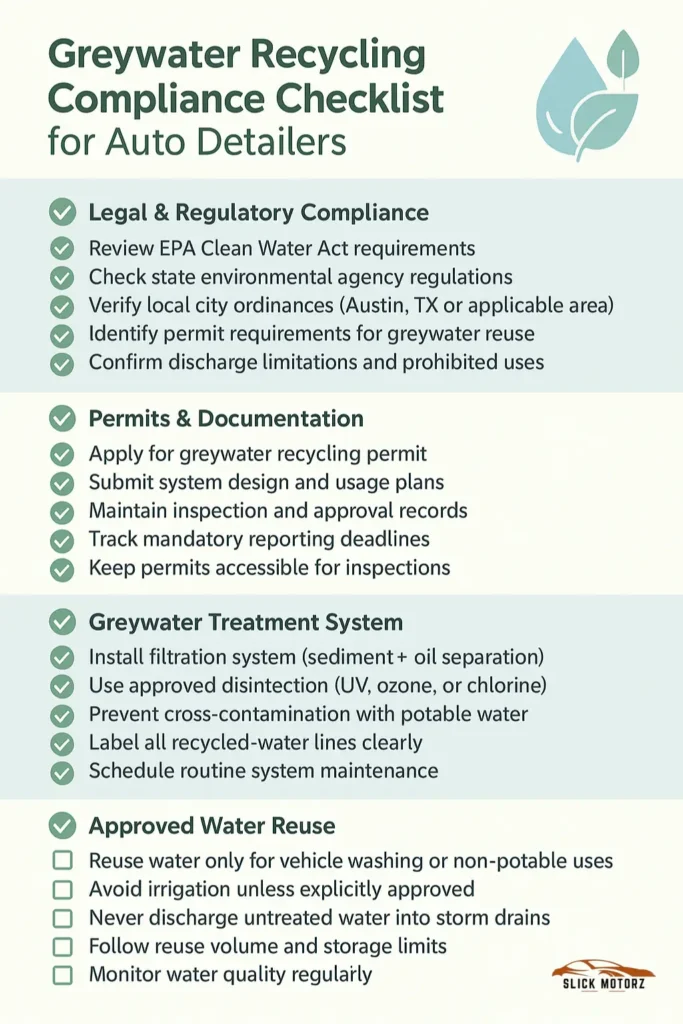
States have their own rules that often add to federal laws. Many require permits for greywater recycling systems. Local governments may impose stricter limits on water reuse and disposal. Auto detailers should check state environmental agencies and city ordinances. These rules can include water quality testing, storage standards, and discharge limits. Compliance helps avoid fines and business disruptions.
Texas-specific Requirements
Texas enforces greywater recycling rules through the Texas Commission on Environmental Quality (TCEQ). Auto detailers must follow TCEQ guidelines for system design and operation. These include filtering greywater before reuse and preventing contamination. Texas also limits where greywater can be discharged or stored. Local city codes in places like Austin may add further rules. Staying updated on Texas laws ensures smooth business operations.
Permitting Process
The permitting process for greywater recycling is essential for auto detailers. It ensures the system meets local rules and protects the environment. Following the correct steps avoids fines and delays. Understanding the process helps you plan better and stay compliant.
Obtaining Permits
Start by contacting your local environmental agency. They provide the necessary forms and instructions. Submit details about your recycling system and how you will use the greywater. The agency reviews your plan for safety and compliance. Approval can take several weeks, depending on complexity.
Reporting Obligations
Permit holders must regularly report water usage and recycling data. This keeps authorities informed about system performance. Reports often include water volume, treatment methods, and any issues. Timely and accurate reporting maintains your permit in good standing. Failure to report can lead to penalties or permit loss.
Inspection Procedures
Inspectors visit to check your greywater system and records. They verify that the system follows permit conditions and local laws. Inspections may be routine or triggered by complaints. Prepare by keeping all documentation organized and your equipment clean. Passing inspections helps avoid fines and operational interruptions.

Credit: www.wet-inc.com
Treatment Methods
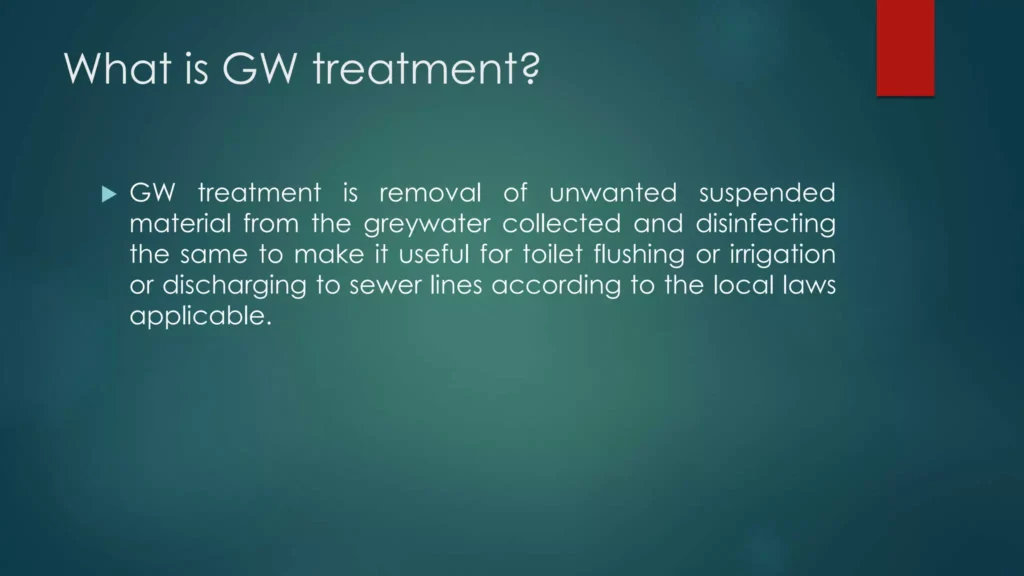
Greywater recycling for auto detailers requires effective treatment methods. Proper treatment ensures water is clean enough for reuse and meets local regulations. Choosing the right treatment method protects the environment and your business.
Filtration Technologies
Filtration removes dirt, oils, and debris from greywater. Common filters include sand filters, cartridge filters, and mesh screens. Sand filters trap small particles, improving water clarity. Cartridge filters catch finer contaminants and are easy to replace. Mesh screens block large debris like leaves and trash. Combining filters often gives better results. Proper filtration extends the life of other treatment components.
Disinfection Options
Disinfection kills harmful bacteria and pathogens in greywater. Ultraviolet (UV) light is a popular option. It uses light to disrupt microorganisms without chemicals. Chlorine is another choice, effective but requires careful dosing. Ozone treatment oxidizes contaminants and disinfects water. Each option suits different system sizes and budgets. Disinfection helps meet health and safety standards for reuse.
System Maintenance
Regular maintenance keeps greywater systems working well. Clean filters often to avoid clogging and reduce wear. Check disinfectant levels and replace bulbs or chemicals as needed. Inspect pipes and tanks for leaks or damage. Keep records of maintenance tasks for compliance purposes. A well-maintained system saves money and prevents downtime.
Water Reuse Applications
Water reuse is an important part of greywater recycling for auto detailers. It helps reduce freshwater use and cuts down wastewater discharge. Using recycled water wisely supports sustainability and saves money. Understanding the different reuse options ensures compliance with local rules and promotes environmental care.
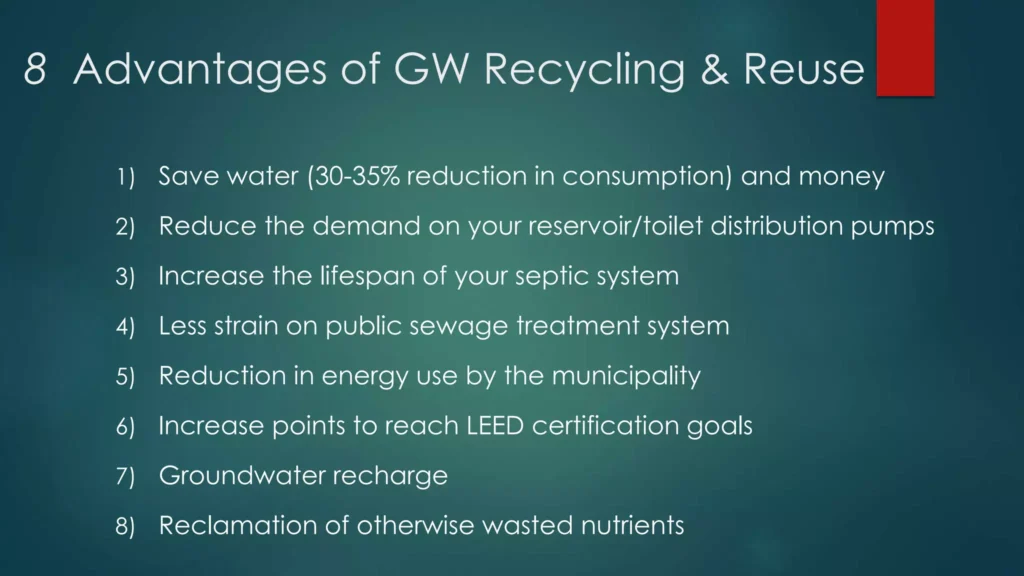
Onsite Recycling
On-site recycling means treating and reusing water right at the auto detail shop. This method filters and cleans greywater from washing cars. The treated water then flows back for use in the next wash cycle. It reduces water waste and lowers operating costs. Many auto detailers use on-site recycling to meet strict water conservation rules.
Irrigation And Non-potable Uses
Recycled greywater can water plants or clean outdoor areas. These uses are called non-potable because the water is not safe to drink. Auto detailers may use treated water for landscape irrigation or rinsing equipment. This saves fresh water for drinking and other important needs. Following proper treatment steps keeps plants healthy and prevents pollution.
Limitations And Prohibitions
Not all greywater reuse is allowed. Some uses risk health or harm the environment. Local laws often ban greywater for drinking, cooking, or filling swimming pools. Auto detailers must avoid sending untreated water to storm drains or soil without permission. Knowing these limits helps businesses avoid fines and protect public health.
Credit: www.slideshare.net
Disposal Guidelines
Proper disposal of greywater is essential for auto detailers to comply with environmental laws. Following clear disposal guidelines helps protect local water sources and public health. Understanding these rules ensures your business avoids fines and supports sustainability.
Safe Disposal Practices
Dispose of greywater by using approved systems only. Use designated drains connected to treatment facilities. Avoid releasing untreated water into streets or storm drains. Employ filtration or treatment before disposal. Regularly maintain equipment to prevent leaks and spills. Keep records of disposal activities for inspections.
Avoiding Sewer Contamination
Never pour greywater directly into the sewer system without permission. Contaminants in the water can harm treatment plants. Follow local regulations for discharging water to sewers. Use proper filtration to remove oils and chemicals. Train staff to recognize and prevent sewer contamination risks. Inspect discharge points regularly for blockages or damage.
Handling Hazardous Waste
Identify hazardous substances in your greywater, such as solvents or heavy metals. Separate hazardous waste from regular greywater streams. Store hazardous waste safely in labeled containers. Arrange disposal through licensed hazardous waste handlers. Avoid mixing hazardous waste with other liquids. Follow all local and federal rules for hazardous waste management.
Compliance Tips
Staying compliant with greywater recycling rules is crucial for auto detailers. Following clear compliance tips helps avoid fines and protects the environment. Proper management and careful attention to regulations ensure smooth operations and good business standing.
Record Keeping
Keep detailed records of water usage and recycling processes. Document all maintenance and repairs of recycling systems. Record any tests or inspections performed on the greywater system. Accurate records prove compliance during inspections and audits.
Employee Training
Train all employees on greywater recycling rules and procedures. Teach proper handling and disposal of water and chemicals. Ensure staff know how to operate recycling equipment safely. Regular training keeps everyone updated on rule changes and best practices.
Regular System Audits
Conduct regular audits of your greywater recycling system. Check for leaks, blockages, and equipment malfunctions. Verify water quality meets local standards. Audits help catch problems early and maintain system efficiency and compliance.
Cost Considerations
Understanding the cost factors behind greywater recycling is key for auto detailers. It helps decide if the investment fits their budget and business model. Costs vary widely depending on system size, technology, and local rules. Planning avoids surprises and ensures financial feasibility.
Installation Expenses
Installing a greywater recycling system requires upfront capital. Expenses include equipment like filters, pumps, and storage tanks. Labor costs add up, especially if plumbing changes are needed. Permits and inspections may also incur fees. Choosing the right system size impacts installation costs directly.
Operational Costs
Running a greywater system involves ongoing expenses. Energy use powers pumps and treatment units. Regular maintenance keeps the system efficient and compliant. Replacement parts and chemicals add to the budget. Training staff to operate the system safely may require extra investment.
Potential Savings
Greywater recycling reduces water bills significantly. It lowers the volume of fresh water needed for washing. Savings depend on water prices and usage levels. Some regions offer tax credits or rebates for water-saving systems. Avoiding fines for illegal water discharge also saves money.
Technology Trends
Technology plays a big role in greywater recycling for auto detailers. New tools help clean and reuse water efficiently. These advances support environmental rules and reduce water costs.
Auto detailers can now use smarter systems that save water and energy. Technology trends focus on improving recycling methods and making processes easier to manage.
Advanced Recycling Systems
Modern recycling systems use filters and treatments to clean greywater. They remove dirt, oils, and chemicals from car wash water. These systems make water safe for reuse in washing cars again.
Some systems use multi-stage cleaning. This includes sedimentation, filtration, and disinfection. These methods ensure high water quality and meet local regulations.
Automation And Monitoring
Automation helps control water recycling without manual work. Sensors check water quality and system performance continuously. This reduces human error and improves reliability.
Real-time monitoring sends alerts if water quality drops. Auto detailers can fix issues quickly. Automation also helps save energy by running only when needed.
Future Innovations
New ideas aim to make greywater recycling cheaper and more efficient. Researchers are exploring better filters and chemical-free cleaning. These will lower maintenance and operational costs.
AI and machine learning may optimize water use patterns. This can reduce waste and improve recycling rates. Future systems will be smarter and easier for detailers to use.
Credit: www.slideshare.net
Frequently Asked Questions
Do Automatic Car Washes Recycle The Water?
Many automatic car washes recycle water using filtration systems to reduce waste and conserve resources. Recycling lowers water usage significantly.
What Is The Greywater Recycling Treatment?
Greywater recycling treatment cleans used household water from sinks, showers, and laundry. It allows safe reuse for irrigation, flushing, and cleaning. This process conserves water and reduces wastewater discharge. Treatment methods vary, ensuring health safety and environmental protection.
How To Dispose Of Car Wash Water?
Dispose of car wash water by directing it to a sanitary sewer or recycling system. Avoid dumping it into storm drains. Use local regulations to guide proper disposal. Consider treatment or hauling to authorized facilities to prevent pollution and comply with environmental laws.
Do Car Washes Use The Same Water Over And Over?
Many car washes recycle and treat water to reuse it, reducing overall water consumption and environmental impact.
Conclusion
Following greywater recycling rules helps auto detailers protect the environment. It reduces water waste and lowers operational costs. Staying compliant avoids fines and legal issues. Simple steps like proper treatment and disposal make a big difference. Understanding local laws ensures your business runs smoothly.
Recycling greywater supports sustainability and community health. Auto detailers gain trust by showing environmental responsibility. Use clean water practices to improve your service quality. Remember, every drop saved counts toward a greener future.














