
If you run a car detailing business, understanding the FTC and car detailing advertising laws is crucial for your success. You want your ads to attract customers, but they also need to follow strict rules set by the Federal Trade Commission.
These rules ensure that your claims are honest, clear, and backed by evidence. Ignoring them can lead to penalties that harm your reputation and your bottom line. You’ll learn exactly what the FTC expects from your advertising and how to keep your business compliant while still standing out.
Keep reading to protect your business and build trust with your customers.
FTC Advertising Rules
The Federal Trade Commission (FTC) sets clear rules to keep car detailing advertising honest and fair. These rules protect you from misleading claims and help you make informed choices about the services you use. Understanding the FTC advertising rules can save you from wasting money on promises that sound too good to be true.
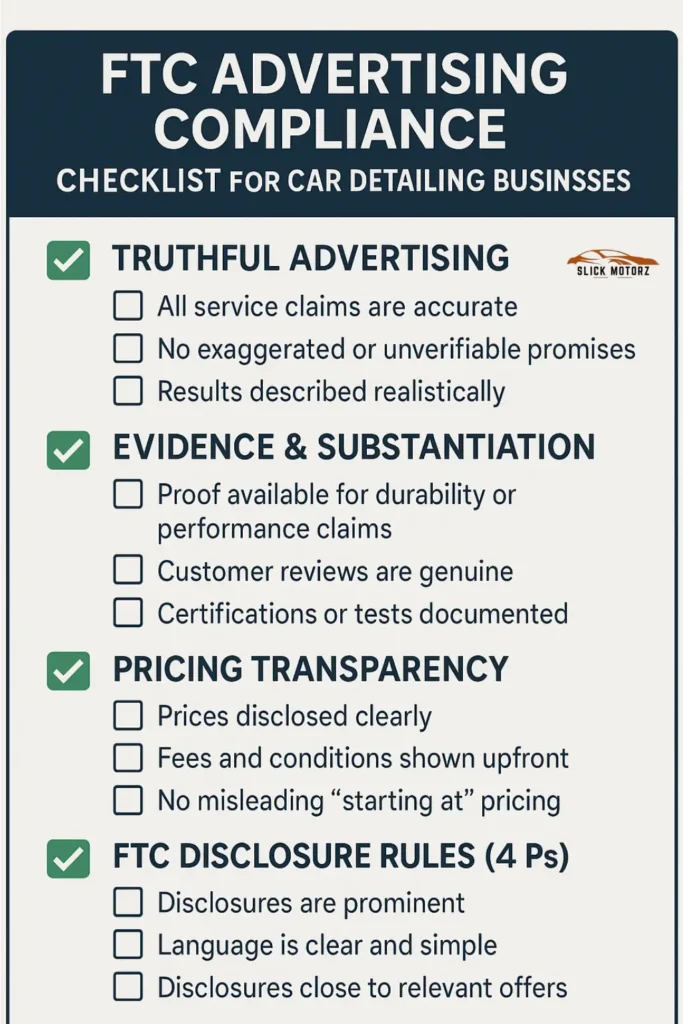
Truthful Claims
All advertising claims about car detailing services must be truthful and not exaggerate the results. If an ad says your car will look “like new,” the business needs to back that up with real, honest results. Have you ever seen an ad promising a “perfect shine” only to be disappointed? The FTC wants to stop that by requiring accuracy in every statement.
Truthfulness means no exaggeration or leaving out important facts. If a detailer promises to remove all stains but can’t, that’s a problem. You deserve clear and honest information before spending your money.
Avoiding Deceptive Practices
Deceptive advertising tricks you into believing something false or hides key details. For example, if a car detailer advertises a low price but adds hidden fees later, that’s deceptive. The FTC makes sure businesses reveal all important information up front.
Think about the last time you saw a “special offer” that didn’t include extra charges. How did that affect your trust in the company? Avoiding deception helps businesses build honest relationships with customers like you.
Evidence Requirements
The FTC demands proof for any claims made in ads. If a detailer says their wax lasts six months, they must have solid evidence to support that statement. No guesswork or vague promises are allowed.
This means you can ask for proof when you see bold claims. Are there test results, customer reviews, or certifications backing up the service? Reliable evidence helps you pick the best option without falling for empty promises.

Credit: strolid.com
Cars Rule Essentials
The CARS Rule Essentials set clear standards for car dealerships and advertisers. This rule protects consumers from misleading ads and unfair sales tactics. It focuses on transparency and honesty in car advertising and selling. Understanding these essentials helps businesses follow the law and build trust with customers.
Purpose And Scope
The CARS Rule targets deceptive practices in car sales advertising. It applies to dealers who advertise used cars and related services. The rule covers all forms of advertising, including online, print, and radio. Its goal is to stop false claims and hidden fees in car deals.
Price Disclosure Standards
Dealers must show clear and accurate prices in all ads. The rule requires full disclosure of the total price, including fees and taxes. Advertisements cannot hide costs or use fine print to mislead buyers. This ensures customers see the true cost before visiting the dealership.
Sales Practice Regulations
The rule limits unfair sales tactics that pressure customers. Dealers cannot use bait-and-switch offers or false promises. They must provide truthful information about the vehicle’s condition and history. These regulations promote honest communication and protect buyers from scams.
Four Ps Of Disclosures
The Federal Trade Commission (FTC) requires clear and honest disclosures in car detailing ads. The “Four Ps of Disclosures” help businesses follow these rules. They ensure ads are fair and consumers get correct information. These Four Ps are Prominence, Presentation, Placement, and Proximity. Each plays a key role in how disclosures appear in advertising.
Prominence
Prominence means disclosures must stand out. They cannot be hidden in small print or faint colors. The font size should be easy to read. The disclosure must catch the viewer’s attention quickly. This helps consumers see important facts without effort.
Presentation
Presentation refers to how the disclosure is shown. It should be clear and simple. Avoid confusing words or complex sentences. Use plain language that everyone can understand. The message must be truthful and direct, not misleading.
Placement
Placement is about where the disclosure appears in the ad. It should be near the claim it relates to. Do not place disclosures only at the bottom or in a separate section. Good placement makes sure consumers do not miss the information.
Proximity
Proximity means disclosures must be close to the relevant claim. If the claim is about price, the disclosure should be nearby. This prevents consumers from being misled by separated details. The closer the disclosure, the clearer the message.
Common Violations In Car Detailing Ads
Advertising in the car detailing industry must follow strict rules set by the FTC. Many ads break these rules, causing problems for customers. These common violations hurt trust and can lead to legal trouble for businesses. Understanding these issues helps both customers and companies stay safe.
False Service Claims
Some ads promise services that the company cannot deliver. This includes claims of “complete cleaning” or “paint protection” without proof. Such false promises mislead customers into paying for services they do not get. The FTC requires all claims to be truthful and backed by evidence.
Hidden Fees
Many car detailing ads show low prices but hide extra fees. These fees appear later in the process, surprising customers. The FTC demands clear disclosure of all costs upfront. Hiding fees is unfair and can lead to penalties.
Misleading Pricing
Ads often use confusing pricing to attract customers. For example, a price may apply only to small cars or basic services. The full cost for other cars or add-ons is not clear. The FTC requires pricing to be clear and easy to understand for all customers.
Compliance Strategies
Car detailing businesses must follow strict advertising laws set by the FTC. Compliance strategies help companies avoid penalties and build trust with customers. These strategies focus on clear communication, honest pricing, and proper record-keeping.
Clear Advertising Language
Use simple and direct words in all ads. Avoid confusing terms that may mislead customers. Advertisements should clearly state the services offered and any conditions. Transparency reduces misunderstandings and keeps your business safe from legal issues.
Accurate Price Listings
Show all prices honestly and include any extra fees. Advertised prices must match what customers actually pay. Hidden charges or unclear pricing can lead to FTC violations. Always update prices to reflect current rates and promotions.
Proper Documentation
Keep detailed records of all advertisements and customer communications. Documentation proves compliance with FTC rules if questioned. Store contracts, price lists, and marketing materials securely. Good record-keeping helps resolve disputes quickly and protects your business.

Credit: kpa.io
Enforcement And Penalties
Enforcement and penalties are key parts of the FTC’s role in car detailing advertising. The FTC acts to stop dishonest ads that mislead customers. Businesses face serious trouble if they break these advertising laws. Penalties can include fines and legal actions. These actions ensure fair competition and protect consumers.
Ftc Investigations
The FTC investigates ads that seem false or misleading. Complaints from customers often start these probes. The agency looks closely at the claims made in car detailing ads. They check if evidence supports these claims. Investigations can include reviewing marketing materials and interviewing witnesses.
Legal Consequences
Violating FTC advertising rules can lead to legal trouble. Businesses may face fines or court orders. The FTC can require companies to stop running deceptive ads. Sometimes, companies must pay refunds to affected customers. Repeat offenders risk harsher penalties and longer investigations.
Reputation Impact
Penalties can harm a business’s reputation deeply. Negative publicity from FTC actions scares away customers. Trust is hard to rebuild after deceptive advertising is exposed. Honest advertising builds loyalty and long-term success. Following FTC rules protects both business and customer trust.
Best Practices For Car Detailers
Car detailing businesses must follow clear rules to advertise fairly and honestly. Best practices help avoid legal trouble and build trust with customers. These steps keep advertising truthful and prevent misleading claims.
Following these best practices ensures compliance with FTC guidelines. It also promotes a professional image for your car detailing service. Here are key areas to focus on.
Regular Policy Reviews
Review your advertising policies often. Check for updates in FTC rules and local laws. Make sure all claims about your services are accurate and backed by facts. Remove any misleading or exaggerated statements quickly. Keeping policies current avoids fines and complaints.
Employee Training
Train your staff on advertising laws and company policies. Employees must understand what they can and cannot say. Teach them to handle customer questions honestly and clearly. Regular training reduces mistakes and protects your reputation. Well-informed employees support legal compliance.
Customer Communication
Be clear and honest when talking to customers. Provide full details about services, prices, and guarantees. Avoid vague or confusing language that may mislead buyers. Respond promptly to questions and complaints. Good communication builds trust and meets FTC standards.
Credit: komonews.com
Frequently Asked Questions
What Does The FTC Act Require For Advertising?
The FTC Act requires advertisers to ensure all claims are truthful, not deceptive or unfair, and backed by evidence.
What Is The New FTC Car Rule?
The new FTC CARS Rule targets auto retail scams by requiring clear price disclosures and honest advertising at car dealerships. It promotes transparency and fairness.
What Are The 4 P’s Required By The FTC for Advertising?
The FTC requires advertisers to follow the 4 P’s: prominence, presentation, placement, and proximity. These ensure clear, truthful disclosures in ads.
Which Of The 5 Laws Are Enforced By The Ftc?
The FTC enforces the Federal Trade Commission Act, Telemarketing Sales Rule, Fair Credit Reporting Act, CAN-SPAM Act, and the CARS Rule. These laws protect consumers from deception, ensure fair competition, and regulate advertising and marketing practices.
Conclusion
Understanding FTC rules helps car detailers advertise honestly and clearly. Avoiding false claims builds trust with customers. Clear pricing and truthful information reduce legal risks. Staying updated on FTC laws keeps your business safe. Good advertising respects both the law and the customer.
Following these guidelines leads to fair and effective marketing. Keep your ads simple, honest, and easy to understand. This approach helps your car detailing business grow steadily and fairly.














