When you’re detailing your car, the products you use matter more than you might think. Some chemicals, once common in car care, are now banned because they pose serious health and environmental risks.
But do you know which ones to avoid? Using the wrong substances can harm your health, damage your vehicle, and even get you in trouble with regulations. You’ll discover the key chemicals banned in car detailing and why staying informed protects not just your car, but also you and those around you.
Keep reading to learn what to watch out for and how to detail your car safely and responsibly.

Credit: www.reddit.com
Banned Chemicals In Car Detailing
Car detailing involves cleaning and restoring vehicles to look their best. Certain chemicals, once common in this field, are now banned. These substances pose serious health and environmental risks. Understanding these banned chemicals helps professionals and car owners choose safer products.
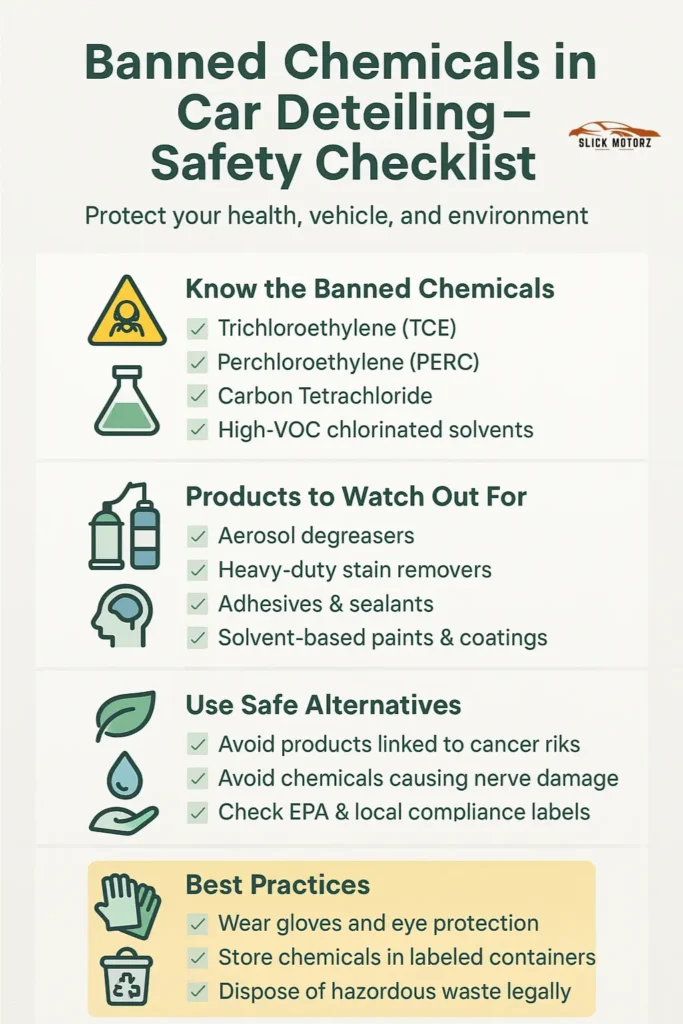
Trichloroethylene (tce)
Trichloroethylene, or TCE, was used as a solvent in car detailing. It helped remove grease and stains from metal parts and upholstery. The chemical is toxic and linked to cancer and nerve damage. Because of its dangers, TCE is now banned for use in many cleaning products.
Perchloroethylene (perc)
Perchloroethylene, known as PERC, is a common dry-cleaning solvent. It was also used in stain removers and degreasers for cars. PERC exposure can harm the nervous system and cause reproductive issues. The EPA has restricted its use due to these health concerns.
Carbon Tetrachloride
Carbon tetrachloride was once popular for removing tough stains and grease. It is highly toxic and damages the liver and kidneys. This chemical also contributes to ozone layer depletion. Its use in car detailing products is now prohibited worldwide.

Credit: www.reddit.com
Health Risks Linked To Banned Chemicals
Banned chemicals in car detailing pose serious health risks. These substances can harm workers and customers exposed to them. Understanding the dangers helps promote safer practices in car care. Many banned chemicals affect the body in different harmful ways.
Cancer Risks
Several banned chemicals cause cancer. Trichloroethylene (TCE) and perchloroethylene (PERC) link to increased cancer risk. They may lead to liver, kidney, and lung cancers. Long-term exposure raises the chance of developing tumors. Avoiding these chemicals lowers cancer risk significantly.
Neurological Effects
Exposure to banned chemicals can damage the nervous system. Chemicals like TCE affect brain function and nerve cells. Symptoms include headaches, dizziness, and memory loss. High exposure may cause permanent neurological damage. Protecting workers from these chemicals prevents such effects.
Reproductive Harm
Banned substances also harm reproductive health. They may cause birth defects, miscarriages, and fertility problems. Chemicals like PERC affect both men and women. Pregnant women face higher risks when exposed. Using safer alternatives supports reproductive well-being.
Common Products Containing Banned Chemicals
Many car detailing products once contained harmful chemicals now banned for safety reasons. These chemicals posed risks to human health and the environment. Understanding which products had these banned substances helps professionals and hobbyists choose safer alternatives. Here are some common products that used to contain these chemicals.
Stain Removers
Stain removers often included perchloroethylene (perc) and trichloroethylene (TCE). These chemicals helped break down tough stains on upholstery and carpets. Both perc and TCE are now banned due to their link to cancer and neurological damage. Safer, water-based stain removers are replacing these harmful solvents.
Aerosol Degreasers
Aerosol degreasers once contained TCE and other volatile organic compounds. These helped remove grease and grime from metal parts and engine surfaces. The banned chemicals caused air pollution and health problems for users. Today’s degreasers use less toxic ingredients and focus on environmental safety.
Adhesives And Sealants
Many adhesives and sealants used TCE and similar solvents to improve bonding. These chemicals were common in automotive assembly and repairs. Due to their toxicity, these substances are no longer allowed. Manufacturers now use safer formulas to avoid health risks and environmental harm.
Paints And Coatings
Paints and coatings often contained banned chemicals like TCE for better drying and smooth finishes. These solvents released harmful fumes during application and drying. New paint products avoid these toxic chemicals, reducing pollution and protecting workers’ health. Water-based and low-VOC paints are now preferred.

Credit: www.reddit.com
EPA Regulations And Recent Bans
The Environmental Protection Agency (EPA) has taken strong steps to regulate harmful chemicals in car detailing. These rules protect workers, consumers, and the environment. The EPA focuses on substances that cause health risks or pollution.
Recent bans target chemicals often found in cleaning and degreasing products. These changes affect how car detailing products are made and used. Understanding these regulations helps detailers stay compliant and safe.
Timeline Of Chemical Restrictions
The EPA started limiting toxic chemicals decades ago. Early bans focused on substances linked to cancer and environmental damage. Over time, new scientific data led to stricter rules.
In recent years, the EPA banned trichloroethylene (TCE) and perchloroethylene (PERC). These solvents were common in automotive and industrial cleaning. The latest restrictions took effect in 2023, tightening use and sales.
Scope Of The EPA Ban
The ban covers the manufacturing, processing, and distribution of specific chemicals. TCE and PERC cannot be used in many consumer products, including car detailing supplies. The rules also limit disposal and emissions to reduce pollution.
Products like degreasers, spot removers, and adhesives face new restrictions. Some alternatives must meet strict safety and environmental standards. The EPA enforces these rules nationwide, including Texas and other states.
Impact On the Car Detailing Industry
Detailing businesses must switch to safer products quickly. Some traditional cleaners are now illegal or require special handling. This change raises costs for some companies but improves worker safety.
Manufacturers develop new formulas without banned chemicals. Eco-friendly products gain popularity among consumers. Training and awareness help detailers follow the new regulations correctly.
Safe Alternatives For Car Detailing
Safe alternatives for car detailing protect both your vehicle and the environment. They avoid harsh chemicals banned due to health risks and pollution. Using safer products keeps your car clean without harmful side effects. These options also reduce damage to surfaces and improve indoor air quality.
Non-toxic Solvents
Non-toxic solvents clean dirt and grease without harmful fumes. They break down grime gently and evaporate quickly. These solvents are biodegradable and safe for skin contact. Using them reduces chemical exposure for detailers and car owners. Examples include citrus-based cleaners and water-based formulas.
Silicone Polymers
Silicone polymers provide a smooth, shiny finish on car surfaces. They protect paint and trim from water and dirt. These polymers are stable and do not release toxic substances. Silicone-based products improve durability and enhance the car’s look. They are safe alternatives to traditional waxes with harmful additives.
Eco-friendly Cleaning Agents
Eco-friendly cleaning agents use natural ingredients to clean and protect cars. They avoid phosphates, ammonia, and other banned chemicals. These agents are gentle on surfaces and safe for the environment. Many contain plant-based surfactants and enzymes. Choosing eco-friendly options supports sustainability and reduces pollution.
Best Practices For Chemical Safety
Chemicals used in car detailing can pose serious health and environmental risks. Following best practices for chemical safety protects workers, customers, and the environment. Proper handling and awareness reduce accidents and contamination. This section covers key safety steps every detailer should follow.
Proper Chemical Storage
Store chemicals in cool, dry places away from sunlight. Use containers made of materials that resist corrosion. Label all containers clearly with chemical names and hazard warnings. Keep incompatible chemicals separate to prevent dangerous reactions. Lock storage areas to limit access to authorized personnel only. Regularly inspect containers for leaks or damage.
Using Protective Gear
Wear gloves made of chemical-resistant materials to protect skin. Use safety goggles or face shields to guard eyes from splashes. Respirators help avoid inhaling harmful fumes or dust. Choose protective clothing that covers arms and legs fully. Clean gear after use to remove any chemical residue. Replace damaged or worn-out protective equipment promptly.
Disposal Of Hazardous Materials
Never pour chemicals down drains or on the ground. Follow local regulations for hazardous waste disposal. Use designated containers for chemical waste and label them properly. Arrange for pickup by licensed hazardous waste handlers. Keep records of disposal activities for compliance. Avoid mixing different wastes to prevent dangerous reactions.
Frequently Asked Questions
What Chemicals Did Biden Ban?
President Biden banned toxic chemicals trichloroethylene (TCE) and perchloroethylene (PERC). These solvents cause cancer and neurological harm. The EPA prohibits their use in adhesives, paint removers, dry cleaning, and stain removers to protect public health.
What Products Contain Perc And Tce?
Products containing perc and TCE include carpet and clothing stain removers, aerosol degreasers, cleaning wipes, adhesives, sealants, lubricants, paints, and coatings.
What Dry Cleaning Solvent Is No Longer Used?
The dry cleaning solvent perchloroethylene (perc) is no longer used due to its health and environmental risks. Trichloroethylene (TCE) is also banned.
Why Was Tetrachloroethylene Banned?
Tetrachloroethylene was banned due to its links to cancer, neurological damage, and reproductive harm. It poses high health risks.
Conclusion
Avoiding banned chemicals in car detailing protects health and the environment. Many harmful substances, like trichloroethylene and perchloroethylene, have strict restrictions. These chemicals can cause serious health problems, including cancer and nerve damage. Choosing safer, approved products keeps your car clean and safe.
Always check labels and follow local regulations carefully. Staying informed helps you make better detailing choices. Clean cars without risking your health or the planet.