
If you work in auto detailing or manage a team in this fast-paced industry, understanding workers’ compensation laws is crucial for your safety and peace of mind. Accidents and injuries can happen on the job, and knowing your rights and protections can make all the difference when the unexpected occurs.
This article breaks down what workers’ compensation means specifically for auto detailing employees in Austin, Texas. You’ll learn what injuries are covered, who qualifies for benefits, and how the law protects you—so you can focus on your work without worrying about what happens if things go wrong.
Keep reading to empower yourself with the knowledge that could save you time, money, and stress
Coverage Requirements
Workers’ compensation laws set clear rules about coverage for auto detailing employees. Coverage requirements ensure workers get help if they get injured or sick due to work. Understanding these rules helps both employees and employers know their rights and duties.
Who Qualifies As An Employee
An employee is a person hired to do work under an employer’s control. Auto detailing workers usually qualify as employees if the business controls their tasks and hours. Independent contractors or freelancers may not be covered under workers’ compensation. The key is the level of control the employer has over the worker.
Employer Obligations In Texas
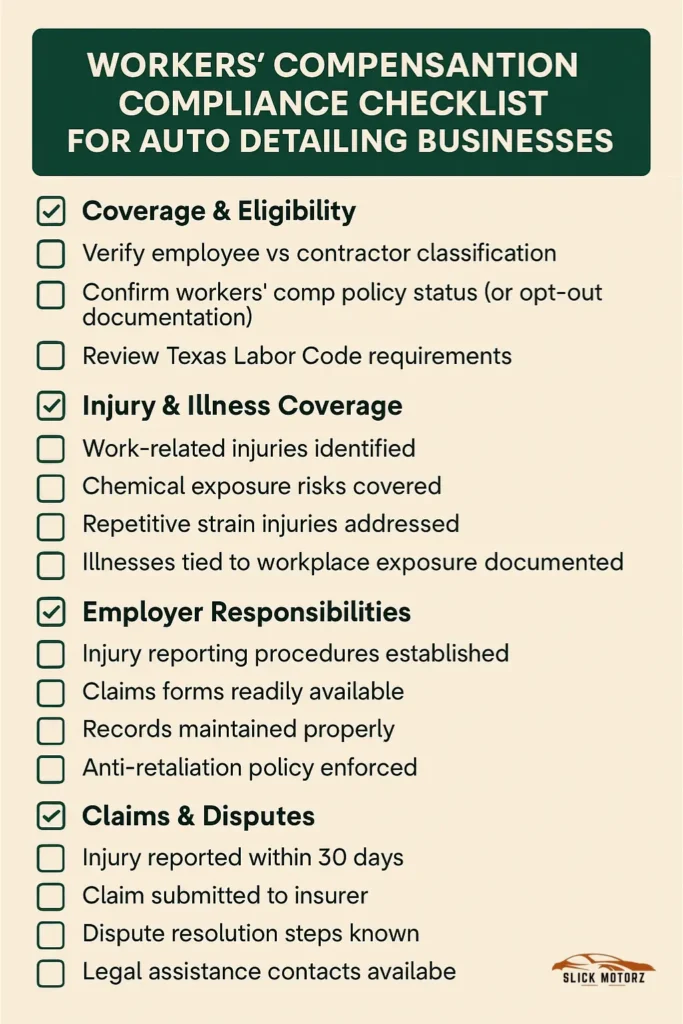
Employers in Texas must provide workers’ compensation insurance to cover injuries at work. They must buy a policy or be legally exempt. If an employee is hurt, the employer must report the injury quickly. Employers must also keep records and follow Texas Labor Code rules. Failure to comply can lead to fines and lawsuits.
Industries With Mandatory Coverage
Texas law requires certain industries to have workers’ compensation coverage. Construction and manufacturing are examples. Auto detailing businesses are not always required to carry coverage, but many choose to protect their workers. Having coverage builds trust and helps avoid legal problems.
Injury Types Covered
Understanding the types of injuries covered under workers’ compensation laws is essential for auto detailing employees. These laws protect workers who face health issues or injuries related to their job duties. Coverage ensures medical care and financial support during recovery. The scope of covered injuries varies, but the main focus is on incidents that occur during work activities.
Work-related Injuries And Illnesses
Workers’ compensation covers injuries that happen while performing job tasks. For auto detailers, this includes cuts, burns, or chemical exposure. Repetitive strain injuries from constant scrubbing or bending are also covered. If an illness arises due to work conditions, such as breathing in fumes, it may be included. Coverage applies only if the injury or illness is directly linked to the job.
Exclusions From Coverage
Not all injuries qualify for workers’ compensation. Injuries that happen outside of work hours or off the job site are excluded. Personal health issues unrelated to work do not receive coverage. Injuries caused by horseplay or ignoring safety rules might be denied. Understanding these exclusions helps employees know their rights and limits.
Intentional And Illegal Acts
Injuries caused on purpose by the employee are not covered. If an employee hurts themselves intentionally, workers’ compensation will not apply. Injuries that occur during illegal activities at work are also excluded. For example, if an employee is harmed while breaking the law, they cannot claim benefits. These rules protect employers from abuse of the system.
Benefits For Employees
Workers’ compensation laws provide vital protections for auto detailing employees who suffer injuries or illnesses on the job. These benefits aim to reduce the financial burden and support recovery. Understanding the key benefits helps employees know their rights and available assistance.
Medical Expense Coverage
Workers’ compensation covers medical costs related to workplace injuries. This includes doctor visits, hospital stays, and necessary treatments. Employees do not have to pay out of pocket for approved medical care. Coverage often extends to physical therapy and prescription medications. Prompt medical attention helps ensure a quicker recovery.
Income Replacement
When injuries prevent employees from working, workers’ compensation provides income support. It usually pays a portion of lost wages during the recovery period. This helps employees meet their daily living expenses. Benefits continue until the employee can return to work or reaches maximum medical improvement. Income replacement offers peace of mind during difficult times.
Additional Non-wage Benefits
Workers’ compensation may offer extra benefits beyond medical care and income. These can include vocational rehabilitation for new job skills. Some programs cover travel expenses for medical appointments. Disability benefits may also be available for permanent impairments. These supports help employees regain independence and stability after injury.

Credit: www.gerberholderlaw.com
Claims Process
The claims process for workers’ compensation helps auto detailing employees get the benefits they need after a work injury. It involves several clear steps to file a claim, employer participation, and ways to resolve disputes if they arise. Understanding this process ensures employees receive timely medical care and wage replacement.
Filing A Workers’ Comp Claim
Employees must report their injury to their employer quickly. Reporting should happen within 30 days after the injury. Next, the employee completes a claim form provided by the employer or the workers’ comp insurer. This form details the injury and how it happened. Submitting the claim on time helps avoid delays in benefits.
After filing, the insurance company reviews the claim. They decide if the injury qualifies for workers’ compensation benefits. Employees should keep copies of all documents and medical records related to the injury.
Employer’s Role In Claims
Employers must provide claim forms and guide employees through the process. They notify their workers’ comp insurance carrier about the injury. Employers also keep records of the injury and treatment. This information helps the insurer evaluate the claim.
Employers cannot discourage or punish employees for filing claims. They must follow state laws to ensure claims are handled fairly and quickly. Cooperation from the employer speeds up benefit payments.
Dispute Resolution Procedures
Disputes may occur if the claim is denied or benefits are delayed. Employees can request a review or hearing to challenge the decision. Many states offer mediation to solve disagreements without court trials.
Appeals and hearings allow employees to present evidence and explain their case. Legal advice may help during this stage. Understanding these procedures protects employee rights and ensures fair treatment.
Exemptions And Opt-outs
Understanding exemptions and opt-outs in workers’ compensation laws is vital for auto detailing employees. These rules affect who must be covered and who can legally avoid coverage. Knowing these details helps businesses follow Texas laws and protect their workers properly.
Who Can Be Exempt In Texas
In Texas, certain workers can be exempt from workers’ compensation coverage. Business owners, partners, and corporate officers often qualify. Independent contractors may also be exempt if they meet specific criteria. Auto detailing employees working as subcontractors might fall under this category. These exemptions reduce costs but require careful classification to avoid legal issues.
Opting Out Of Workers’ Compensation
Texas allows some employers to opt out of the state workers’ compensation system. This option is limited and comes with strict requirements. Employers who opt out must provide alternative insurance or benefits to employees. Opting out means employees may lose access to certain state protections. Employers must notify the Texas Department of Insurance if they choose this route.
Risks Of Non-compliance
Ignoring workers’ compensation laws can lead to serious consequences. Employers may face heavy fines and legal penalties. Injured employees might sue for damages if coverage is missing. Non-compliance also harms a business’s reputation and trust. Following Texas workers’ compensation rules keeps both employees and employers safe.
Credit: www.insureon.com
Legal Responsibilities
Employers in the auto detailing industry must follow strict legal rules about workers’ compensation. These laws protect employees who get hurt or sick because of their job. Employers have clear duties to provide a safe workplace and carry workers’ compensation insurance. Failure to meet these duties can lead to serious legal trouble. Understanding these legal responsibilities helps both employers and employees stay protected and informed.
Penalties For Employers
Employers who do not carry workers’ compensation insurance face heavy fines. They might also pay court costs and legal fees if sued by injured workers. In some cases, criminal charges can apply. Texas law requires all businesses with employees to have this insurance. Penalties increase with repeated violations. Staying compliant avoids costly penalties and business disruption.
Employee Rights
Auto detailing employees have the right to file a claim if hurt at work. They can receive medical care and wage benefits during recovery. Employees must report injuries promptly to qualify for benefits. Workers cannot be fired or punished for filing a claim. These rights ensure fair treatment and financial support after workplace injuries.
State Enforcement Agencies
The Texas Department of Insurance oversees workers’ compensation laws. They investigate complaints and enforce regulations. Employees and employers can contact this agency for help or questions. The agency also provides resources and education about workers’ compensation. Its role is vital in ensuring workplace safety and legal compliance.
Auto Detailing Industry Specifics
The auto detailing industry involves specialized cleaning and restoring vehicles. Employees use chemicals, tools, and machinery daily. These tasks create unique risks and hazards. Understanding these risks helps protect workers and comply with workers’ compensation laws.
Auto detailing often occurs in small shops or mobile units. Workers face exposure to solvents, sharp tools, and repetitive motions. Proper safety knowledge reduces injuries and improves workplace safety.
Common Workplace Hazards
Auto detailers handle strong cleaning chemicals that can irritate skin and eyes. Slippery floors from water and cleaning liquids increase fall risks. Sharp tools like knives and buffers can cause cuts or bruises.
Noise from machines may cause hearing damage over time. Repetitive hand motions can lead to strain injuries. Working in cramped spaces may cause awkward body positions and discomfort.
Typical Injuries In Auto Detailing
Skin burns and rashes result from chemical exposure. Cuts and scrapes occur from sharp tools and broken glass. Muscle strains happen due to heavy lifting or repetitive work.
Eye injuries can happen from splashes of cleaning fluids. Hearing loss may develop after long exposure to loud equipment. Back pain is common from bending and standing for long hours.
Best Safety Practices
Wearing gloves and protective eyewear reduces chemical risks. Use non-slip mats to prevent falls on wet floors. Regularly clean and maintain tools to avoid accidents.
Take breaks to stretch and reduce muscle strain. Train workers on safe chemical handling and equipment use. Ensure good ventilation to reduce inhalation of fumes.
Frequently Asked Questions
Which Of The Following Situations Would Not Be Covered By Workers’ Compensation?
Workers’ compensation does not cover injuries from intentional acts, illegal activities, or self-inflicted harm at work.
Who Is Exempt From Workers’ Comp In Hawaii?
In Hawaii, partners, sole proprietors, corporate officers, and certain business owners may be exempt from workers’ compensation coverage.
What Are The Three Main Requirements To Obtain Workers’ Compensation?
To obtain workers’ compensation, you must be an employee, your employer must have insurance, and you must suffer a work-related injury or illness.
What Wages Are Not Subject To Workers’ Comp?
Wages not subject to workers’ comp include employee tips, gratuities, and earnings from illegal activities or intentional self-injury.
Conclusion
Understanding workers’ compensation laws helps protect auto detailing employees. These laws ensure medical care and financial support after injuries. Employers must follow regulations to keep workers safe. Reporting injuries promptly speeds up benefit claims. Knowing your rights prevents confusion during tough times.
Stay informed to work with confidence and security. Safety and fairness matter in every workplace.














