Car detailing is a great way to keep vehicles looking their best. But if you’re running a detailing business—or planning to start one—you also need to understand the legal side of things.
In the United States, car detailing laws vary by state and even by city. Some places regulate wastewater runoff, chemical use, and mobile detailing operations. Others require specific business licenses, insurance coverage, or permits.
Whether you’re a weekend DIY detailer or launching a mobile detailing business, knowing the rules can help you avoid fines, legal trouble, and unexpected shutdowns.
This guide breaks down car detailing laws by state, explains the most common regulations, and links to detailed guides for each state.
What Are Car Detailing Laws by State?
Car detailing laws in the U.S. usually regulate:
- Business licenses and registration
- Mobile detailing permits
- Wastewater runoff and storm drain protection
- Chemical handling and disposal
- Zoning and home-based business rules
- Insurance requirements
Because these rules often vary at the city and county level, detailers should always verify local regulations before operating.
Key Legal Requirements for Car Detailing Businesses
Most detailing businesses in the United States must comply with several types of regulations. While the exact rules vary by state and city, the most common legal requirements include:
- Registering your business with the state
- Obtaining a local business license
- Following wastewater runoff regulations
- Using approved chemical products
- Carrying liability insurance
- Following zoning laws for home-based businesses
Understanding these requirements helps prevent legal problems and ensures your detailing business operates smoothly.
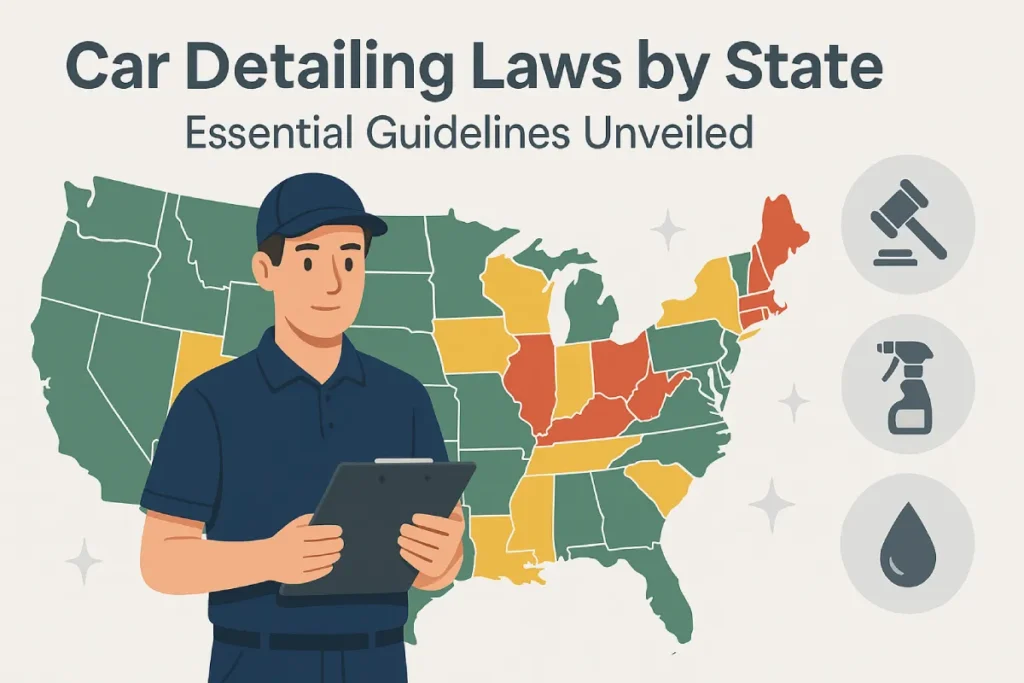
State-by-State Car Detailing Laws Overview
Below is a quick overview of all 50 states. Each state has its own page explaining the specific rules, permits, and environmental requirements.
Environmental Regulations for Car Detailing Businesses
One of the biggest legal concerns in the detailing industry is environmental protection.
Detailing often involves soaps, degreasers, waxes, and other chemicals. When mixed with water, these substances can enter storm drains and pollute rivers or lakes.
Because of this, many states enforce rules about:
- Wastewater disposal
- Storm drain protection
- Chemical runoff
- Water usage
For example, California and Washington have strict environmental regulations that require businesses to control wastewater and avoid storm drain contamination.
Some detailers switch to waterless car wash products or eco-friendly soaps to reduce environmental impact.
Credit: www.townsquare.media
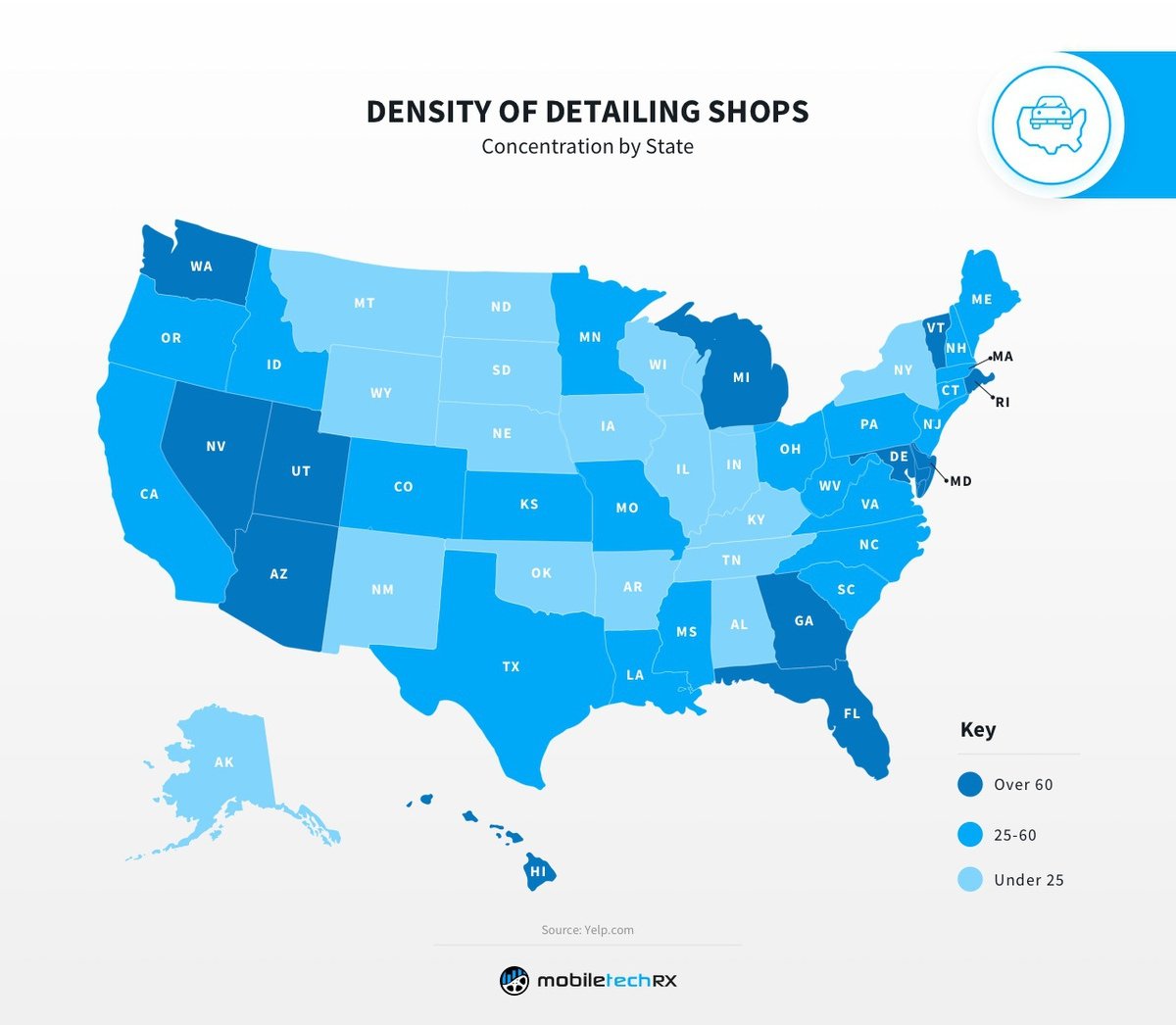
Do You Need a License to Start a Car Detailing Business?
In many states, you must register your detailing service as a legal business entity.
Typical requirements include:
- General business license
- Sales tax registration
- Local operating permits
- Mobile detailing permits (in some cities)
For example:
Florida requires detailing businesses to register with the state and collect sales tax.
New York may require permits for mobile detailing operations, depending on the city.
If you plan to operate from home or travel to customers, local zoning rules may also apply.
Credit: www.mobiletechrx.com
Mobile Car Detailing Laws and Permit Requirements
Mobile detailing businesses are growing fast because they offer convenience to customers.
However, many cities regulate mobile detailing because of concerns about:
- Wastewater runoff
- Parking restrictions
- Environmental compliance
Some cities require mobile detailers to:
- Use water containment mats
- Collect wastewater
- Operate only in approved locations
Before launching a mobile detailing service, check your local environmental and zoning laws.
Water Runoff and Wastewater Rules
Storm drain pollution is a major issue in the detailing industry.
Most storm drains lead directly to local waterways without treatment. Because of this, regulators often restrict letting wastewater flow into the street.
Common wastewater rules include:
- No soap runoff into storm drains
- Wastewater must enter sanitary sewer systems
- Use of water reclamation systems
Some detailers solve this problem by using low-water washing techniques or detailing inside garages.
Chemical Use and Environmental Compliance
Car detailing products can contain chemicals that must be handled carefully.
Many states regulate:
- Hazardous chemical storage
- Product labeling
- Disposal of cleaning solutions
- Volatile organic compounds (VOCs)
Using biodegradable car wash soap is often recommended to reduce environmental impact.
Insurance Requirements for Car Detailing Businesses
Insurance protects both your business and your customers.
Common types of coverage include:
General Liability Insurance
Covers damage or injuries during service.
Garage Keepers Insurance
Protects customer vehicles while in your care.
Workers’ Compensation
Required in many states if you have employees.
Some states require proof of insurance before issuing a business permit.
Can You Run a Car Detailing Business From Home?
Many people start detailing businesses from home garages or driveways.
But local zoning laws may limit:
- Commercial activity in residential areas
- Noise levels
- Water runoff
- Customer traffic
Before starting a home-based detailing business, check with your local city government or zoning office.
Credit: Napkin AI
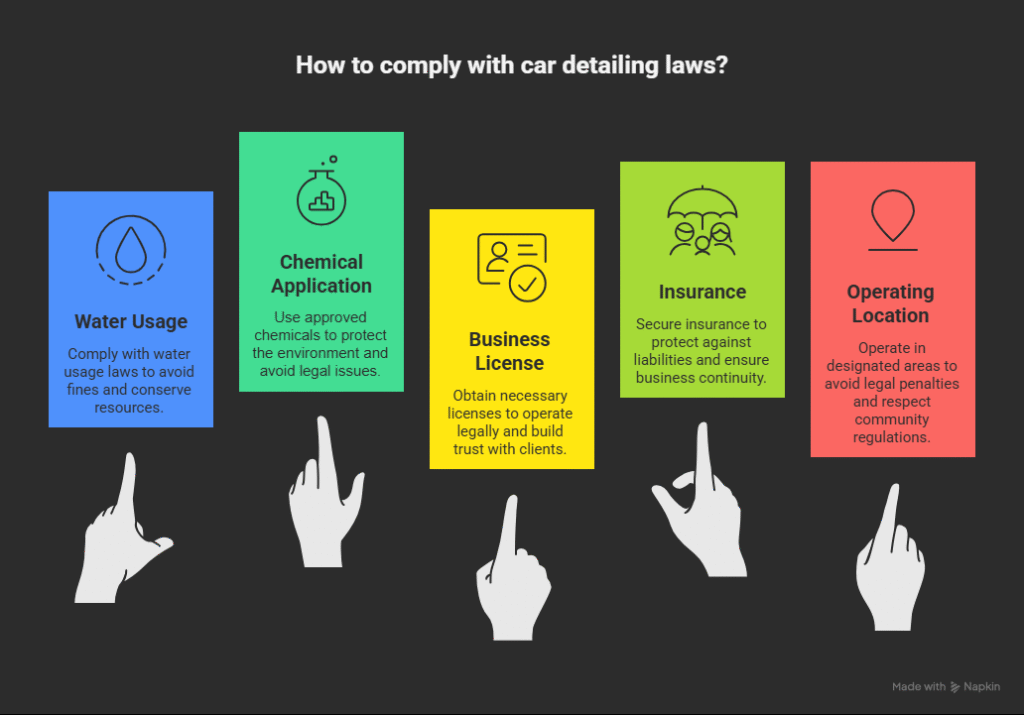
How to Stay Compliant With Car Detailing Laws
If you want to run a legal and successful detailing business, follow these steps:
- Register your detailing business with your state
- Obtain required licenses or permits
- Follow wastewater and runoff regulations
- Store and dispose of chemicals properly
- Carry liability insurance
- Verify local zoning laws
Staying compliant protects your business and builds trust with customers.
Download Car Detailing Legal Compliance Checklist (2025 Edition)
Recommended Products for Eco-Friendly Car Detailing
Many detailers reduce legal risks by using environmentally friendly products, encouraging eco-friendly car detailing.
Popular options include:
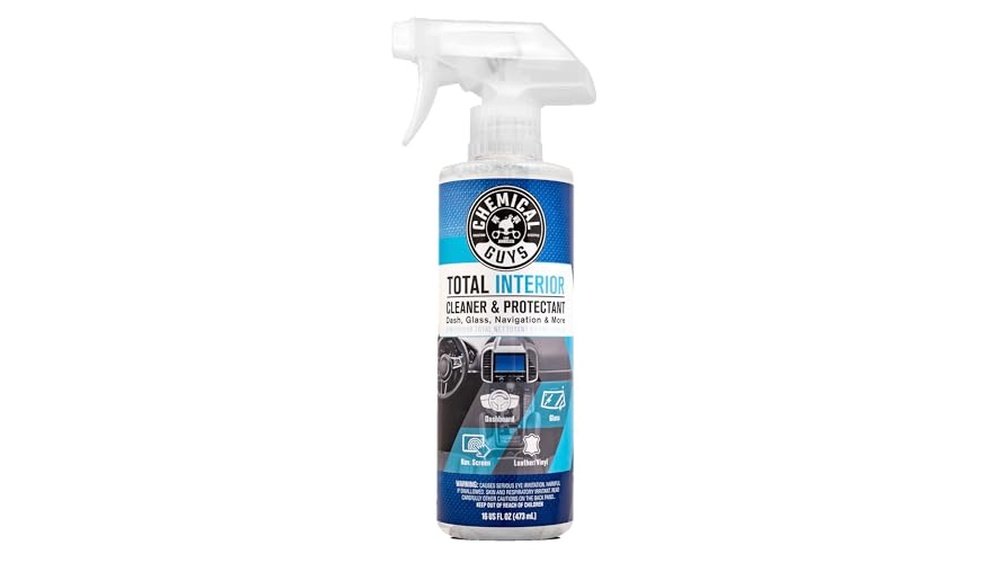
- Waterless car wash sprays
- Biodegradable car wash soap
- Rinseless wash solutions
- Low-water pressure washers
- Eco-friendly degreasers
These products help minimize environmental impact while still delivering professional results.
Frequently Asked Questions
What Are Car Detailing Laws?
Car detailing laws vary by state and cover several aspects. These include environmental regulations, water usage, and waste disposal. Some states require specific licenses or permits. It’s essential to check local laws to ensure compliance and avoid fines. Always stay up-to-date with changes in regulations to ensure compliance and operate legally.
Do I Need A License For Car Detailing?
In many states, a license is required to operate a car detailing business. This ensures compliance with local environmental and business regulations. Licensing may involve fees and inspections. Always check your state’s requirements before starting your business to avoid penalties and ensure legal operation.
How Do State Laws Affect Mobile Detailing?
State laws impact mobile detailing in areas like water runoff, chemical use, and waste disposal. Some states have stricter regulations to protect the environment. Compliance may require specific equipment or permits. Research local regulations thoroughly to ensure your mobile detailing business operates legally and sustainably.
Are There Environmental Restrictions For Detailing?
Yes, many states have environmental restrictions for car detailing. These include rules on water usage, chemical runoff, and waste disposal. Violating these can lead to fines or business closure. It’s crucial to understand and follow your state’s environmental laws to operate responsibly and avoid legal issues.
Final Thoughts
Car detailing can be a profitable business and a rewarding side hustle. But like any professional service, it’s important to understand the legal requirements before you start.
Because regulations vary by state and city, always verify:
- Business license requirements
- Environmental regulations
- Water runoff laws
- Mobile detailing permits
- Local zoning rules
Understanding car detailing laws by state will help you avoid fines, operate legally, and build a trustworthy detailing business.
Legal Disclaimer
This guide is for informational purposes only and should not be considered legal advice. Car detailing regulations may vary by state, city, and county. Always check with your local government, environmental agency, or business licensing office before starting a detailing business.